The global AI arms race is evolving: the battlefield has shifted from technical benchmarks to the mobilization of colossal capital. While Silicon Valley continues its struggle for dominance, emerging players from Asia are pioneering an entirely different model of growth and asset management. Liang Wenfeng, the founder of DeepSeek, has abruptly emerged as the wealthiest entrepreneur among the architects of large language models—a rise that underscores a fundamental realignment of power dynamics within the AI industry.
The contemporary generative AI landscape is undergoing a phase of rapid capital consolidation, where company valuations have evolved from mere indicators of potential into instruments of geopolitical and economic leverage. Recent data from the Bloomberg Billionaires Index reveals a phenomenal surge in the wealth of Liang Wenfeng: following the completion of another investment round, his net worth more than doubled, climbing from $16.7 billion to $36 billion. This trajectory places the DeepSeek founder at the pinnacle of the rankings for entrepreneurs focused specifically on large-scale model development, eclipsing key figures from Anthropic and OpenAI.
This stark divergence from Western counterparts, such as Dario Amodei and Greg Brockman, is driven not only by market dynamics but by the specific nature of ownership structures. In June, DeepSeek secured funding exceeding $7.4 billion, pushing the startup's valuation to approximately $50 billion—a five-fold increase compared to April's figures. Notably, by investing roughly $3 billion into the round himself, Liang Wenfeng managed to retain approximately 78% of the company.
Herein lies a fundamental distinction between Eastern and Western venture development models. While the founders of American AI giants have endured numerous cycles of equity dilution to attract massive capital injections from corporations and funds, Liang has maintained tight control over his business. This strategy allowed him to concentrate the bulk of the company's value in his own hands, transforming DeepSeek into a vehicle for personal financial influence.
However, it must be acknowledged that this status as the "wealthiest AI developer" is largely "on paper." Since DeepSeek shares are not traded on the open market, Liang's wealth is determined by the estimated value of his stake in a private entity. Any shift in valuation during the next funding round or a broader market correction could significantly alter these figures. Nevertheless, even accounting for this volatility, ranking 63rd globally and 8th within China underscores the sheer scale of the project's impact.
It is critical to note that this ranking focuses narrowly on model creators, excluding infrastructure titans. Had chip manufacturers and data center owners been included, Elon Musk would remain the undisputed leader, as his assets span the entire AI technology stack.
Nonetheless, DeepSeek is demonstrating a strategic foresight that could secure the sustainability of this capital in the long term. There is a clear trend toward vertical integration: reports indicate the company is developing its own specialized inference chip. The drive to eliminate dependence on Nvidia and Huawei hardware is more than just a technical challenge; it is an attempt to establish a fully autonomous technological cycle. In a world where access to compute power has become the primary bottleneck for development, owning the underlying "silicon" transforms paper wealth into a tangible strategic asset.
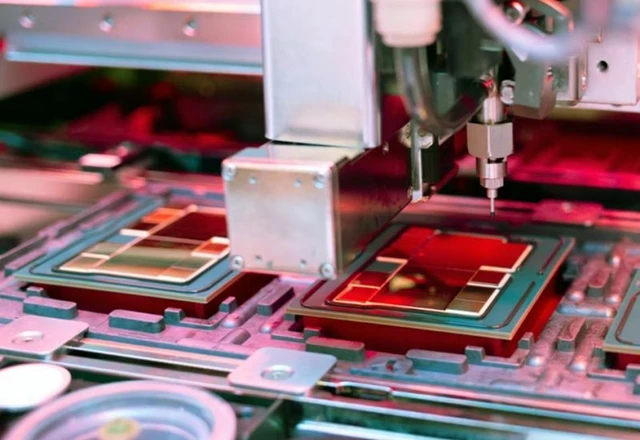 Intel’s Strategic Play for Advanced Packaging Supremacy