The era of generative artificial intelligence has catalyzed one of the most rapid transformations in the hardware industry seen in decades. While public attention remains fixed on algorithms and models, the true beneficiaries—memory manufacturers—are amassing unprecedented levels of capital. The current market dynamics have turned semiconductor supply into a hyper-profitable enterprise characterized by an explosive surge in liquidity. This financial windfall is laying the groundwork for a massive expansion of production capacity that will shape the industry for years to come.
The modern AI technology stack demands more than just GPU compute; it requires massive volumes of high-bandwidth, low-latency memory. This demand has propelled the market's five dominant players—Samsung, SK hynix, Micron, Kioxia, and Sandisk—to generate a combined Free Cash Flow (FCF) exceeding $90 billion in the last quarter.
To put this scale into perspective, Free Cash Flow represents the capital remaining after a company covers its operating expenses, taxes, and capital expenditures for hardware upgrades. We are witnessing an extraordinary surge: on a year-over-year basis, this metric has skyrocketed 92-fold. Even more striking is the net profit trajectory of this tight circle of companies, which control roughly 90% of the global market; their quarterly profits have surged sixteen-fold.
For context, compare these figures with the results of the "Big Four" cloud titans—Amazon, Microsoft, Alphabet, and Meta. Despite their dominance in the digital economy, their net profit growth over the same period was only 1.5 times higher than previous values. A striking paradox emerges: while some American tech giants are reporting negative cash flow due to colossal infrastructure investments, the memory manufacturers providing the bedrock for that infrastructure are reaping superprofits.
The primary driver of this growth has been a sharp spike in component pricing. Last quarter, memory prices climbed by 50–60%, directly boosting business margins. However, this trend is neither accidental nor transient; it is driven by the architectural necessity for new memory types, such as High Bandwidth Memory (HBM), which are critical for the operation of Large Language Models (LLMs).
In response, industry leaders have announced plans to invest hundreds of billions of dollars into expanding production facilities. These capital commitments will be deployed over a long horizon—spanning years and even decades—underscoring the structural, long-term nature of the current growth cycle.
Simultaneously, competition from China is intensifying. The successful IPO of CXMT demonstrates that Chinese memory manufacturers are attracting significant investor interest and are poised to fight for market share. Consequently, financial flows are shifting away from cloud service consumers toward those who build the physical foundation upon which artificial intelligence exists.
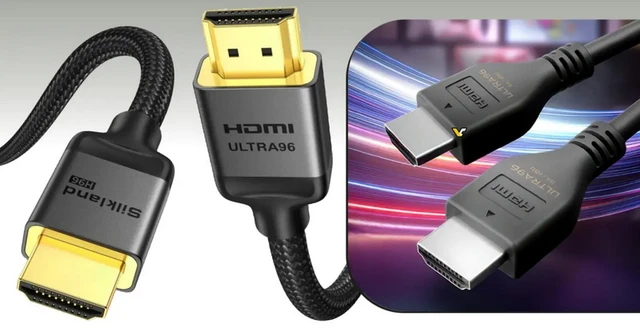 HDMI 2.2: The New Standard for Data Transmission