The boundary between terrestrial computing and deep space is rapidly dissolving. The race for AI supremacy is ascending beyond Earth's atmosphere, where spatial and energy constraints cease to be critical bottlenecks. SpaceX aims to deploy a comprehensive orbital infrastructure, transforming satellites into high-performance data processing nodes. This ambitious vision heralds a new era of space-based AI, underpinned by solar energy and cutting-edge hardware.
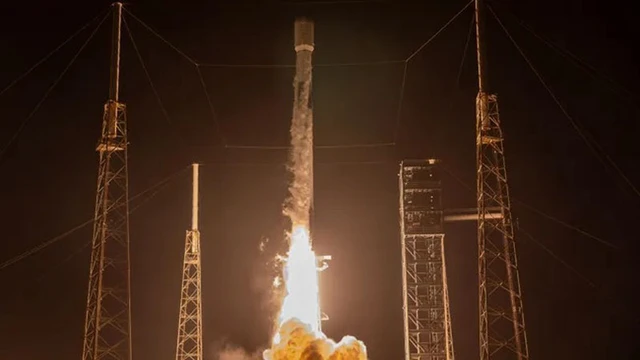
The synergy between SpaceX and xAI has catalyzed a vision that, while sounding like science fiction, is rapidly transitioning into a tangible roadmap. We are talking about the deployment of orbital data centers—infrastructure designed to liberate the Earth's surface from the burden of massive server farms while solving power constraints through the direct harvesting of solar radiation. According to recent disclosures, the rollout of this infrastructure is slated to begin as early as the fourth quarter of next year.
The scale of the ambition is staggering: by 2028, space-based computing is expected to reach industrial maturity. A filing has already been submitted to the US Federal Communications Commission (FCC) for the launch of up to one million satellites, effectively creating a distributed cloud to support proprietary AI infrastructure. Such constellation density would enable a network of unprecedented power, capable of processing colossal datasets directly in orbit.
At the technological heart of this system lies Nvidia hardware. The strategic choice has fallen on the vendor's latest platforms—specifically the Vera Rubin NVL72 family—which will be ruggedized for the harsh realities of the cosmic vacuum and ionizing radiation. By pivoting to specialized solutions, the architects can achieve higher component density and reduce overall mass compared to traditional terrestrial server racks—a critical factor when calculating launch costs.
The project's planning trajectory is particularly telling. While the deployment of orbital data centers was originally slated for 2028, the meteoric rise of generative AI and the insatiable demand for compute have forced a timeline acceleration, pulling the start date forward to next year. This shift underscores the critical importance of iteration speed in today's technological arms race.
Ultimately, the system will manifest as a hybrid ecosystem. Nvidia’s Vera processors will serve as the connective tissue, ensuring seamless synchronization between terrestrial capacities and their orbital counterparts. The result is a unified computing circuit where space-based nodes augment ground operations, forging a global intelligent network characterized by minimal latency and maximum energy efficiency.
 A New Memory Paradigm for AI Accelerators