The contemporary data center landscape is grappling with a critical inflection point: the exponential surge in AI workloads demands massive computational throughput, yet must operate within stringent power envelopes and thermal management constraints. In this pursuit of efficiency, AMD is making a bold strategic move with the introduction of its sixth-generation EPYC processors, codenamed "Venice." The transition to a state-of-the-art TSMC fabrication node marks a new chapter in server computing, where transistor density has become the primary catalyst for performance gains. This strategy transcends mere core-count increases; it represents a fundamental architectural shift in how hardware interacts with machine learning algorithms.
The centerpiece of this update is the implementation of TSMC's 2nm process, positioning AMD as a pioneer in leveraging this node for high-performance server solutions. This technological leap is not merely incremental but fundamental: the company is transitioning from traditional FinFET transistors to Gate-All-Around (GAAFET) nanosheet structures. This paradigm shift allows for a 15% increase in transistor density and, more critically, reduces power consumption by nearly a third. In an era where cooling costs are becoming comparable to the cost of the hardware itself, such optimization evolves into a decisive strategic advantage.
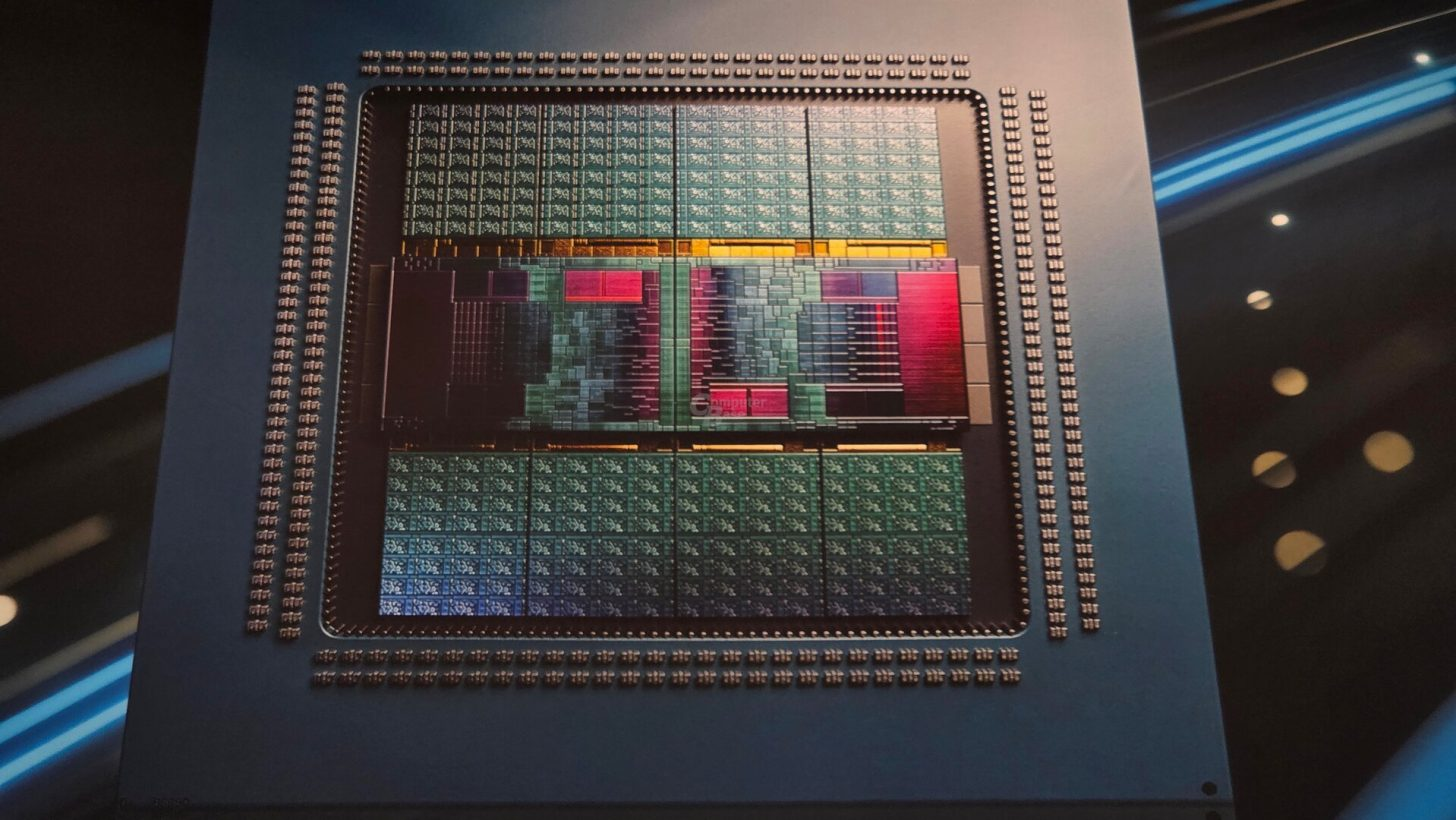
At the heart of "Venice" lies the evolved Zen 6 architecture, which bifurcates compute resources into two specialized core types. Standard Zen 6 cores are engineered for peak performance in traditional workloads, offering configurations of up to 96 cores and 192 threads. In contrast, the "dense" Zen 6C cores (the Venice-Dense line) are optimized for extreme multithreading. Here, AMD pushes the boundaries of possibility, delivering up to 256 cores and 512 threads within a single processor, effectively transforming a single socket into a full-scale compute node.
To address diverse market niches, the company is introducing two distinct sockets. SP7 is designed for uncompromising, high-performance systems with a TDP of up to 600W, while SP8 targets entry- and mid-level segments with a more moderate power envelope of up to 400W.
The approach to data processing warrants particular attention. While support for 512-bit AVX-512 vector instructions was fragmented in previous generations, it is now ubiquitous and uniform across the entire Zen 6 lineup. This is critical for High-Performance Computing (HPC) and large-scale data processing. Furthermore, the introduction of new instruction sets, such as AVX512_FP16 and AVX_VNNI_INT8, directly accelerates machine learning operations, enabling neural network calculations to run exponentially faster through hardware-level optimization.
The platform's infrastructure has also been reinforced: the memory controller now supports 12- and 16-channel configurations, eliminating the traditional "bottleneck" in data transmission to the cores. The lineup ranges from flagship models like the EPYC 9996—boasting a massive 1GB L3 cache and clock speeds up to 4.1 GHz—to energy-efficient LP series solutions with LPDDR memory support.

A comparative analysis with its rival, the Intel Xeon 6+, reveals a classic clash of divergent architectural philosophies. Intel's solutions, based on the 18A process, demonstrate impressive core counts (up to 288) and a more conservative TDP, which may be attractive for specific workloads. However, AMD maintains leadership in throughput and I/O scalability: support for PCIe Gen 6.0, a higher number of PCIe lanes (128 versus Intel's 96), and superior memory speeds (1.6 TB/s vs 1.3 TB/s) make Venice a more flexible tool for building modern cloud infrastructures.
Despite AMD's current momentum, the industry roadmap suggests a new phase of competition: Intel and Samsung have already announced plans for the mass production of 1.4nm chips by 2028–2029. This indicates that the "nanometer war" is only just entering its most aggressive phase.
Ultimately, the primary value of these new processors lies in the battle against the thermal ceiling. In modern server racks, heat dissipation has become the primary limiting factor for hardware density. Reducing TDP while simultaneously increasing performance allows for greater compute density per square meter of data center space—the only viable path forward in the era of the global AI boom.
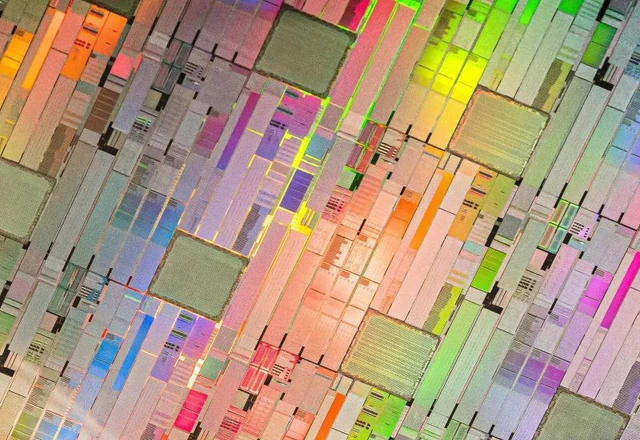 The Triumph of 3nm Chip Manufacturing