The wearables industry is undergoing a rapid evolution, shifting away from cumbersome headsets toward sleek, elegant accessories powered by deeply integrated artificial intelligence. For engineers, the primary challenge remains the delicate balancing act between raw computational power, energy efficiency, and the device's physical footprint. Qualcomm's latest innovations signal a strategic pivot toward the concept of "transparent" computing and the integration of generative AI. The introduction of the Snapdragon Reality Elite platform and the START ecosystem is designed to radically streamline the development of high-end XR devices.
The shift from XR branding to Reality Elite represents far more than a superficial rebranding—it is a complete paradigm shift. While previous chip generations, such as the XR2+ Gen 2, focused on constructing immersive virtual worlds, the new platform is engineered for the seamless fusion of a digital layer with physical reality. The strategic trajectory has moved toward "transparent" devices that do not isolate the user from their surroundings but rather augment them in real time.
The technical leap embodied by the Snapdragon Reality Elite manifests primarily in its optimized visual pipeline and superior thermal management. Support for 4.4K resolution per eye at a 90Hz refresh rate ensures crystalline image clarity and minimizes latency—a critical factor in eliminating motion sickness in XR systems. However, the gains in energy efficiency are even more consequential: a 12-degree Celsius reduction in operating temperature and a 20% increase in battery life allow developers to significantly shrink chassis dimensions, swapping bulky cooling systems for a more ergonomic, streamlined design.
The system's raw computational power is equally noteworthy. While a 60% boost in GPU performance and a 30% increase in CPU speed provide a robust foundation, the true breakthrough is the staggering 160% surge in Neural Processing Unit (NPU) performance. This massive leap in AI acceleration shifts the processing of complex tasks from cloud servers directly to the device. This paves the way for photorealistic avatars and fully realized AI agents capable of analyzing the user's environmental context in real time, devoid of the latency inherent in network data transmission.
The platform's versatility enables two distinct architectural approaches. The first involves fully standalone headsets with all necessary processing power "on board." The second utilizes split computing, where the glasses interface with a separate compute module. This is the path chosen by Xreal for its new Aura glasses, as the company seeks to maintain the lightweight aesthetics of classic eyewear.
Concurrent with the launch of its flagship silicon, Qualcomm unveiled START (Scalable Turnkey AI Ready Toolkit)—a scalable suite of tools for OEMs. This initiative effectively democratizes the smart glasses market. Rather than investing years into developing proprietary hardware, brands can now leverage ready-made modules based on the AR1+ chip and integrated software for iOS and Android.
The START strategy envisions a broad spectrum of reference designs, ranging from simple frames with advanced audio capabilities to full-fledged AR glasses with integrated displays. Partnerships with major optical players, such as the UK-based Inspecs, underscore Qualcomm's ambition to move smart glasses out of the "geek gadget" niche and into the realms of mass-market consumer electronics and high fashion. Ultimately, the synergy of Reality Elite's powerful hardware and the accessibility of the START platform could make intelligent wearables as ubiquitous a part of daily life as the modern smartphone.

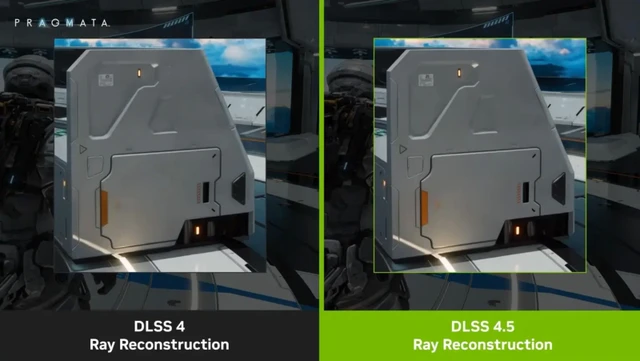 The Evolution of Rendering in DLSS 4.5