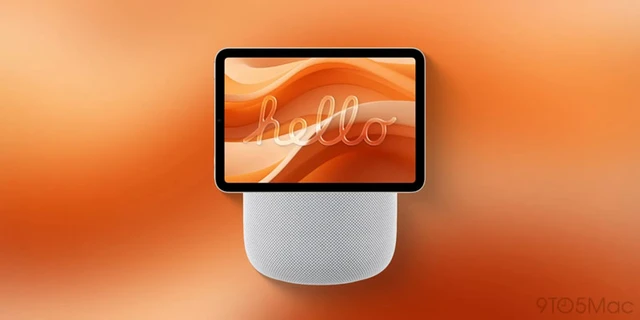
The smart home market is undergoing a fundamental transformation, with the center of gravity shifting toward intelligent interfaces that provide visual confirmation. For years, Apple has remained in the shadow of its competitors, confining its ecosystem to audio-centric solutions and set-top boxes. However, sweeping changes across the company's retail footprint hint at the imminent launch of a comprehensive smart hub featuring a built-in display. This move could signal a strategic pivot toward the deep integration of generative AI into the very fabric of the domestic environment.
The physical reconfiguration of Apple Store layouts often serves as a bellwether for impending technological shifts. Currently, the company has begun redesigning specific zones within its retail spaces, shifting display placements and carving out dedicated areas for accessories. Such retail activity typically precedes major product launches; in this instance, the scale of the preparation seems excessive for a mere refresh of existing lineups.
While updated versions of the Apple TV 4K and HomePod mini are expected this autumn, analysts—citing Bloomberg data—note that the current store modifications are too radical to be explained by the release of two iterative products alone. Rather, this appears to be the groundwork for a full-fledged home hub with a display—a device the industry has already dubbed the "HomePad."
The delay of this product has been driven less by hardware constraints than by the evolution of its software. Apple has long withheld the release of a visual hub, waiting for a quantum leap in Siri's capabilities. The traditional voice assistant, frequently criticized for its limitations, is set to be replaced by a comprehensive AI agent capable of contextual understanding and complex interactions. Only the addition of a screen allows the full potential of Large Language Models (LLMs) to be realized, providing users with visual feedback and expanded smart home control capabilities.
The integration of Siri AI will serve as the connective tissue for the entire updated ecosystem. The Apple TV 4K and HomePod mini will likely receive upgraded processing power to handle neural network queries locally, ensuring both privacy and responsiveness. In this architecture, the new display hub is positioned as the primary command center, unifying lighting, security, and multimedia into a single, seamless interface.
The final verdict on these hypotheses will come during the September keynote. If the company's strategy aligns with current leaks, we are looking at more than just a product refresh; it will be a complete reboot of Apple's "smart home" vision, where hardware finally catches up to the ambitions of software intelligence.
 The Phenomenon of the Foldable iPhone Ultra