The contemporary AI landscape is grappling with an unprecedented thirst for memory bandwidth. In the high-stakes race for dominance within the high-performance computing (HPC) sector, every iteration of the HBM standard represents a critical strategic frontier. With Samsung having initially set the pace, SK hynix is now launching a counter-offensive, unveiling its latest technological breakthroughs. The debut of HBM4E samples signals a new chapter in the quest to optimize the efficiency and power consumption of neural network accelerators.
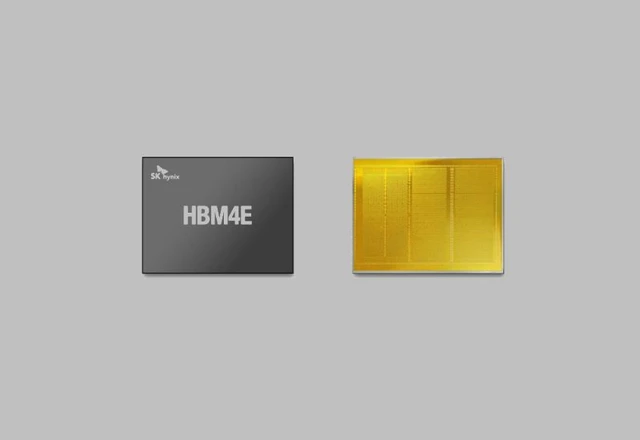
The high-bandwidth memory (HBM) market has evolved into a high-stakes battleground between two South Korean titans. When Samsung Electronics began distributing HBM4E samples to its key partners in late May, SK hynix found itself in a position where closing the technological gap became a matter of strategic urgency. The response was immediate: the company officially announced the commencement of shipments for its own next-generation memory samples.
The architectural bedrock of SK hynix's HBM4E is the implementation of 12-hi stacks. This configuration enables impressive data density, with a single stack housing 48 GB of memory. However, capacity is only one part of the equation. The critical metric is the data transfer rate, which in these new modules reaches 16 Gbps per pin, significantly widening the "highway" for data exchange between the memory and the GPU.
Engineers have placed a particular emphasis on thermal management, which remains the primary bottleneck in scaling AI clusters. To address this, the company employed MR-MUF (Mass Reflow Molded Underfill) technology. This method allows for more efficient filling of the gaps between chips, resulting in a 17% reduction in thermal resistance. This increase in thermal stability is intrinsically linked to system reliability under the extreme workloads typical of training Large Language Models (LLMs).
Alongside thermal improvements, power efficiency has seen a significant leap. Compared to the previous generation, HBM4E power consumption has decreased by more than 20%. In an era where data centers consume gigawatts of electricity, such optimization is no longer merely a technical advantage—it is an economic imperative.
While SK hynix has not officially disclosed the list of initial recipients or the exact timeline for mass production, the trajectory is clear. Nvidia, as the primary architect of the modern AI revolution and the largest consumer of HBM, will inevitably be at the center of this rollout. Close collaboration between the GPU developer and the memory provider is the only way to achieve true hardware synergy, ensuring that memory bandwidth no longer acts as a throttle on the chip's computational power.
 The Speed Limits of Modern Gaming Displays