The quest for maximum screen real estate has become the focal point of modern smartphone evolution, evolving from a mere aesthetic preference into a formidable engineering challenge. For years, Apple has mitigated hardware constraints through clever software workarounds, most notably with the introduction of the Dynamic Island. However, recent insights into the internal architecture of the iPhone 18 Pro suggest a fundamental shift in strategy. The integration of critical sensors directly beneath the display panel signals the beginning of the end for the era of notches and "islands."
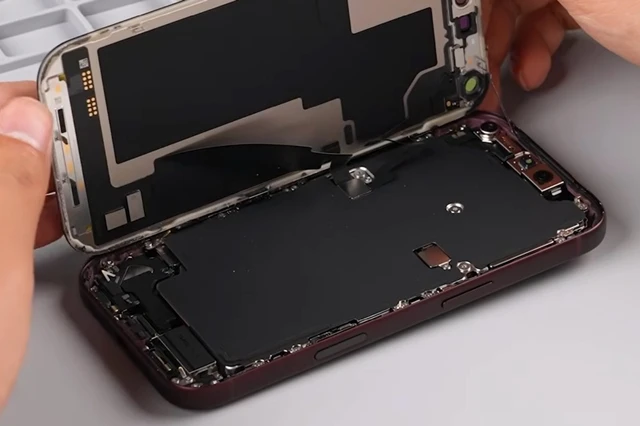
Initial deep-dive teardowns of the iPhone 18 Pro, published by the specialists at REWA Technology, shed light on how Apple managed to visually shrink the Dynamic Island. The solution is as elegant as it is technically sophisticated: the Face ID infrared camera has been migrated beneath the display surface, positioned in the upper-left corner.
Executing this shift required a fundamental redesign of the display matrix. A specialized pixel configuration was engineered above the infrared sensor to ensure high infrared transmittance. For the end user, this modification remains entirely transparent; from standard viewing angles, the screen maintains its characteristic uniformity and color accuracy, avoiding any visual anomalies in the sensor's operational zone.
Beyond the interface refinements, Apple has continued to evolve its imaging system. The primary camera module now features a 48MP sensor equipped with a variable aperture. This is a pivotal upgrade that elevates mobile photography toward professional-grade standards, allowing for precise control over depth of field and light intake—a difference most apparent in challenging lighting conditions or when capturing portraits with natural bokeh.
Intriguing details have also emerged regarding power management and regional variations. In models featuring a physical SIM tray, the battery capacity stands at 4,056 mAh. This figure is slightly lower than those found in versions destined for the US, Canadian, and Japanese markets, where Apple has fully transitioned to the eSIM standard. The removal of the physical tray has allowed engineers to optimize internal spatial efficiency, thereby increasing the volume of the battery cell.
Apple's connectivity strategy is particularly noteworthy. The compact iPhone 18 Pro utilizes Apple's proprietary C2 modem across all regions, underscoring the company's drive toward total vertical integration and independence from third-party vendors. However, the Pro Max segment reveals a divergence: while the C2 modem is deployed in most global markets, the US market remains reliant on Qualcomm's solutions. It is expected that US versions will feature the Snapdragon X80 or X85 modems, which currently remain the gold standard for 5G data speed and stability.
 Analog Aesthetics in Digital Execution