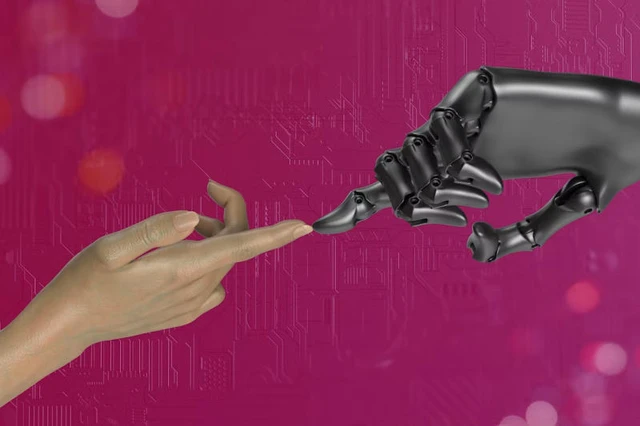
The global labor market is undergoing a fundamental transformation, as the traditional boundaries between skill levels begin to blur. Initial fears that generative AI would simply eradicate entry-level roles have evolved into an understanding of a far more nuanced process. Today, the barrier to entry has not merely been raised—it has fundamentally shifted in nature, requiring newcomers to possess competencies that were once the exclusive domain of seasoned professionals. At the heart of this transition lies the challenge of balancing technological efficiency with the preservation of foundational critical thinking.
For some time, the industry has grappled with a distinct paradox: while Large Language Models (LLMs) demonstrate staggering efficiency in handling entry-level drudgery, they often falter when faced with complex, multi-layered challenges. This initially led to a cooling period in junior hiring; however, the tide is turning. Companies have realized that young talent serves as the primary conduit for integrating AI tools into the corporate hierarchy, bringing with them an innate fluency in algorithmic interaction. According to data from Ramp, enterprises that have deeply integrated AI into their workflows are, conversely, hiring more aggressively.
Yet, this accessibility of tools has given rise to the "seniorization" of entry-level roles. Today, candidates for junior positions are increasingly required to possess data-driven decision-making skills and even elements of personnel management—competencies that, in 2019, were reserved for mid-to-upper management. Statistics show a 35% increase in such requirements within job postings. In this new reality, the traditional corporate pyramid is beginning to erode: middle managers are either evolving into "player-coaches" or becoming redundant altogether, as the productivity gap between a seasoned professional using AI and a junior specialist with the same tool continues to shrink.
Simultaneously, a serious risk of cognitive atrophy is emerging. When routine work is delegated to a machine, the novice loses the opportunity to learn through the trial-and-error process that builds professional intuition and critical thinking. This is particularly acute in the design industry: where a mistake in proportions was once a formative lesson for a designer, AI can now generate a visually flawless vehicle that completely lacks a radiator grille—a fundamental oversight that an inexperienced eye simply fails to notice.
Consequently, the value of "soft skills"—empathy, creative synthesis, and the ability to build social capital—has skyrocketed. Mentions of these qualities in job descriptions have increased two-and-a-half times, as they remain the final bulwark against total automation.
Parallel to this is an unexpected renaissance of the humanities. With the advent of AI agents capable of writing code, programming is losing its status as an elite skill and becoming a ubiquitous utility. Interdisciplinary thinking and social intelligence—traits traditionally associated with liberal arts graduates—are now taking center stage. This is shifting the very logic of academic preparation: while universities remain confident in the relevance of their curricula, employers continue to face a shortage of talent capable of effectively managing AI within real-world business processes.
The cycle of model iteration has become so breakneck that knowledge expires faster than an employee can master it. In this race, AI is beginning to function as a personal mentor, simulating complex case studies for lawyers or engineers to help them build competencies in a sandboxed environment.
The most progressive companies are moving toward the creation of "digital institutional memory." In sectors like logistics and consulting, AI is being trained on internal regulations and the tacit knowledge of retiring experts to ensure that critical insights do not vanish with the workforce. This radically transforms the onboarding process: newcomers no longer need to spend months "navigating the corridors" to find answers from colleagues—the knowledge base is now instantly accessible. Nevertheless, despite the power of automation, fundamental technical training and a deep understanding of physical or legal principles remain an essential foundation; without them, the use of AI becomes nothing more than a facade of professionalism.
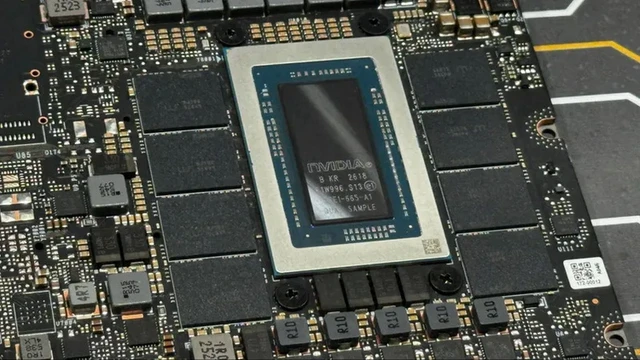 Nvidia N1X and the New Era of Arm PCs