The boundary between professional cinematography equipment and mobile devices is rapidly dissolving. The introduction of Honor’s Robot Phone signals a pivotal transition from software-driven stabilization toward comprehensive mechanical solutions, all delivered in a pocketable form factor. This is far more than just another flagship release; it is an audacious engineering venture aimed at weaving robotics into the fabric of a daily-driver device. The industry now stands at a threshold where the camera evolves from a static module into an active collaborator in the creative process.
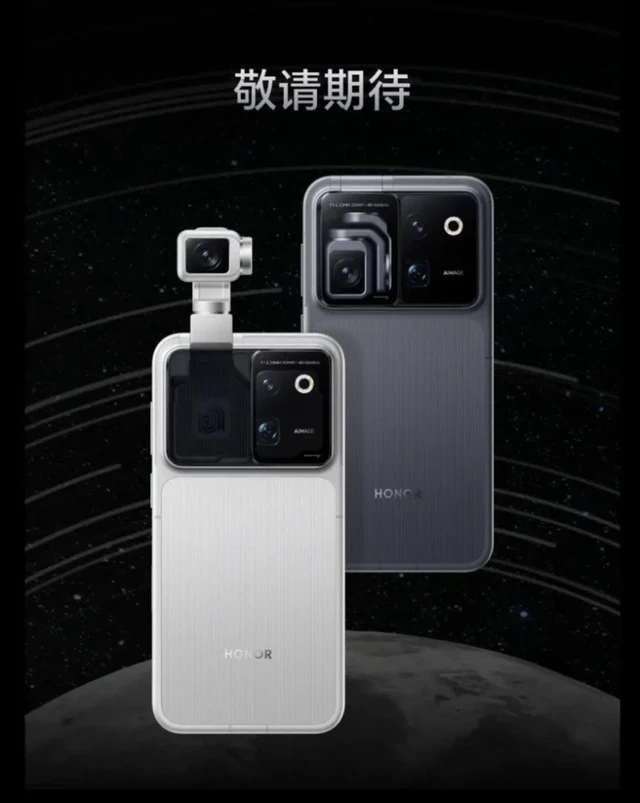
The Robot Phone made its public debut at MWC 2026, immediately distinguishing itself from the sea of generic glass slabs. The primary engineering challenge was the integration of a full four-degree-of-freedom (4DoF) gimbal, crafted from a lightweight yet durable titanium alloy. Unlike traditional external modules, this system is concealed within the chassis and deploys in just 0.8 seconds, transforming the smartphone into an active cinematography tool.
This architectural shift allows the device to achieve a CIPA 5.5 stabilization rating, effectively rendering external steadicams obsolete for dynamic content creation. Intelligent AI algorithms handle object tracking, ensuring a fluid motion and focusing precision previously reserved for specialized professional equipment.
The optical array is a powerhouse of high-resolution sensors. The primary module, featuring a 200MP sensor with an f/1.6 aperture, works in synergy with a 200MP periscope telephoto lens and a 50MP ultra-wide module. However, the true value lies not in the raw specifications, but in the partnership with the legendary ARRI. This collaboration enables support for professional Log-C color grading formats and LUTs, elevating mobile videography to the level of full-scale cinematic production.
Under the hood, the device aligns with its status as an uncompromising flagship. The system is powered by the Qualcomm Snapdragon 8 Elite Gen 5, providing the necessary computational overhead to process heavy video streams and run local neural networks. The visual interface consists of a compact display—approximately 6.3–6.4 inches with 1.5K resolution—maintaining ergonomic handling while ensuring high pixel density and minimal bezels.
Particular emphasis has been placed on the cognitive dimension. The local YOYO AI model does more than simply execute commands; it analyzes behavioral patterns and even the emotional context of the user's interaction. This evolves the smartphone into an adaptive assistant capable of anticipating the owner's needs. System autonomy is maintained by a battery supporting 120W ultra-fast charging, a critical requirement for a device featuring active mechanical elements and a power-hungry processor.
The Robot Phone's market rollout begins in China, where Honor has launched an extensive pre-order campaign. The strategy focuses on building a loyalty ecosystem: buyers gain not only access to exclusive YOYO AI SVIP services but also guaranteed technical support for the unique gimbal mechanism. Consequently, the device is positioned as an investment in a new standard of mobile imaging—one where hardware prowess and robotic precision converge into a single, seamless tool.
 Nvidia N1X and the New Era of Arm PCs