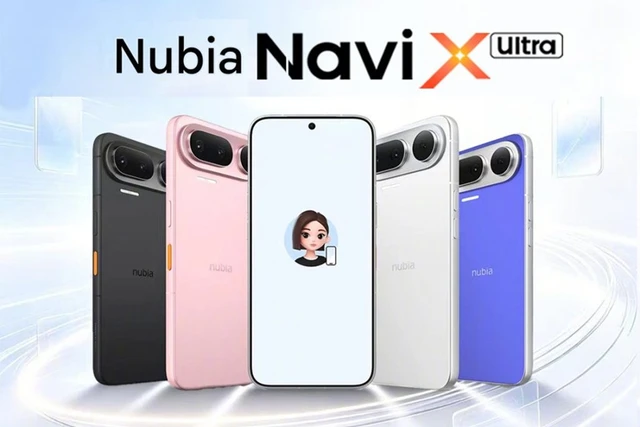
The contemporary smartphone industry is undergoing a fundamental paradigm shift: devices are evolving beyond mere gateways to connectivity, transforming into true cognitive partners. Central to this evolution is the emergence of AI agents—autonomous entities capable of orchestrating complex tasks on behalf of the user. Nubia’s new NaviX Ultra aims to set the gold standard for this approach, fusing uncompromising hardware with deeply integrated artificial intelligence. This is more than just another flagship release; it is a bold attempt to redefine the very nature of human-device interaction.
The defining characteristic of the NaviX Ultra is its radical approach to security and the speed of access to its intelligent features. For the first time in the industry, a dual biometric verification system has been implemented. A traditional Goodix ultrasonic scanner, integrated into the display, handles fundamental operations such as system unlocking and payments. However, interaction with the Doubao AI assistant is managed by a dedicated sensor embedded directly into the side power button. This configuration allows the user to authenticate instantly and initiate a dialogue with the neural network, bypassing standard unlock sequences and transforming AI access into an instinctive action.
The visual experience is driven by a cutting-edge OLED display featuring LTPO 2.0 technology. The 6.78-inch panel pairs an adaptive refresh rate of 1 to 144 Hz, ensuring a seamless balance between interface fluidity and power efficiency. A resolution of 2800 × 1260 pixels, combined with 10-bit color depth and full DCI-P3 coverage, renders the screen a professional-grade tool for content creation. Of particular note is the peak brightness of 4500 nits, which, coupled with 2160 Hz PWM dimming and a DC dimming function, minimizes eye strain even under extreme lighting conditions.
The device's architectural backbone is the 3-nanometer Snapdragon 8 Elite Gen 5 chipset paired with an Adreno 840 GPU. This combination delivers the massive computational throughput required to run heavy large language models (LLMs) locally. Memory is handled by modern LPDDR5X standards (up to 16 GB) and ultra-fast UFS 4.1 storage up to 1 TB, guaranteeing instantaneous system response during intensive multitasking.
The NaviX Ultra's imaging system is engineered for those with uncompromising standards for image quality. A 200 MP primary sensor with Optical Image Stabilization (OIS) provides exceptional detail, complemented by a 50 MP ultra-wide module and a 64 MP periscope telephoto lens, also equipped with OIS. A 32 MP front-facing camera rounds out the array, enabling high-quality content creation across all scenarios.
Battery endurance is supported by a behemoth 7100 mAh cell. This substantial capacity is offset by 90W fast wired charging and a 50W wireless standard, allowing users to maintain a high operational tempo without prolonged downtime at a power outlet. The audio system, featuring DTS: X Ultra support and a triple-microphone array, creates the necessary acoustic environment for high-fidelity voice interaction.
The software ecosystem, Nebula AIOS 2 (built on Android 16), transforms the smartphone into a full-fledged terminal for neural network operations. At its core lies a full-duplex voice model developed by ByteDance's Seed team. Unlike traditional assistants, this system enables fluid, organic conversation: users can interrupt the AI, pivot topics, or clarify details on the fly without needing to restart the speech stream.
Nubia's engineering refinements have significantly optimized speech recognition in challenging environments. Thanks to updated audio processing algorithms, voice identification latency in noisy locations—such as subways or train stations—has improved by 48%, while phrasing accuracy has increased by 21%. The system natively supports over ten regional dialects and offers flexible activation methods, ranging from voice commands to touch-controls via headphones.
The device's market positioning reflects its premium status. The base model, featuring 12 GB of RAM and 512 GB of flash storage, is priced at $893. A configuration with 16 GB of RAM and the same storage capacity costs $968, while the top-tier 1 TB variant reaches $1,117.
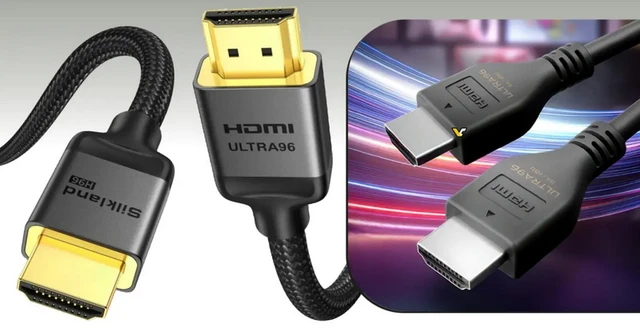 HDMI 2.2: The New Standard for Data Transmission