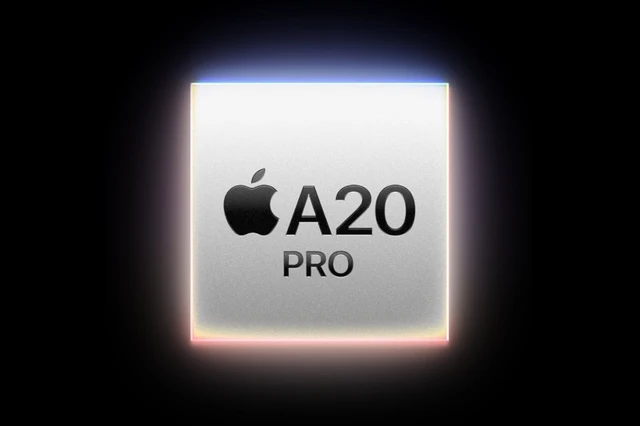
The semiconductor industry has reached a tipping point where raw clock speed is no longer the primary catalyst for innovation. Instead, the focus has shifted toward a profound synergy between transistor density, intelligent power management, and advanced thermal dissipation. The new Apple A20 Pro aims to redefine the boundaries of possibility, effectively transplanting desktop-class performance into a mobile form factor. This is more than a mere iterative update; it represents a strategic pivot toward the full-scale local execution of complex neural network models.
The leap to a 2-nanometer process has enabled Apple to architect the A20 Pro platform, fundamentally redefining the boundaries of smartphone performance. At the heart of the system lies a six-core CPU, anchored by two new desktop-class "super-cores." These high-performance blocks deliver a speed boost of up to 20%, allowing the device to tackle computationally intensive workloads that previously demanded the resources of a full-fledged PC. Complementing these are four efficiency cores, meticulously optimized to manage power consumption during background processes and light-use scenarios.
The graphics subsystem has undergone a comprehensive overhaul, evolving into a seven-core architecture. This transition has yielded a 40% increase in graphical performance, a leap most evident in demanding AAA games and rendering applications. However, the true breakthrough lies in the expanded memory bandwidth and the introduction of 8-bit floating-point (FP8) precision support. This shift is critical for deploying Large Language Models (LLMs), as it significantly reduces resource overhead without compromising accuracy, enabling sophisticated AI tools to run natively on-device without relying on cloud servers.
Particular attention has been paid to the Neural Engine, which has been scaled up to 32 cores. This twofold increase in raw throughput, combined with FP8 support, transforms the A20 Pro into a dedicated AI accelerator. To ensure this powerhouse doesn't encounter data bottlenecks, Apple has implemented the widest memory bus in the history of the iPhone lineup, guaranteeing the neural network near-instantaneous access to essential model weights.
Inevitably, increased transistor density and higher performance levels lead to greater thermal output. To combat thermal throttling—the forced reduction of clock speeds during overheating—engineers have reimagined the chip's packaging, drawing inspiration from the M-series silicon. The processor and memory modules now maintain direct contact with a vapor chamber that is three times larger than the one found in the iPhone 17 Pro. This advanced thermal management system allows the chip to sustain peak performance over extended periods.
The dividends of this engineering philosophy are clear in sustained-load benchmarks. The A20 Pro, powering the iPhone 18 Pro, demonstrates a 40% performance gain over its predecessor, the A19 Pro, and is twice as fast as the A18 Pro. In doing so, Apple is pivoting away from fleeting "peak" benchmarks toward stable, sustained power, effectively evolving the smartphone into a professional-grade workstation for data processing and artificial intelligence.
 A Comprehensive Refresh of Apple's Global Product Portfolio