The era of AI's meteoric rise is evolving from a phase of raw technological rivalry into a period of societal introspection. The spotlight is shifting away from the architects of the hardware and toward those defining the frameworks for human-algorithmic coexistence. The latest Time100 AI list vividly illustrates this pivot, notably omitting several of the industry's primary titans. This transformation signals the dawn of an era where social and legal leverage carries more weight than the mere possession of computational power.
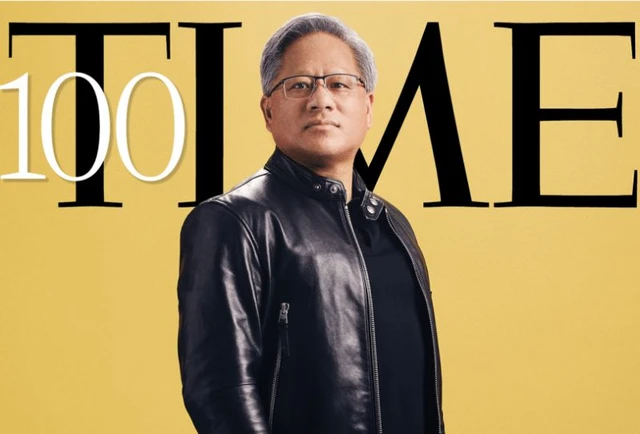
The tradition of business publications curating influence rankings often serves as a mirror for society's shifting priorities. For the past three years, Time has consistently included Jensen Huang, the helm of Nvidia, in its list of the 100 most influential people in AI. Yet, in the latest iteration of the Time100 AI, his name is conspicuously absent. The omission seems paradoxical: Nvidia remains the primary beneficiary of the current boom, and its accelerators are effectively the bedrock of the global AI infrastructure.
Huang is not the only industry titan left on the sidelines. The list also overlooks other stalwarts: Alphabet's Sundar Pichai, Microsoft's Satya Nadella, Meta's Mark Zuckerberg, Google DeepMind's Demis Hassabis, and AMD's Lisa Su. This radical pruning is the result of a shift in editorial paradigm. The Time100 AI has evolved beyond a mere directory of Big Tech CEOs; the curators now aim to highlight individuals who most accurately reflect the key trends of the last twelve months and define the trajectory of technological development and the ethics of its application.
Consequently, policymakers, public figures, and creative professionals now stand shoulder-to-shoulder with model developers. Nevertheless, the tech sector maintains a strong presence. The roster includes OpenAI's Sam Altman, Greg Brockman, and Mark Chen; Anthropic founders Dario and Daniela Amodei; as well as Elon Musk, Larry Ellison, and ByteDance chief Liang Rubo. The semiconductor segment remains prominent, featuring executives from IBM, Broadcom, and Micron, alongside SMIC's Liang Mongson.
Intriguingly, the editorial board acknowledges Nvidia's influence even in Huang's absence. Josh Payne, head of AI infrastructure operator Nscale, has made the cut. Time highlights the tight symbiosis between Nscale and Nvidia, noting that the chipmaker helps fund infrastructure expansion, which accelerates hardware deployment and broadens the client base.
The new ranking places a particular emphasis on "innovators" from the arts. Ben Affleck is included not as an actor, but as an active participant in the discourse on Hollywood's intersection with generative AI. His stance is pragmatic: he advocates for the integration of new tools into filmmaking while insisting on the establishment of rigorous content licensing mechanisms. In Affleck's view, AI will not replace cinema; rather, it will liberate creators from routine tasks and lower the barrier to entry for independent studios.
Joseph Gordon-Levitt echoes this sentiment as a co-founder of the Creators Coalition on AI—an organization dedicated to protecting creators' rights against the expansion of neural networks.
Another unexpected entry is Paris Hilton, whom Time categorizes as a figure shaping public perception of technology. Her role centers on the fight against deepfakes. Hilton is actively championing legislative initiatives to combat the creation and dissemination of synthetic imagery and video that utilize a person's likeness without consent.
The inclusion of Hollywood stars and activists in the Time100 AI does not signal a decline in the importance of technical leaders, but rather an expansion of the very concept of "influence." Today, influence encompasses more than just writing code, designing chips, or building data centers; it extends to shaping legislation, protecting copyright, and defining the moral boundaries of AI's role in modern society.
 Nvidia’s Big Bet on Physical Intelligence