The server computing landscape is currently undergoing a fundamental transformation, where core density and data processing efficiency have emerged as the primary benchmarks of competitiveness. Recent insights into the AMD Venice platform signal a significant technological pivot toward the Zen 6c microarchitecture. Preliminary benchmarks reveal an impressive surge in performance—one that transcends a mere quantitative scaling of resources. Yet, beneath these headline-grabbing figures lies a complex engineering struggle, necessitating a rigorous analysis of the testing environments.
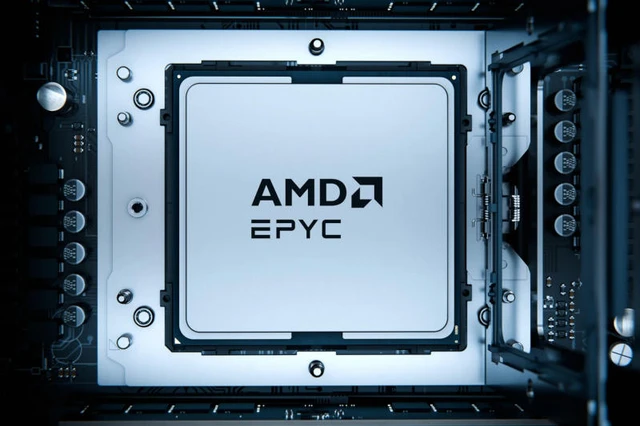
The modern race for data center performance has long evolved beyond mere clock speed increments. Today, success is defined by the synergy of core count, memory bandwidth, and instruction execution efficiency. New data on the Epyc Venice server processors confirm AMD's intent to solidify its leadership, leveraging the transition to Zen 6c to achieve a qualitative leap in integer processing.
In the SPECrate 2026_int_base benchmark—which evaluates overall system throughput under compute-intensive workloads—the flagship 256-core Epyc 9996 delivered a result 78% higher than the previous generation's 192-core Epyc 9965. At first glance, the gap appears massive, but a detailed analysis reveals that it isn't solely about core count. Since the core count increased by 33%, mathematical extrapolation indicates a per-core performance gain of approximately 34%.
It is crucial to understand that this figure does not represent a "pure" IPC (instructions per cycle) gain. In server platforms of this scale, the final result is shaped by a confluence of factors: clock speeds, power limits, and the efficiency of the memory subsystem. Nevertheless, the data clearly indicates that each individual Zen 6c core has become significantly more efficient than its predecessor.
When compared to its competitors, AMD claims a dominant advantage. In the same tests, the Epyc 9996 outperforms the Intel Xeon 6980P and Nvidia Vera by more than twofold in overall performance. Even in a constrained 96-core configuration, Venice demonstrates a per-core advantage of roughly 20% over Nvidia's 88-core solution.
However, professional scrutiny demands caution when interpreting these figures. The testing methodology was inconsistent: AMD utilized varying system configurations, and some competitor metrics were sourced from third-party data. Particular attention should be paid to the software stack. In certain scenarios, the GCC 16.1 compiler—which includes specific optimizations for Zen 6—was used, whereas Nvidia's solutions were tested on version 15.2. This creates a distinct bias in AMD's favor, as a more recent compiler can generate more efficient machine code.
The power profile also plays a pivotal role. In the 96-core tests, AMD set a power limit of 600W, significantly exceeding the standard 500W for production high-frequency models of this configuration. Consequently, a portion of the performance gain was achieved through power over-provisioning, which may not be feasible in real-world operational environments.
Parallel to raw compute power, data handling remains critical. In the STREAM benchmark, which focuses on memory bandwidth, the Epyc 9996 (in 96-core mode) outperformed Nvidia Vera by 18%. On a per-core basis, the advantage was 8%. This is a significant signal, given that Nvidia's solutions previously demonstrated exceptional efficiency in such scenarios.
Beyond synthetic benchmarks, AMD demonstrated Venice's capabilities across real-world enterprise workloads: from database management and Java applications to cryptographic algorithms. In the High-Performance Computing (HPC) segment, the new Epyc also left Intel's Granite Rapids-AP flagship in its wake, establishing a substantial lead before the arrival of the next-generation Diamond Rapids, expected only in 2027.
Of particular interest is the platform's adaptation for "Agentic AI" tasks. Testing included the NGINX web server, FAISS vector search, and complex multi-agent AI interaction scenarios. While some results (such as those derived from TPC-H and TPC-C) remain preliminary and cannot be directly compared with official registries, the general trend is clear: AMD is building a universal tool for the era of generative intelligence.
In summary, it is evident that Epyc Venice represents a significant leap forward. Despite certain "marketing" adjustments to the testing conditions, the technological foundation of Zen 6c looks promising. However, it is worth remembering that the success of Zen 6c server chips does not guarantee an automatic transfer of these metrics to consumer Zen 6 processors, which will operate under different power efficiency and clock speed targets.
 Breaking the Lithography Barrier in China