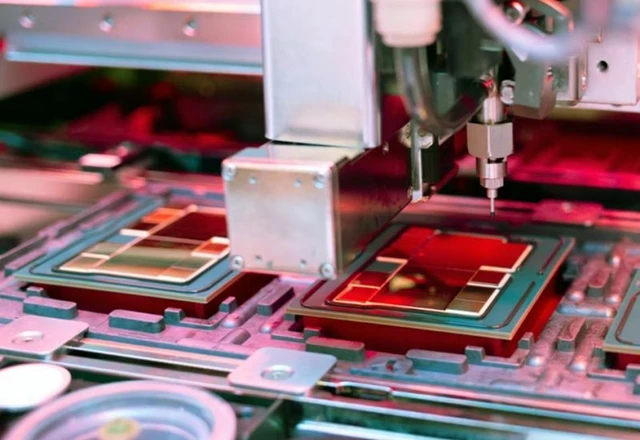
Modern robotics is driven by a relentless pursuit of full autonomy, a goal that necessitates migrating massive computational power directly onto the hardware. Nvidia is addressing this challenge by distilling the cutting-edge capabilities of its Blackwell architecture into compact form factors. The new Jetson Thor platforms are engineered to blur the line between cloud computing and edge intelligence—a pivotal strategic move toward the realization of truly autonomous intelligent agents.
The artificial intelligence industry is undergoing a pivotal transition, shifting from centralized data centers toward distributed edge computing (Edge AI). In this landscape, the unveiling of the new Jetson Thor T3000 and T2000 platforms marks a watershed moment. Nvidia is not merely refreshing its hardware lineup; it is migrating the raw power of its latest Blackwell GPU architecture into compact systems tailored for robotics and industrial automation.
The flagship Jetson Thor T3000 is a masterclass in engineering. At its core lies a synergy between the Blackwell GPU and an eight-core Arm Neoverse CPU, delivering a staggering performance of 865 FP4 TFLOPS. The adoption of the FP4 format (4-bit floating point) represents a critical trend in modern deep learning: it enables a radical increase in data processing speeds and a significant reduction in power consumption without compromising model accuracy.
The technical stack is further bolstered by 32 GB of high-speed LPDDR5X memory with a bandwidth of 273 GB/s—a specification critical for running Large Language Models (LLMs) and complex, real-time computer vision systems. Furthermore, a network interface supporting speeds up to 25 Gbps ensures seamless integration into enterprise infrastructures or large-scale robotic fleets.
Particularly noteworthy is the T3000's efficiency compared to its predecessor, the T5000 module. Nvidia has managed to halve both the physical footprint and power consumption while maintaining comparable performance in natural language processing and physical system modeling. This evolution means robots will become lighter and more autonomous, capable of executing complex cognitive tasks without relying on a constant tether to a remote server.
For applications where extreme compute density is not the primary requirement, Nvidia offers the Jetson Thor T2000. Delivering 400 FP4 TFLOPS with 16 GB of memory, this module targets the mass market: autonomous delivery robots, industrial manipulators, and automated quality control systems. It is a balanced solution for scenarios where cost-effectiveness must be weighed against high-level intelligent data processing.
The rollout of these platforms will be phased. To allow developers to adapt their algorithms before the hardware arrives, Nvidia is providing emulation tools via JetPack 7.2.1, based on the current AGX Thor kit. This enables engineers to program behavioral logic and optimize neural networks today, while the mass production of T3000 and T2000 hardware modules is slated for the first quarter of 2027.
Ultimately, Jetson Thor serves as the foundation for the next generation of autonomous machines, evolving them from simple command-executors into fully realized intelligent agents capable of independent environmental analysis and decisive action.
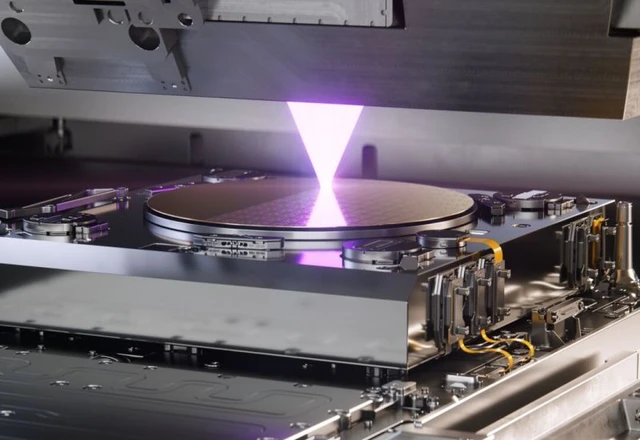 The Horizon of China's Technological Sovereignty in Lithography