The modern market is saturated with "smart" gadgets that, upon closer inspection, are little more than expensive interfaces for accessing remote cloud models. The true technological inflection point, however, lies in the migration of computation directly to the end device. Edge AI solves the fundamental challenges of latency, power efficiency, and data privacy. In this shift, local neural networks are ceasing to be mere diminished copies of their cloud-based counterparts, evolving instead into independent engines of autonomy.
The wearable and "smart" accessory market currently feels like a showcase of marketing hyperbole. Smart glasses, sensors, and even specialized buttons are frequently positioned as the embodiment of artificial intelligence, yet upon closer inspection, they often reveal themselves to be mere hardware wrappers for familiar applications. The core issue is a deficit in computational power: compact form factors simply cannot house the hardware necessary to run even Small Language Models (SLMs), let alone the industry giants. At best, these devices serve as intermediaries, relaying requests to a smartphone or directly to cloud systems like Claude or GPT.
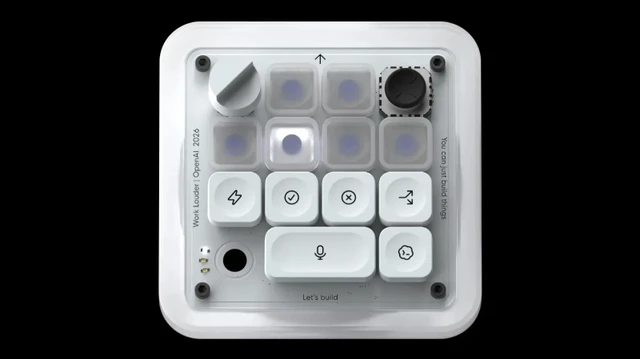
A prime example of this approach is OpenAI's Codex Micro. Despite its status as a commercial product, the device is essentially a physical interface for managing ChatGPT on a PC. It is a "smart keyboard" with lighting that signals data processing states—it spares the user from switching windows, but adds no inherent intelligence to the system.
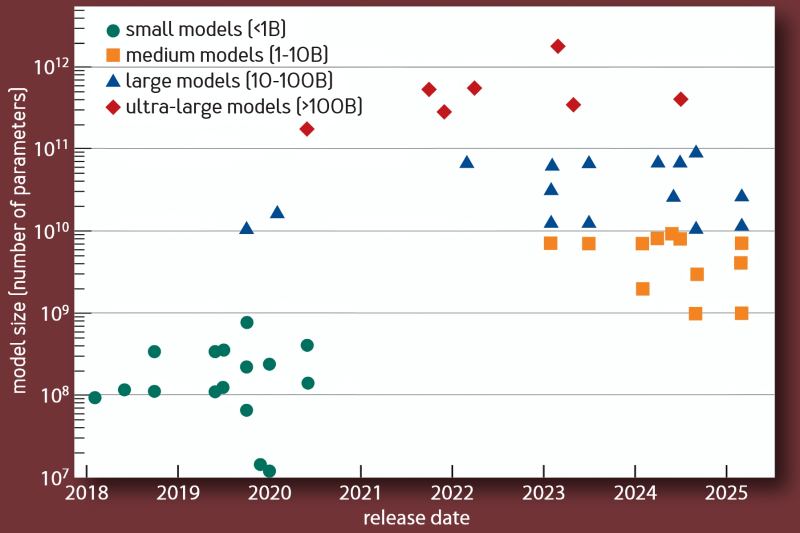
The pursuit of the universality offered by Large Language Models (LLMs) drives developers to create convenient "shims" between the user and the cloud. However, this does not mean local computation is destined for secondary status. The field of Edge AI proves that complex models can operate effectively outside the cloud—within video cameras, sensors, and IoT elements. Here, universality is sacrificed for efficiency, a trade-off that proves more justifiable in real-world scenarios.
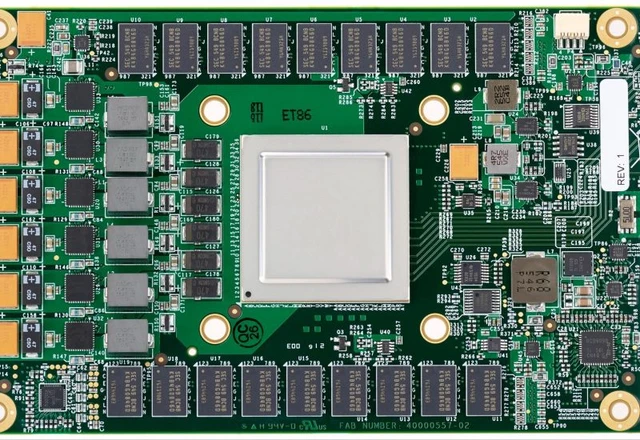
Local intelligence relies on specialized hardware: GPUs, Neural Processing Units (NPUs), as well as ASICs and FPGAs. This foundation supports not only compact versions of general-purpose language models but also specialized neural networks—spiking, recurrent, and convolutional. The shift toward local execution is driven by three critical factors: latency, energy, and autonomy.
Latency—the delay between request and response—is decisive for industrial robotics, security systems, and autonomous transport. Even a minimal lag in cloud communication can be unacceptable in situations requiring instantaneous reactions. From an energy perspective, specialized small networks implemented at the silicon level are orders of magnitude more efficient than "cloud monsters," which consume massive resources to process every single token. Furthermore, a local perimeter guarantees data privacy, which is critical for both the corporate sector and private life.
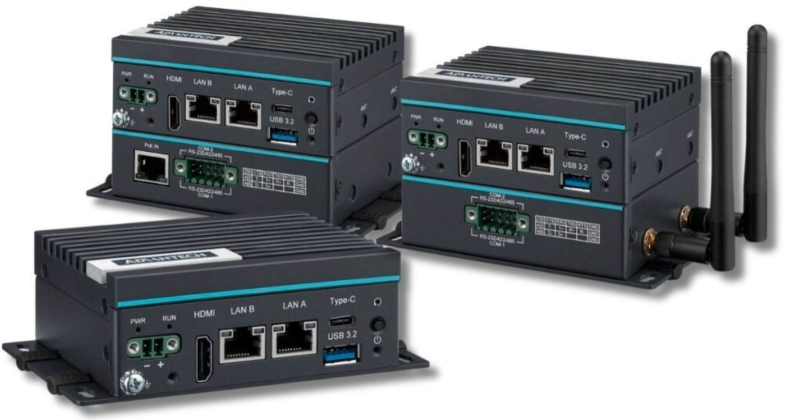
The spectrum of devices implementing local AI can be divided into several key categories. First are industrial edge gateways. Essentially, these are ruggedized routers that bridge Information Technology (IT) with Operational Technology (OT). They process data "on the fly," enabling real-time machine vision and predictive equipment analysis directly on the production line, bypassing the need to send data to the cloud.
The second category comprises autonomous transport and robotics. Here, local AI is non-negotiable: the physical world cannot wait for a server response while a drone or vehicle processes data streams from lidars and cameras. Performance requirements in this segment are colossal—ranging from 30 to 1,000 TOPS. This race is contested by platforms like Nvidia Drive, Qualcomm Snapdragon Ride, and Tesla's proprietary solutions, where computational power directly defines the vehicle's level of autonomy.
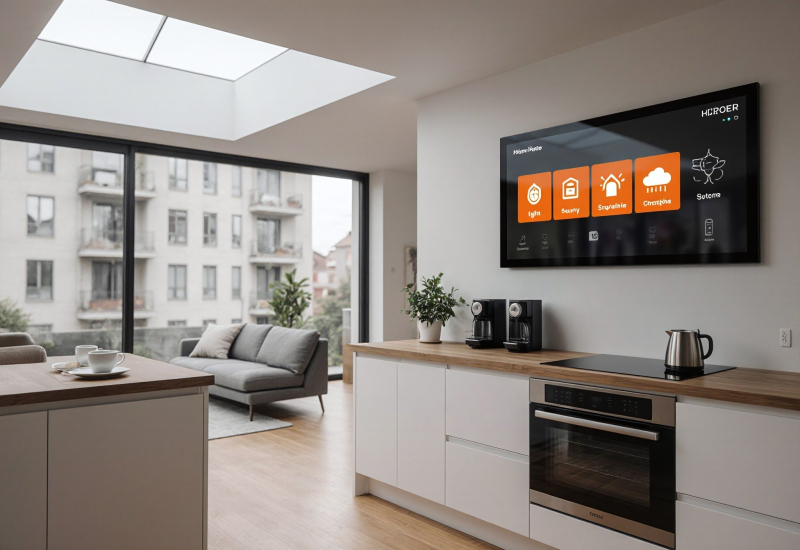
The third category encompasses smart home elements. While full-scale intelligence in a microwave may seem redundant, local processing of voice commands and image recognition in cameras significantly enhance home security and privacy. However, an economic paradox emerges here: the cost of deploying intelligent systems often outweighs the actual benefit of energy savings, especially when services are provided via a subscription model.
Finally, wearables—such as watches and fitness trackers—utilize neural processors to monitor biometric indicators. Local computation is preferred over the cloud not only for battery preservation but for reliability: eliminating the radio communication channel reduces the risk of failure when monitoring vital bodily functions.
Smartphones and personal computers occupy a special place in this ecosystem. Thanks to the Apple Silicon architecture, modern Macs can run models with over 100 billion parameters by leveraging unified memory. In the x86 world, the situation is more complex: AI models are limited by the VRAM of graphics adapters, necessitating either expensive hardware or the use of quantization methods.
In ARM-based smartphones, the situation is more standardized. RAM capacity determines the device's capabilities: flagships with 8–12 GB of RAM can run modern multimodal models like Gemma 4 or Qwen 3, while budget devices are limited to models with fewer than 1 billion parameters.
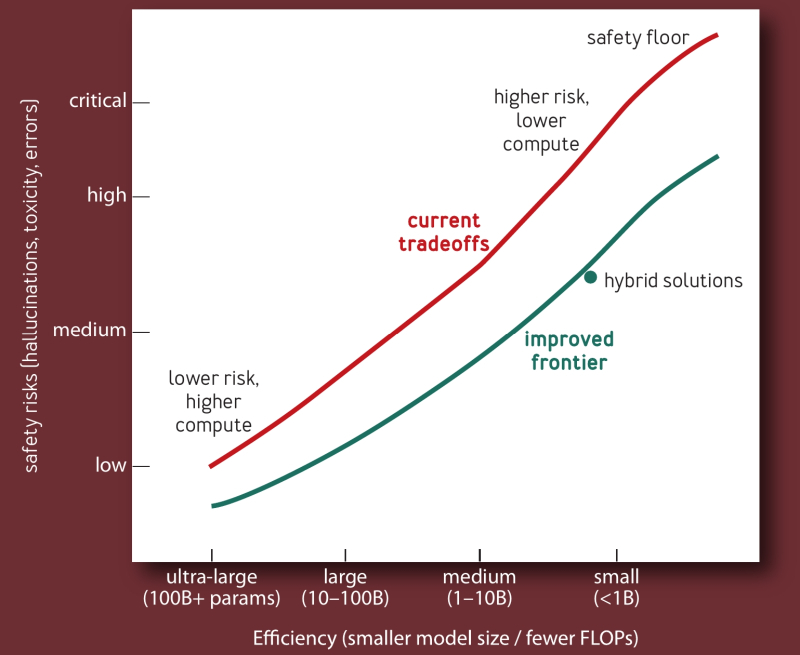
It is important to understand that Small Language Models (SLMs) are not simply "trimmed" versions of LLMs. They undergo processes of distillation and quantization, where weights are replaced by integer representations (INT4 or INT8), radically reducing memory requirements. Despite lower precision, SLMs are indispensable in tasks where speed is paramount. Local model latency ranges from 25–100 ms, compared to 300–800 ms for cloud systems. This difference is critical for creating the illusion of live communication; any stutter breaks the sensation of interacting with an intelligent interlocutor.
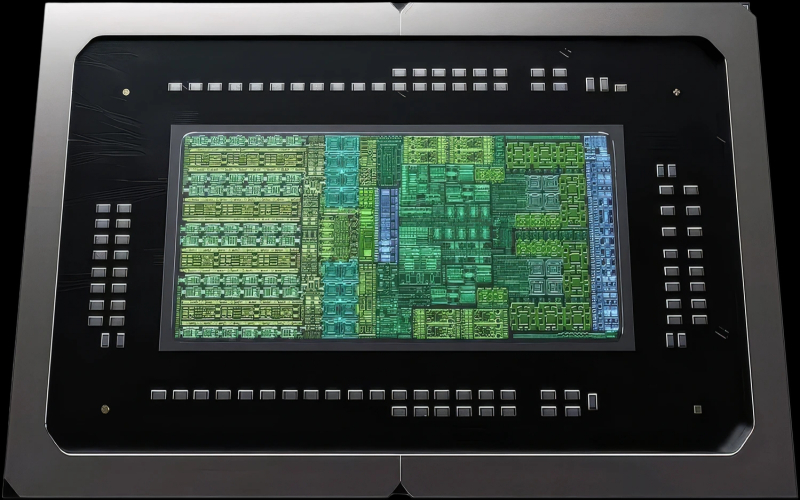
The future promises even deeper integration. We expect the emergence of new ARM chips, such as the Nvidia RTX Spark, designed specifically for local AI agents with performance up to 1 PFLOPS. This will lead to a hybrid model: local systems will handle fast, confidential, and routine tasks, while cloud giants manage complex, resource-intensive computations requiring deep logic.
At the lowest level of the hierarchy lies TinyML—microscopic models running on microcontrollers with negligible memory (up to 256 KB). These are no longer language models in the traditional sense, but rather specialized classifiers that identify specific patterns or signals.
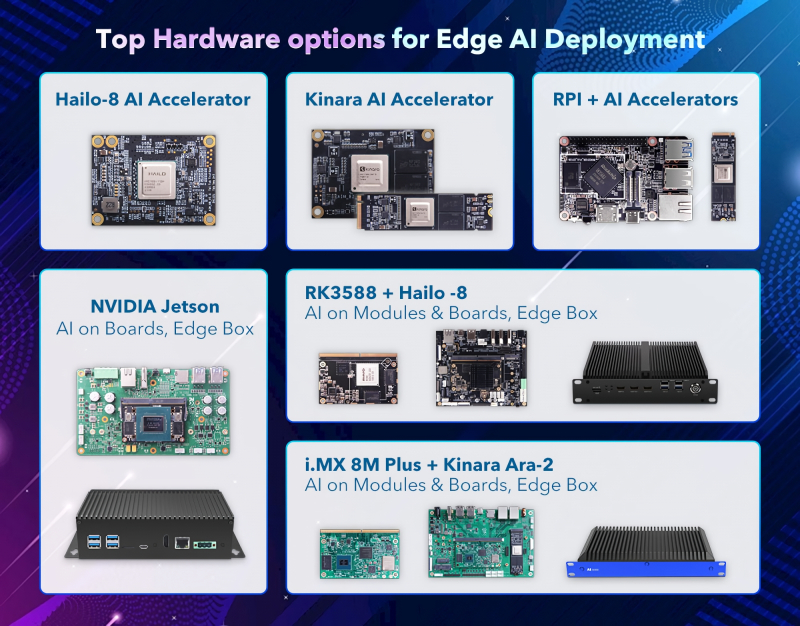
To implement such tasks, developers use either ASICs (Application-Specific Integrated Circuits), which are maximally energy-efficient but fixed, or FPGAs (Field-Programmable Gate Arrays). The latter are indispensable in robotics, aerospace, and defense, as they allow the hardware logic to be reconfigured directly on the device, adapting the model to changing real-world conditions.

Local intelligence is not a temporary measure until the era of the "omnipotent cloud" arrives, but a necessary tool for autonomy. The balance between local computation and cloud services will become the industry standard, where efficiency and privacy take precedence over absolute universality.
 The Price of Acceleration: CXMT’s Rapid Push into Memory