The leap from laboratory prototypes to mass production has become the critical inflection point for the entire modern robotics industry. While countless firms promise a humanoid future, only a select few possess the infrastructure required to realize it at an industrial scale. UBTech’s new facility in China embodies a paradigm shift where machines transcend their role as mere tools to become the architects of their own successors. This transition marks the dawn of an era defined by the fully integrated, intelligent manufacturing of humanoid systems.
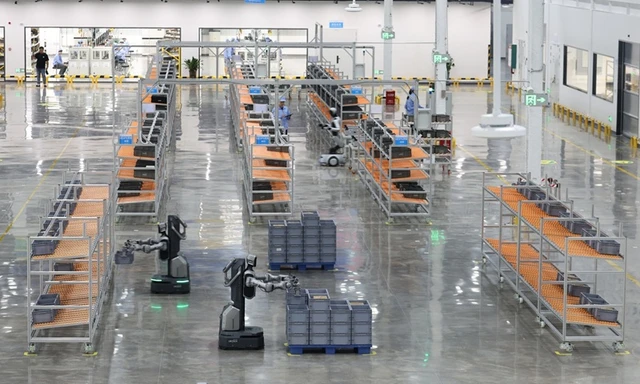
For too long, the robotics industry has been trapped in "demonstration cycles," where flashy prototype videos were followed by years of glacial refinement. However, the launch of UBTech's production complex in Liuzhou shifts the conversation from engineering feasibility to operational efficiency. Spanning 14,000 square meters with ceilings nearly 14 meters high, the facility is designed not merely as an assembly plant, but as a cohesive, living organism with an annual capacity of 10,000 units. The production cadence is striking: an industrial humanoid rolls off the line every 10 minutes.
At the heart of this process is the deep integration of digital and physical systems. In partnership with Siemens Digital Industries Software, UBTech has developed a management ecosystem that serves as a comprehensive "Digital Twin" of the entire enterprise. This intelligent "brain" coordinates everything from order scheduling and material allocation to rigorous quality control. Particular emphasis is placed on traceability; a "one product, one code" system allows the lifecycle of every robot to be tracked via a unique serial number—a critical requirement for subsequent maintenance and software updates.
The production lines are focused on the Walker S and Cruzr series, embodying the principle of "robots building robots." Specialized models, such as the Cruzr Y1 and Cruzr S2, handle routine material handling and pallet operations. Final assembly is a symbiosis of high-precision technologies: collaborative robots (cobots) and power-assisted manipulators work in tandem with autonomous guided vehicles (AGVs). The use of 360° rotary workstations enables precision assembly from any angle, eliminating the need to move the product itself and providing the flexibility to produce various machine types on a single line.
Quality control at the plant mirrors automotive-grade standards. Each humanoid undergoes comprehensive testing lasting over four hours. The final touch is a passage through a specialized light tunnel, designed to detect the slightest exterior imperfections, ensuring a flawless product finish.
The project's logistics have also received a technological overhaul. UBTech has implemented the industry's first fully automated high-bay warehouse. Within a footprint of just 65 square meters, the system accommodates 112 robots, increasing space utilization efficiency by over 50%. This entire mechanism is supported by a network of AGVs and autonomous forklifts, linking assembly nodes, testing zones, and storage into a single, seamless flow.
UBTech's scaling comes amid an exponential surge in the regional robotics market. According to data from the National Bureau of Statistics of China, industrial robot production is showing steady double-digit growth; in the first seven months of this year alone, output exceeded 635,000 units. In this context, the transition to mass-produced humanoids appears not merely as the ambitious project of a single company, but as a logical stage in the evolution of the global industrial landscape.
 The Commercial Debut of the Googlebook Ecosystem