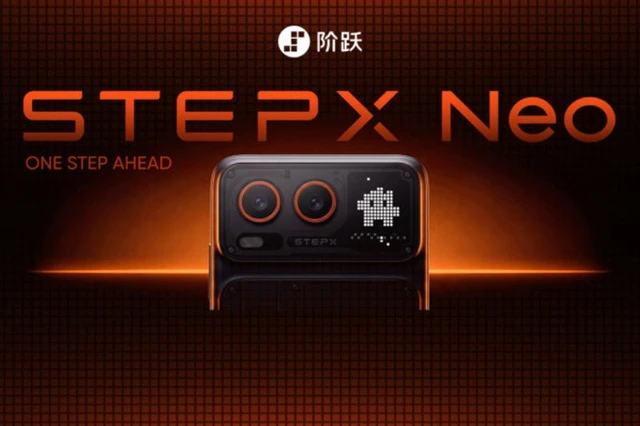
The modern smartphone experience is defined by fragmentation; every objective requires the launch of a discrete application and manual process management. Yet, the industry is shifting toward an "intent-centric" philosophy—one where the interface recedes, yielding to an intelligent intermediary. StepFun has entered this fray with the StepX Neo, a device that fundamentally reimagines our interaction with mobile electronics. At its core lies an AI agent capable of autonomously orchestrating complex, multi-step workflows, effectively transforming the smartphone from a mere toolkit into a sophisticated digital surrogate.
The fundamental flaw in contemporary operating systems is that AI functionality is often fragmented across disparate services and buried deep within settings, creating significant cognitive load for the user. StepX Neo proposes a radical departure from this impasse. Rather than forcing the user to juggle multiple windows, the device delegates task execution to an AI agent called Step Amoo. This agent is integrated directly into Step AOS—an operating system built on an open Android foundation—functioning as an autonomous orchestration layer.
The critical distinction between Step Amoo and conventional chatbots lies in its capacity for agency. It does not merely offer suggestions; it actively interacts with applications, web services, and system tools until a task is fully resolved. Furthermore, the system operates in a completely autonomous mode, eliminating dependence on constant connectivity and enhancing data privacy. Over time, the agent constructs a sophisticated profile of user preferences—remembering which airlines allow pets or which restaurants the user prefers for bookings—effectively transforming routine searches into automated workflows.
This concept proves particularly potent in travel scenarios. StepX Neo assumes the role of a universal translator and logistics coordinator, supporting 32 languages in real-time—ranging from voice calls to the analysis of road signs and museum placards. Even in environments with zero cellular connectivity, the device can analyze routes and provide transit schedules. Moreover, the agent absorbs the bureaucratic overhead: assisting with customs declarations, monitoring visa requirements, and managing flight check-in windows become background processes that require no active human intervention.
At its core, Step AOS utilizes a hybrid architecture combining components of Android, Linux, and RTOS. To manage these functions efficiently, it employs the MCP protocol, which segments system capabilities into four functional blocks: connectivity, applications, files, and system tools. The AI agent seamlessly combines these blocks to achieve a given objective. Interaction is handled via a Natural User Interface (NUI), which analyzes voice and visual commands. This effectively renders traditional device management obsolete; the user simply expresses an intent, and the system determines the optimal path to execution.
The technical implementation of memory in StepX Neo is split into two circuits: the user circuit and the agent circuit. The latter operates on a "capture—comprehension—retention" pipeline, allowing the system to contextualize information effectively. To optimize resources, a multi-tiered decision-making mechanism has been implemented. Simple, everyday queries are handled by lightweight, high-speed models, while complex analytical tasks are routed to resource-intensive neural networks.
Security concerns are addressed through Trusted Execution mechanisms and detailed audit logs. The system grants access to data only at the moment of necessity and instantly revokes permissions upon task completion. Any erroneous action taken by the agent can be annulled with a single touch, ensuring a necessary level of human oversight over the autonomous intelligence.
To maximize functionality, StepFun has integrated the system with major services such as Ctrip, Alipay, Didi, Meituan, WPS, and CapCut. This transforms the smartphone into a single point of access for payments, ride-hailing, productivity, and content creation, where each application serves merely as a backend for the AI agent's actions. Consequently, StepX Neo signals a paradigm shift from the "human manages the app" model to one where the "human defines the goal—the agent executes it."
 Intel’s Strategic Play for Advanced Packaging Supremacy