For decades, the debate surrounding the true environmental impact of electric vehicles has remained one of the most contentious issues in the transportation industry. Skeptics frequently point to the energy-intensive nature of battery production and the carbon footprint of power grids, casting doubt on the actual efficacy of the "green transition." However, a recent study from the Massachusetts Institute of Technology (MIT) brings much-needed clarity to the matter, confirming the systemic superiority of electric drivetrains over traditional internal combustion engines. The data analysis demonstrates that the shift toward these new technologies genuinely reduces the planetary burden, regardless of the existing variables.
Research conducted by MIT scientists reinforces a fundamental thesis: electric vehicles (EVs) and hybrid powertrains are significantly more environmentally sustainable than internal combustion engine (ICE) vehicles. On average, the transition to electric propulsion yields an emission reduction ranging from 40% to 60%. However, this figure is not a constant; it is subject to substantial fluctuations based on several external variables.
The pivotal parameter determining overall ecological efficiency is the regional energy mix. While an EV generates zero tailpipe emissions, its footprint is inextricably linked to how the electricity powering its battery is produced. This "carbon intensity" of the power grid accounts for the wide variance in performance: in certain scenarios, annual savings in CO2 equivalent can range from negligible amounts to an impressive 4,700 kg. Consequently, as global energy systems undergo decarbonization and shift toward renewable sources, the environmental profile of EVs will improve organically, without requiring any modifications to the vehicles themselves.
Regional context also plays a critical role. In dense urban environments, plug-in hybrids demonstrate peak efficiency, achieving emission reductions of 80–90% compared to traditional transport. In rural areas, where distances are greater and charging infrastructure may be less accessible, this figure drops to 60%, provided the battery is regularly recharged. Individual driving style serves as an additional variable, directly impacting energy consumption and, by extension, the volume of indirect emissions.
The challenge of operating in extreme climates warrants separate consideration. There is a prevailing notion that severe cold negates the advantages of electric cars. Indeed, at critically low temperatures, battery efficiency can plummet to 50%, rendering them less competitive than ICE vehicles in the short term. However, over the course of a calendar year, such anomalies are rarely persistent, and their impact on overall annual averages remains marginal.
In the long term, the trend toward reducing the carbon footprint of electricity observed over the last decade promises even more radical emission cuts. If the current trajectory of grid cleaning persists, the actual environmental dividends from EV adoption could significantly exceed current projections, definitively cementing electric transport as the primary instrument in the fight against climate change.
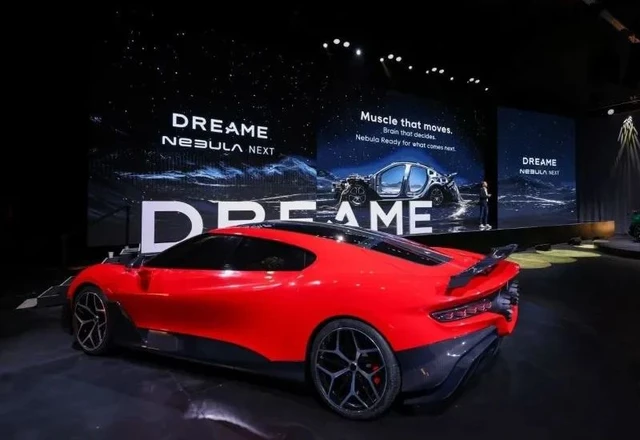 The Shattered Illusion of the Dreame Jet Hypercar