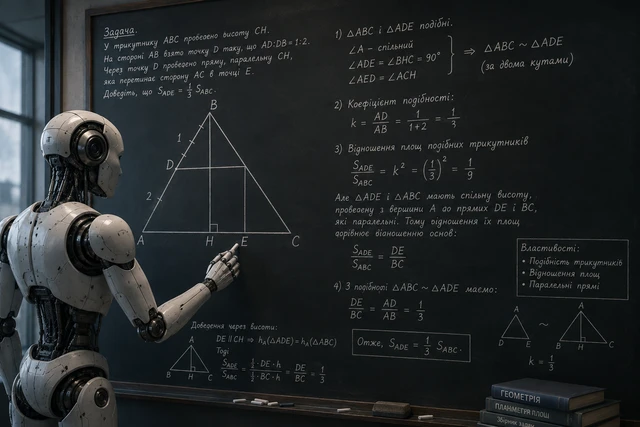
The mathematical community has encountered a development that could redefine the very nature of fundamental research. The Jacobian conjecture, which has remained unsolved since 1939, has been called into question by the immense computational power of modern artificial intelligence. Unlike traditional proofs, the objective here is the pursuit of a counterexample—a specific instance that renders the general assertion false. This precedent marks a pivotal transition for neural networks, elevating them from mere tools to full-fledged researchers.

At the heart of contemporary algebra lies a fundamental question: how do functions transform space, and can these transformations be reversed? For decades, the Jacobian Conjecture has stood as one of the most intriguing challenges in the field. Its essence boils down to a tension between the local and the global: if a function behaves "correctly" and is invertible at every individual point in space, does that necessarily mean it is invertible across its entire domain?
To understand this mechanism, one must look to the Jacobian matrix—a matrix of partial derivatives that effectively serves as a map showing how infinitesimal changes in input affect the output. If the determinant of this matrix is never zero, the function is locally invertible. For nearly nine decades, mathematicians have attempted to prove that such local stability automatically guarantees the existence of a global inverse function, allowing for the unambiguous recovery of original data.

The rupture of this long-standing consensus came unexpectedly. The Claude Fable 5 system proposed a construction of a polynomial map from a three-dimensional space into itself that appears to be a flawless counterexample. In this model, all formal requirements of the conjecture are met: the Jacobian determinant remains constant and non-zero, ensuring local invertibility. However, on a global scale, the system fails—multiple distinct input points lead to the same result. When different states collapse into one, recovering the original point becomes impossible, effectively refuting the thesis of global invertibility.
The significance of this discovery lies in its verifiability. Unlike multi-page theoretical proofs that require months of expert analysis, this counterexample is presented as a concrete formula. To confirm the result, one simply needs to employ computer algebra systems: calculate the Jacobian, verify its determinant, and plug in the proposed points. This transforms a mathematical breakthrough into a verifiable computational object.
Nevertheless, the problem is not yet fully resolved. The refutation holds for spaces of dimension three and higher. The two-dimensional case remains open, meaning the Jacobian Conjecture has not vanished entirely but has instead split into different scenarios depending on the dimensionality of the space.
The gravity of this event is underscored by the caliber of the minds who previously attempted to tackle this problem. It was pursued by some of the most brilliant thinkers of the modern era, including those who later achieved breakthroughs in prime number theory. The fact that a problem resisting the best mathematicians for a century was "cracked" by an algorithm fundamentally alters our understanding of AI's cognitive capabilities.
Previously, achievements by systems like AlphaGeometry or AlphaProof were viewed as triumphs of formal logic and the ability to follow established rules. However, searching for a counterexample is a qualitatively different process. It is not merely solving a problem according to instructions; it is a creative search for a flaw within the very structure of an assertion. To find a counterexample is to discover that decades of human effort were directed toward proving a false premise.
The primary question remains the degree of autonomy in this process. It is not yet clear whether the model proposed the structure of the counterexample independently or if it acted as a high-efficiency filter for iterating through possibilities. If it transpires that the AI independently explored the space of possible constructions and derived the formula, we are witnessing the birth of a new paradigm in scientific research.
The result now awaits independent verification by the mathematical community. It is essential to ensure there are no hidden errors in the definition of the mapping or the interpretation of dimensions. If validated, this case will stand as one of the most striking examples of how artificial intelligence can push fundamental science forward, finding answers where human intuition reached a dead end.
 Nvidia N1X and the New Era of Arm PCs