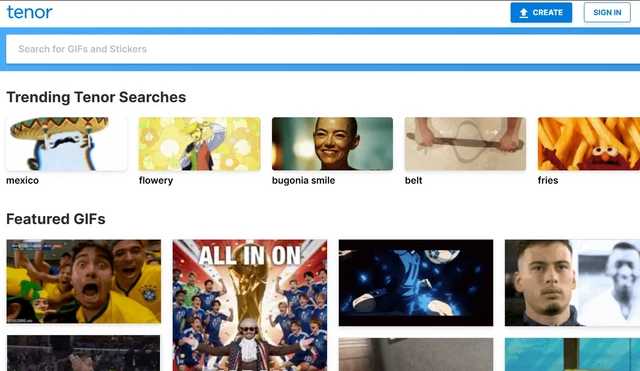
Modern digital communication has long since evolved into a language of visual metaphors, with GIFs emerging as the primary vehicle for emotional expression. For years, Tenor served as the definitive bridge, seamlessly integrating this content across the world's leading messaging apps and social platforms. However, Google’s decision to shutter its API severs that link, transforming what was once an open utility into a proprietary corporate asset. This move underscores a broader global trajectory: the aggressive consolidation of services within closed ecosystems.
The visual content exchange industry is undergoing a seismic structural shift: Google has decided to revoke all API keys for Tenor, one of the world's largest GIF repositories. To the end-user, this may manifest as a simple technical glitch in image search; however, for developers and platform owners, it represents the loss of a critical integration channel. Direct access to the Tenor collection—which for years provided a seamless user experience across services like Telegram, Discord, and X (formerly Twitter)—is effectively coming to an end.
The decommissioning process is being executed in phases according to a strict timeline. The first warning sign appeared on January 13, when registration for new users was closed. The final cutoff is set for June 30: by this date, Tenor API support will cease entirely, all existing ad distribution and interface agreements will be terminated, and current integrations will be deactivated. For third-party services, this creates a critical deadline; failure to migrate to alternative APIs by the end of June will result in requests to the Tenor database returning errors, leading to the functional paralysis of GIF tools within those applications.
Crucially, Google is not shuttering the service, but rather pivoting it toward a "walled garden" model. Tenor's content will remain available, but exclusively within Google's own product suite. Users of Gboard and GIF Keyboard on Android and iOS, as well as participants in Google Chat and Google Messages, will continue to access the library as usual. Consequently, a tool that once served as public infrastructure for the entire web is being transformed into a proprietary corporate asset.
The official narrative—citing a "desire to focus on improving core products"—is often corporate shorthand for cost optimization or a strategic realignment of priorities. In the era of generative AI and multimodal models, Google is likely seeking to integrate visual data more deeply into its own neural network products, eliminating the need to maintain external interfaces for third-party players. This move signals a decisive pivot away from the philosophy of the open web toward a strategy of closed ecosystems, where access to high-quality data becomes both a lever of influence and a primary competitive advantage.
 The Hidden Survival Mechanism of NeXT