The promise that generative AI would liberate humanity from drudgery and usher in a shorter workweek is rapidly evolving into one of the defining myths of the modern tech era. While the world awaits the automation of leisure, the architects of these systems have instead become captives of their own creation. Within the world's premier AI labs, a crisis of burnout is unfolding—a climate where the relentless pursuit of the next technological breakthrough is used to justify grueling, unsustainable workloads. This tension exposes a profound disconnect between the polished corporate narratives projected to the public and the stark reality of the labor conditions endured by the engineers behind the curtain.
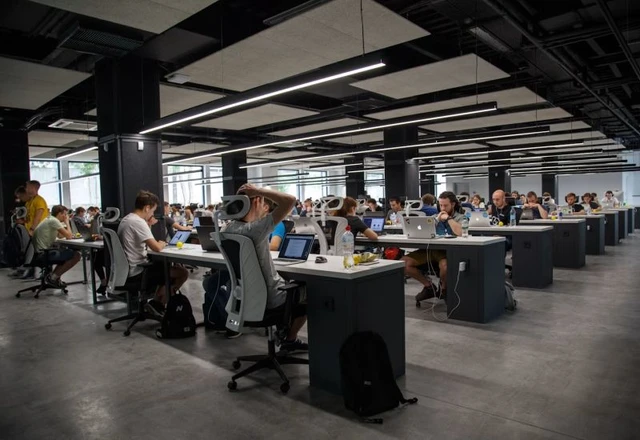
The contemporary discourse surrounding artificial intelligence is centered on the concept of hyper-productivity: the promise that neural networks will absorb mundane operations, liberating humans to focus on creativity and strategy. Yet, behind this utopian facade lies the brutal reality of an industry-wide "arms race." Insiders at OpenAI, Anthropic, Meta, and Google report workweeks stretching to 90 hours, effectively transforming professional life into a relentless marathon of survival.
Within giants like OpenAI and Anthropic, multi-week "sprints" have become common practice, completely erasing the boundary between personal life and professional obligation. For many developers, a weekly load of 70–80 hours has become the norm, while periods of intensive development devolve into regimes of total managerial pressure. The paradox is stark: while these companies publicly speculate on the transition to a four-day workweek for those who successfully integrate AI, the internal corporate reality is one of coercion. Unrealistic deadlines and the looming threat of mass layoffs have become the primary levers of personnel management.
This phenomenon can be analyzed through the lens of the Jevons Paradox: an increase in resource efficiency leads not to conservation, but to increased overall consumption. In the context of AI, this means that tools designed to accelerate individual tasks do not grant employees free time. Instead, employers simply scale up requirements, filling the reclaimed hours with new demands. Compounding this is a new form of cognitive load—the necessity of meticulously verifying AI-generated outputs, a process that often proves more labor-intensive than performing the task manually.
The situation at Google is particularly telling, where a hyper-fixation on AI development has led to the atrophy of other domains. Resources are being reallocated so aggressively that peripheral projects are faltering, and overnight shifts to patch critical bugs have become commonplace. A strange systemic inertia has emerged: some employees find themselves mimicking activities that AI is theoretically supposed to handle, while others struggle to determine whether this transition is actually yielding efficiency in practice.
Ultimately, the industry is facing a fundamental contradiction. Technologies designed to optimize human labor are, at this stage of development, merely intensifying the exploitation of those pioneering the progress. Instead of the promised liberation, specialists are met with an increased workload and chronic stress, confirming the thesis that high AI productivity is currently being subsidized exclusively by human endurance.
 Anthropic’s Strategic Push for Hardware Independence