The pursuit of fully autonomous driving has evolved into one of the most capital-intensive and high-stakes gambles in modern industry. Even the combined resources of two global titans offer no guarantee of success within the volatile landscape of artificial intelligence. The dissolution of the partnership between Volkswagen and Bosch serves as a poignant illustration of the staggering cost of failure when developing safety-critical systems. This rupture marks yet another strategic pivot for one of the world's largest automotive conglomerates.
The partnership between Volkswagen and Bosch in the realm of autonomous driving has come to an end, failing to realize its ambitious objectives. Launched in 2022, the project was intended as the cornerstone for advanced software and Advanced Driver Assistance Systems (ADAS) across the group's entire portfolio. At the heart of this initiative was Cariad—Volkswagen’s internal software hub, conceived as a strategic countermeasure to the digital dominance of Tesla and Chinese tech giants.
The financial stakes were substantial, with investments totaling approximately $1.71 billion. However, within a few short years, it became evident that the deliverables fell short of market expectations. Internal audits revealed that the developed technologies had lost their competitive edge against the breakneck pace of progress in neural networks and machine learning—the primary drivers defining the current trajectory of autonomous transport.
This case exposes a systemic struggle facing many legacy automakers: the friction between traditional engineering rigor and the agility required for modern software development. While Bosch remains the gold standard for hardware reliability, it encountered a fundamental shift in the paradigm; modern autopilots demand massive datasets and real-time self-learning capabilities far more than they require mere sensor precision.
Following a strategic pivot, Volkswagen has decided to terminate the collaboration entirely. The contract is being dissolved according to established terms, and the company has already begun scouting for a new partner capable of providing more mature hardware and software ecosystems. With a new agreement expected by September, it is clear that the group is intent on closing its technological gap as rapidly as possible.
The fallout between Cariad and Bosch underscores a broader industry trend: a shift away from "in-house" everything toward a model of strategic sourcing. When the cost of developing a proprietary autonomous driving stack becomes prohibitive and progress stagnates, even industry titans are forced to concede defeat and seek market-proven, turnkey solutions.
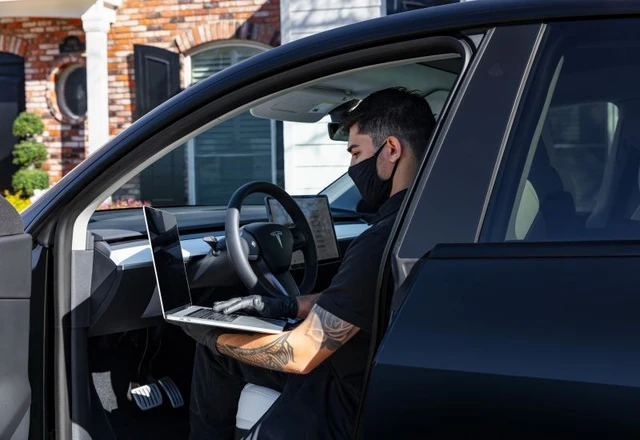 Driver Attention Monitoring in Tesla Electric Vehicles