The line between home consoles and personal computers is becoming increasingly blurred. Valve’s strategy with the launch of the Steam Deck has already proven the viability of a Linux-based gaming ecosystem in a handheld form factor. Now, the company is scaling this experience to desktop systems, expanding access to its operating system across a broad spectrum of hardware. This move transforms any compatible PC into a comprehensive gaming hub, fundamentally shifting the industry's paradigm.
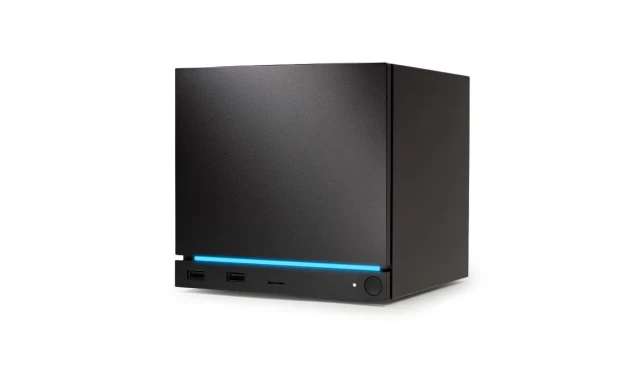
The release of SteamOS 3.8.10 marks a pivotal evolution in Valve's vision for gaming ecosystems. While the SteamOS experience was previously tethered strictly to the proprietary hardware of the Steam Deck, the company is now officially sanctioning enthusiasts to build their own "Steam Machines" using off-the-shelf components. This is more than a mere technical permission; it is a strategic pivot toward universality, enabling any modern PC to be transformed into a device with a dedicated console interface and functionality.
The current development trajectory is focused heavily on expanding hardware compatibility. Valve is aggressively optimizing the system for the latest Intel and AMD platforms, aiming to mitigate driver conflicts and enhance kernel stability. However, the primary hurdle remains Nvidia GPU support. Historically, the opaque nature of Nvidia's proprietary drivers created significant barriers to the full integration of Linux into mainstream gaming, but the tide is turning. Valve is assembling a specialized team to work in close coordination with Nvidia to integrate drivers directly into SteamOS. While comprehensive support may take time, this initiative is being treated as a high priority.
While running SteamOS on third-party hardware was technically feasible in the past, the process was fraught with friction. Users were forced to rely on Steam Deck recovery images, making the installation process far more cumbersome than deploying a standard Linux distribution. Currently, installing the system on Intel or Nvidia hardware remains a challenging endeavor, but Valve is striving to transform this into an intuitive, streamlined scenario accessible to a broader user base.
Valve's ultimate objective is to engineer a seamless user experience for "living room" configurations—PCs tethered to televisions and dedicated exclusively to gaming. In this mode, SteamOS delivers an experience nearly identical to that of the Steam Deck, including critical features such as shader pre-caching, which eliminates the "stutters" (micro-freezes) often encountered in games. Nevertheless, certain niche functionalities, such as HDMI-CEC support—which allows the television to be controlled via a game controller—remain unavailable on third-party hardware.
A critical pain point in the current iteration is the absence of a comprehensive installation wizard. At present, SteamOS requires a destructive installation that wipes the entire drive, making dual-boot configurations alongside Windows or other Linux distributions impossible. Users must sacrifice all existing data to migrate to Valve's ecosystem. Valve has acknowledged this limitation and is developing an installer that will allow for flexible disk partitioning and coexistence with other operating systems.
In today's market landscape, assembling such a system may prove financially comparable to purchasing a pre-built device, particularly given the intermittent shortages of components like high-speed RAM. However, for those unwilling to wait for official shipments or those wishing to leverage an existing high-end PC, SteamOS presents a compelling alternative.
For users demanding immediate stability on Linux—where Valve's official toolkit may still feel nascent—alternative solutions already exist. Gaming-centric distributions such as Bazzite or Nobara currently offer many of the features Valve intends to implement in the future, effectively serving as a bridge between the traditional PC architecture and the console world.
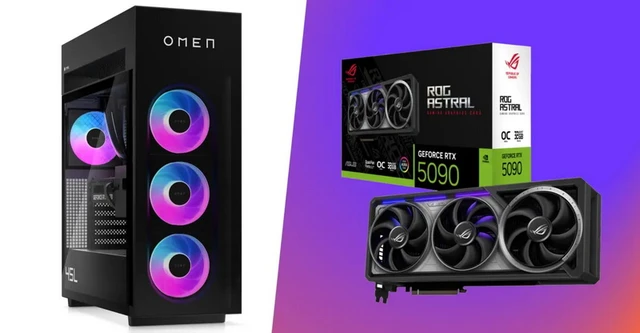 The Economic Paradox of the GeForce RTX 5090