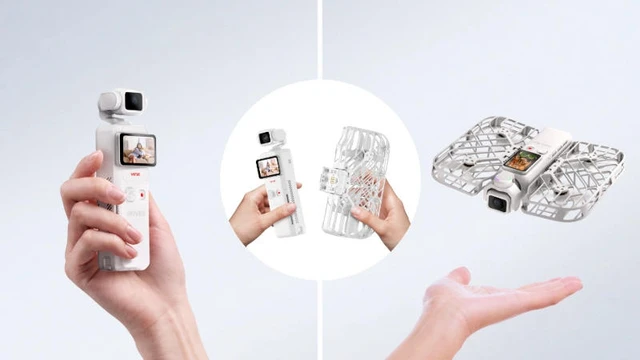
The boundary between consumer electronics and specialized military-grade hardware is rapidly eroding. US regulatory bodies are currently redefining technology compliance standards, effectively reclassifying advanced navigation sensors as dual-use tools. This shift creates a precarious environment not only for manufacturers but also for thousands of professionals—ranging from cinematographers to first responders. At the heart of the conflict lies a fundamental question: where does user convenience end and a threat to national security begin?
The contemporary UAV landscape is confronting a significant regulatory upheaval. The U.S. Federal Communications Commission (FCC) has initiated a process for the retroactive revocation of operating authorizations for drones now classified as "military-grade." The most radical aspect of this approach is that functions which have become standard in the premium consumer segment are now being categorized as military equipment.
The primary catalyst for this shift is the deployment of LiDAR-based (Light Detection and Ranging) collision avoidance systems. For years, this technology—capable of generating high-precision, real-time 3D spatial maps—was viewed exclusively as a tool for professional surveying or intelligence agencies. However, its integration into mass-market models such as the DJI Air 3S, Avata 360, and Mini 5 Pro has transformed ordinary gadgets into devices with deep terrain-scanning capabilities, sparking serious concerns among regulators.
This interpretation of "military-grade" sets a dangerous precedent for the entire visual content and industrial monitoring industries. The impact extends beyond hobbyists capturing cinematic footage; it threatens real estate professionals, cinematographers, and photographers for whom LiDAR serves as a critical safety guarantee for expensive equipment when filming in complex environments.
However, the list of restrictions reaches far beyond navigation systems. Devices equipped with thermal imaging cameras, such as the DJI Mavic 3 T, have been flagged as high-risk. Despite their undeniable utility in search-and-rescue operations and technical audits of power grids, the ability to detect an object's thermal signature renders them potent intelligence tools. Specialized agricultural equipment, including the Agras series designed for seeding and pesticide application, faces a similar fate.
Regulators have also turned their attention to physical specifications and support infrastructure. Any foreign-made drone weighing over 25 kg is now automatically categorized as high-risk. This encompasses heavy transport systems like the DJI FlyCart, as well as automated docking stations (including the DJI Dock for the Matrice series), which enable autonomous territorial monitoring without human intervention.
The scale of this technological purge extends beyond UAVs. The FCC has set its sights on other categories of foreign-made devices, ranging from portable power stations to internet routers. Specifically, the commission is considering the revocation of authorizations for Xtra brand equipment, which regulators claim is effectively a shell for DJI technology.
This situation underscores a global trend toward "technological sovereignty," where a device's functionality becomes secondary to the origin of its components. A final decision on these restrictions will be reached following public hearings ending September 2; however, the trajectory is clear: the era of an open market for high-tech sensors in the civilian sector is drawing to a close.
 The Price of Acceleration: CXMT’s Rapid Push into Memory