The quest to unravel the mysteries of Martian origins and its geological evolution frequently yields discoveries that shatter our long-held assumptions about the Red Planet. The recent detection of corundum by the Perseverance rover is precisely such a catalyst, challenging the current paradigms of planetary science. Finding a mineral that forms the bedrock of rubies and sapphires in an environment where its natural occurrence seemed virtually impossible suggests the presence of obscured, potentially cataclysmic events in Mars' distant past. This revelation compels us to rethink the mechanisms governing the formation of the Martian crust and the influence of external drivers on its mineralogical makeup.
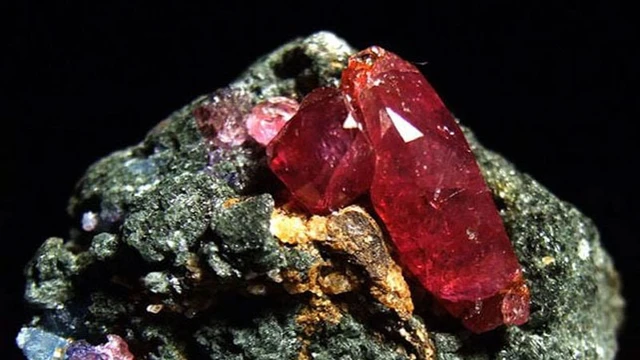
While exploring the fringes of Jezero Crater, the Perseverance rover has detected the presence of corundum—a crystalline aluminum oxide ($\text{Al}_2\text{O}_3$). To a terrestrial observer, this mineral is primarily associated with gemstones; depending on its impurities, it manifests as either a ruby or a sapphire. On Mars, however, these are not jewelry-grade specimens but microscopic inclusions embedded within rock fragments dubbed Hampden River, Coffee Cove, and Smiths Harbour. These fragments fall into the category of "traveling boulders"—clasts that were severed from their parent strata and transported across the surface by natural forces, turning the quest to pinpoint their origin into a genuine geological detective story.
The mission's instrument suite allowed scientists to peer inside these stones using the SuperCam system. The pivotal technology here was Time-Resolved Luminescence (TRL) spectroscopy. This method works by exciting impurity atoms within the crystal lattice using a 532 nm green laser. Following a brief pulse, the spectrometer records the decaying afterglow that persists for several milliseconds. To prevent sunlight from interfering with this faint signal, these measurements are conducted exclusively at night.
Analysis of the samples revealed a distinct spectral fingerprint of chromium—the very element responsible for the deep red hue of Earth's rubies. Specifically, in the Smiths Harbour sample, the luminescence decay time was approximately 3 ms, nearly identical to the behavior of natural corundum on Earth. The crystals themselves are minuscule—less than 200 $\mu$m—pushing the resolution limits of the rover's cameras.
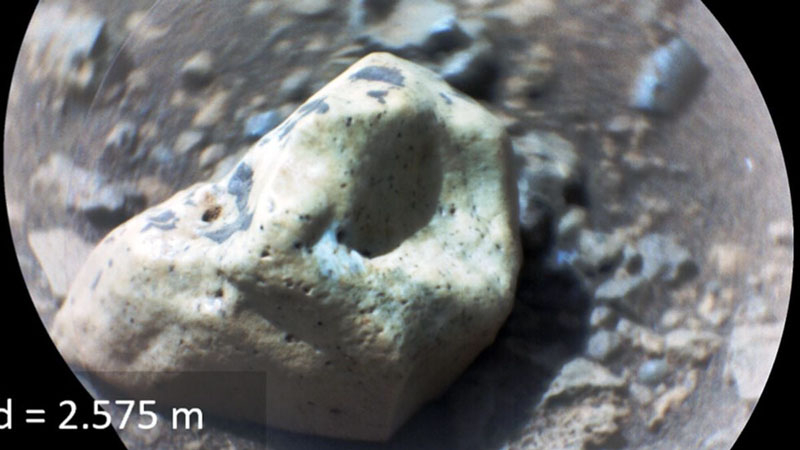
From a scientific perspective, this discovery is paradoxical given the composition of the host rock. Corundum typically forms in environments with high aluminum content and an acute deficiency of silicon. If silicon is abundant, aluminum binds into aluminosilicates, such as plagioclase. Yet, all three discovered samples proved to be rich in plagioclase. Under standard geological conditions, the coexistence of these two minerals is virtually impossible; one effectively precludes the other.
To explain this geochemical anomaly, researchers are weighing several scenarios. While theories involving crystallization from magma or the influence of hot hydrothermal solutions remain possible, the impact hypothesis appears most compelling. The massive asteroid collision that forged Jezero Crater could have generated an instantaneous surge of extreme pressure and temperature. Such conditions can trigger chemical reactions otherwise unavailable to the planet, literally "squeezing" corundum out of silicon-rich rocks.
Similar processes are well-documented in terrestrial impact structures and lunar samples, where shock-induced corundum often serves as a marker of catastrophic events. The microscopic grain size and their location on the crater's edge further support this theory. It is possible that post-impact hydrothermal activity also played a role, locally altering the rock's chemistry to facilitate aluminum oxide crystallization. A definitive resolution to this mystery will only be possible through detailed laboratory analysis on Earth; however, as the Mars Sample Return mission faces delays, scientists are left to piece together the puzzle using remote sensing data alone.
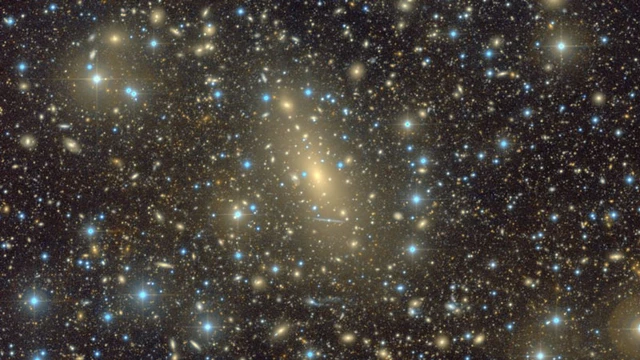 The Phenomenon of the Supermassive Galaxy IC 1101