The promise of fully autonomous transportation has long been the "holy grail" of the modern automotive industry. Under Elon Musk's leadership, Tesla has consistently positioned itself as the primary architect of this technological revolution. However, the recent unveiling of the Cybercab has exposed a profound disconnect between visionary rhetoric and operational reality. The market's reaction was swift and severe, mirroring growing investor skepticism over the company's ability to scale its ambitions.
Tesla's market valuation has traditionally been anchored not just in current EV sales, but in investor conviction regarding future technological breakthroughs. Elon Musk has mastered the art of transforming product reveals into global media spectacles, where personal charisma and theatricality create an aura of inevitable progress. However, the launch of the Cybercab autonomous taxi proved to be a troubling outlier. Instead of a triumphant debut, the industry witnessed a dearth of specifics, triggering an immediate 6% dip in share prices.
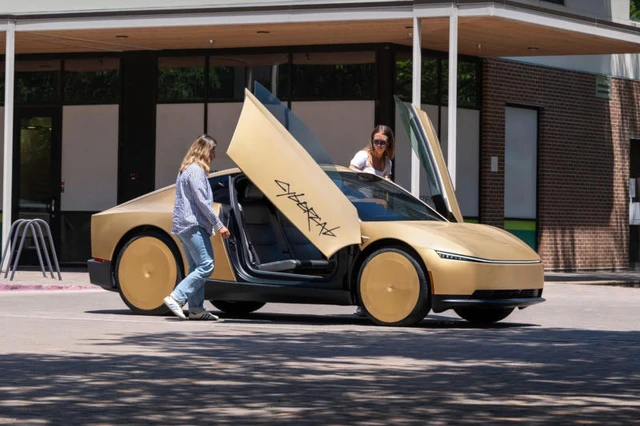
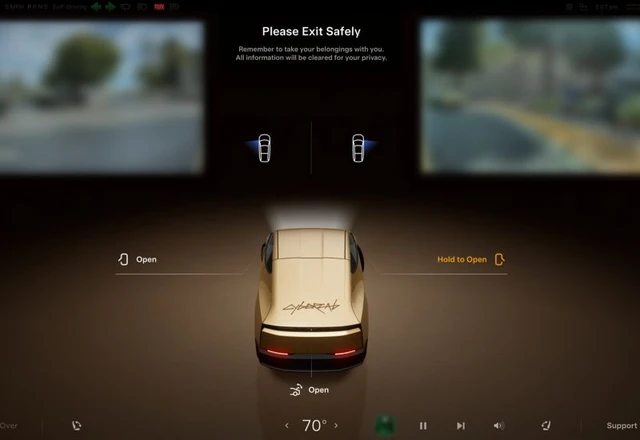
From a technical standpoint, the Cybercab represents a radical departure from the traditional automotive concept. Assembly began at the Austin plant in the spring, and by July, the project had transitioned into serial production. The vehicle's defining characteristic is the total absence of a steering wheel and pedals. This is more than a minimalist interior; it is a declaration of a new paradigm: a vehicle designed exclusively for the autonomous transport of two passengers and their luggage. The supporting digital infrastructure and user interfaces have already been deployed, as the first units have hit Texas roads for commercial operations.
Yet, the actual rollout has collided with severe regulatory headwinds. The National Highway Traffic Safety Administration (NHTSA) has expressed significant concern regarding the legality of such services. The core issue is that the legislative framework for autonomous transport is lagging catastrophically behind engineering advancements, leaving the question of liability in the absence of a human driver wide open.
Analysts from RBC Capital Markets, speaking to CNBC, noted that investor disappointment stems from an "information vacuum." Unlike previous announcements, the Cybercab presentation lacked concrete metrics. The market was left without data on trip pricing, projected production volumes, or—most critically—confirmed official operating permits. The absence of Tesla's customary livestream further amplified the sense of opacity and uncertainty.
Adding to the negativity is the trickle of real-world user experience surfacing on social media. Early eyewitness accounts point to systemic routing errors, excessive wait times, and inefficient trips. In the high-tech sector, the chasm between the promise of "flawless intelligence" and a reality where algorithms struggle with basic navigation is felt acutely by the market. Consequently, at this stage, the Cybercab serves more as a demonstration of technical capability than a viable business case capable of driving sustainable growth in the company's capitalization.
 The Resilience of the Discrete GPU Market