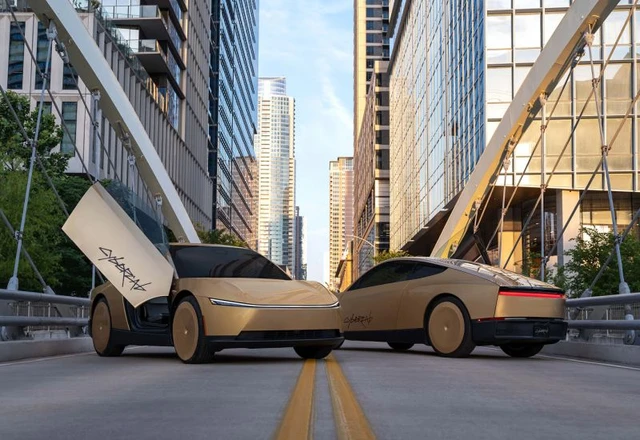
The transition to fully autonomous transportation is no longer a technical challenge; it has become a legal one. The debut of the Cybercab in Austin marks the precise moment where engineering audacity collided with the inertia of regulatory standards. By discarding the steering wheel and pedals, the vehicle challenges the very foundation of safety—a paradigm built over decades around the necessity of a human operator. Now, regulators must determine whether the future of mobility can truly exist outside the confines of obsolete regulations.
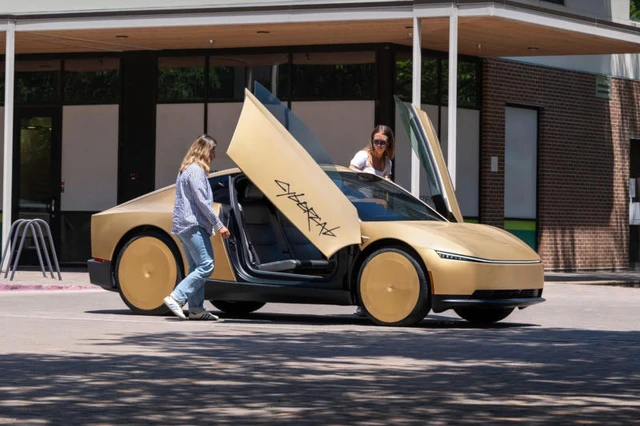
The deployment of the autonomous Cybercab on Texas roads represents more than a mere commercial rollout; it is a systemic stress test for the United States' road safety infrastructure. In Austin, any user can now summon a robotaxi via an app, yet the project's technical sophistication has collided head-on with a bureaucratic wall. The National Highway Traffic Safety Administration (NHTSA) has initiated a probe into the vehicle's self-certification, as the concept of a car devoid of a steering wheel and pedals stands in direct conflict with federal safety standards.
The conflict is fundamental: existing safety regulations were drafted in an era when human-in-the-loop control was considered the sole guarantor of road safety. Tesla, adhering to its strategy of aggressive innovation, maintains that the Cybercab complies with all "applicable" standards. However, the regulator intends to scrutinize exactly which provisions the company deemed inapplicable and the rationale behind those conclusions.
The U.S. employs a distinct self-certification framework: manufacturers are not required to obtain prior approval from the NHTSA before beginning series production. Instead, they certify their own compliance, with the government exercising oversight only after the product hits the market. While this mechanism grants companies unprecedented agility in deployment, it creates the risk of large-scale recalls. Should the NHTSA deem the Cybercab's design unsafe or non-compliant, Tesla could be compelled to recall the entire fleet for corrective modifications.
Notably, the regulator has previously attempted to adapt to the reality of autonomous vehicles by proposing the removal of mandatory control interfaces. However, these legislative initiatives have yet to be enacted, leaving Tesla in a regulatory limbo between a technological breakthrough and the letter of the law.
For contrast, one can look at the experience of Amazon’s Zoox. In July, the NHTSA permitted their robotaxis to operate commercially, albeit under stringent constraints: a ban on operation during inclement weather (rain, snow) and a speed limit of 72 km/h. Tesla, conversely, is pursuing a far more expansive and uncompromising vision, aiming to position autonomous transport as a central pillar of its business model.
The project's economic projections are striking: the Cybercab is intended to cost private buyers less than $30,000, with production volumes reaching up to 125,000 units per year. Currently, 45 such vehicles are registered in Texas; combined with autonomous Model Ys, the total Robotaxi fleet in the region stands at 420 vehicles. Ultimately, the outcome of the NHTSA investigation will determine whether the Cybercab becomes a mass-market product or remains a prohibitively expensive experiment constrained by legacy regulations.
 The Cost of Tesla's Robotaxi Ambitions