The global semiconductor landscape is undergoing a rapid pivot, shifting away from open trade toward a regime of aggressive strategic protectionism. The U.S. Department of Commerce is reimagining customs tariffs, evolving them from mere fiscal instruments into levers designed to compel the reshoring of manufacturing capacities. By indexing tariff rates to the scale of local investment, a new paradigm is emerging—one where market access is effectively purchased through the construction of domestic fabrication plants. This strategy forces the industry's titans into a stark trade-off: maintain operational profitability or secure a physical footprint on American soil.
Washington's contemporary trade strategy is evolving toward a state of aggressive industrial expansionism. A new initiative from the U.S. Department of Commerce proposes the implementation of tiered import tariffs on semiconductor components, where the duty rate will be directly linked to the manufacturer's level of capital investment in American infrastructure. This strategy extends beyond the silicon itself to encompass the entire value chain; laptops, gaming consoles, and data center server equipment could all be targeted. In essence, this represents a concerted effort to onshore the entire high-tech ecosystem.
In this high-stakes game of survival, Taiwan's TSMC, the global leader in logic semiconductor manufacturing, holds the most resilient position. The scale of its U.S. expansion is staggering: announced investments totaling $265 billion provide significant leverage for negotiating tariff reductions. Furthermore, Taiwan is expected to allocate an additional $20 to $30 billion, allowing the company to solidify its status as a preferred partner.
The mechanics of this partnership are already partially outlined in an existing Memorandum of Understanding (MoU) between Taiwan and the U.S. According to the document, companies investing in local production can expect substantial tax incentives. During the construction phase of new plants, a duty-free import quota is provided—equivalent to 2.5 times the planned capacity—which later scales down to 1.5 times once production commences. In effect, the U.S. is creating a temporary "safe corridor" for imports, ensuring companies can maintain business continuity while their new fabrication plants are being built.
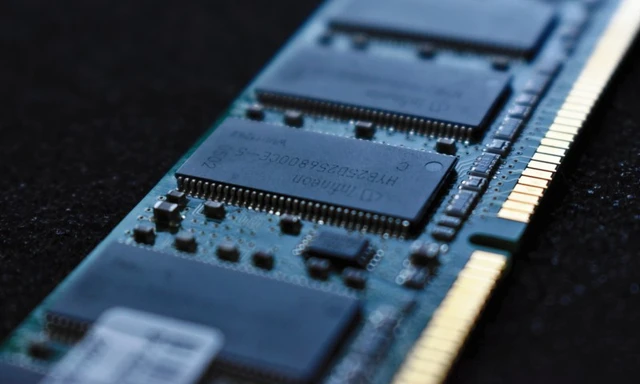
However, for South Korean titans such as Samsung Electronics and SK hynix, the landscape is considerably more precarious. Washington is showing a particular interest in the localization of DRAM and NAND flash memory production, both of which are critical for the advancement of artificial intelligence and cloud computing. While Samsung already operates two plants in Austin and is finalizing a facility in Taylor (slated for a 2026 launch), and SK hynix is deploying a cutting-edge HBM packaging complex in Indiana, a pivotal question remains: will these investments serve as a shield for products manufactured in South Korea and exported to the U.S.?
Relocating memory production entails far more daunting technical and logistical hurdles than the production of logic chips. The nature of this segment is such that even Micron—the sole major American player in the memory space—has historically relied on a global network of factories, maintaining more capacity abroad than domestically. This underscores a fundamental contradiction between Washington's political ambitions for total technological sovereignty and the economic reality of global supply chains, which cannot be restructured within the span of one or two election cycles.
 Energy Autonomy: The Extreme Edition