The global hardware market is currently navigating a paradox. While acute component shortages and a memory crisis would typically signal a period of stagnation, the GPU segment is witnessing an unexpected surge. Price volatility has failed to curb consumer appetite; instead, demand for discrete solutions continues to climb. This trend points to a profound transformation in consumer behavior and a strategic shift toward mobile platforms.
An analysis of market metrics for the second quarter of 2026 reveals a resilient trend: sales of discrete graphics processing units (GPUs) for consumer PCs are climbing on both a quarterly and annual basis. This growth persists despite significant market volatility triggered by shortages of key components, which predictably led to a sharp spike in pricing. Nevertheless, the data is compelling: discrete GPU sales surged by 12.2% quarter-over-quarter and 14.1% year-over-year, marking the strongest performance in recent history.
Aggregate shipments of graphics solutions—encompassing both integrated and discrete chips for desktops and laptops—reached 75.5 million units. This represents a 10.4% increase sequentially and a modest 1.1% growth year-over-year. A closer look at the composition of this growth reveals a critical pattern: the mobile sector has become the primary catalyst. While desktop GPU shipments contracted by 4%, the laptop market saw an impressive leap, growing by 16.8%.
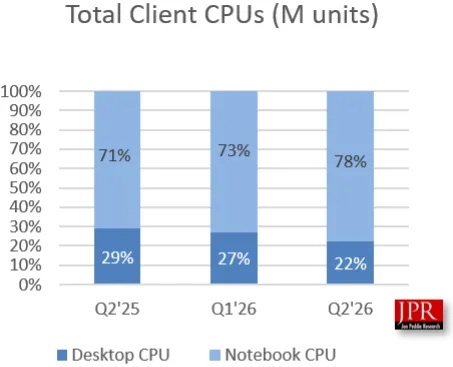
Simultaneously, the central processing unit (CPU) segment is exhibiting divergent dynamics. On an annual basis, the CPU market contracted by 1.1%; however, the short-term outlook is more positive, with quarterly growth hovering around 10%. Here, too, a clear trajectory emerges: the mobile segment continues to dominate as demand for stationary computing solutions noticeably wanes.
Based on actual volume estimates, combined discrete GPU sales from the three industry titans—Nvidia, AMD, and Intel—totaled approximately 20 million units. This figure underscores the tenacity of demand for high-performance graphics, even amidst a general decline in interest toward traditional desktop PCs. Yet, the catalyst behind this surge remains a subject of debate: it is unclear whether this is driven by an influx of new gamers, a surge in the popularity of gaming laptops, or other external variables.
Of particular note is the fact that the second quarter is traditionally viewed as a seasonal trough. The current growth of 12.2% occurred in defiance of a global memory crisis. The situation was further complicated by a confluence of limited supply, artificial demand spikes, and the idiosyncrasies of local markets—creating a "perfect storm" for pricing that, nonetheless, failed to deter the consumer.
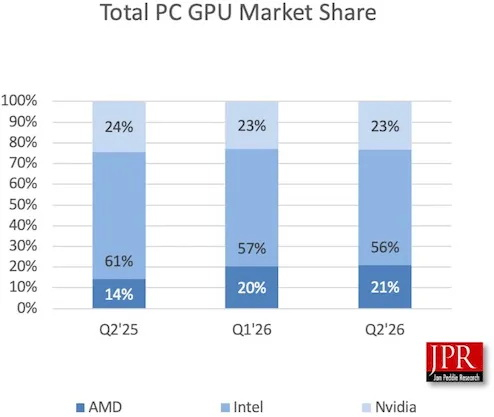
In terms of market share distribution, the overall GPU landscape (including integrated solutions) remains stable, albeit with significant nuances. Intel maintains its leadership with a 56% share, leveraging the sheer volume of its integrated offerings. Nvidia holds the second position at 23%, while maintaining de facto dominance in the premium discrete card segment. The most dynamic growth is seen in AMD, which expanded its share from 14% to 21% over the year. This rapid ascent was made possible by the expanded shipment of AMD consumer processors, which increasingly feature efficient graphics cores, effectively blurring the boundaries between integrated and discrete acceleration.
 Energy Autonomy: The Extreme Edition