The global AI arms race is shifting its center of gravity from algorithmic innovation to physical infrastructure. Anthropic, a leading contender for industry dominance, is preparing for a landmark IPO, yet finds itself confronting an unexpected barrier. Social friction and public apprehension toward AI are evolving from abstract ethical debates into tangible financial risks. The company's ability to scale now depends not only on the raw power of its models, but on whether local communities are willing to tolerate the encroachment of monolithic data centers in their own backyards.
Anthropic’s trajectory toward the public markets is defined by a profound reckoning with risk. While the company’s leadership has traditionally maintained a cautious stance on AI safety, this vigilance now extends to external social pressures. As it prepares for its IPO, the startup intends to formally categorize public resistance to AI expansion as a primary risk factor within its investor prospectus.
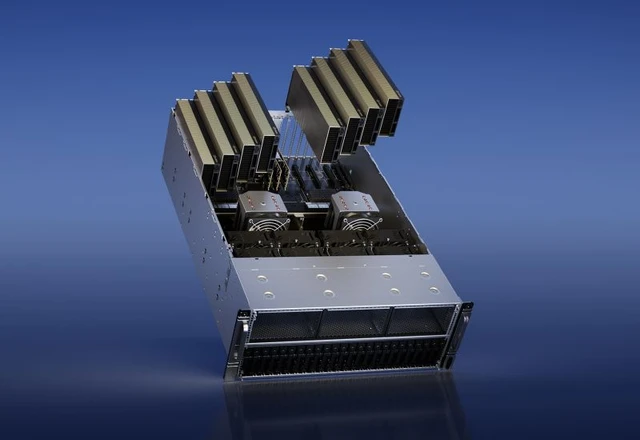
The public debut is expected as early as September or October of this year. During this window, the company is slated to present a detailed financial and operational report, in which the prevailing social climate will be highlighted as a significant headwind to business growth. This is not merely a matter of theoretical discontent, but of tangible public protests against the construction of large-scale data centers. For modern AI, infrastructure is the bedrock; without massive computational power, neither the training of new models nor the revenue scaling necessary for return on investment is possible.
The scale of Anthropic's ambitions is staggering. Reports suggest that through its IPO, the company aims to raise capital surpassing that of SpaceX, breaking the $85.7 billion threshold. In the long term, the startup's valuation could reach an astronomical $2 trillion, which would set an absolute industry record. However, this rapid ascent is colliding with fierce "on-the-ground" resistance.
Statistics from Gallup reveal a deep societal rift: only a quarter of Americans are willing to tolerate the proximity of AI data centers. Approximately 70% of citizens are opposed, with half of them expressing strong negativity. This creates an infrastructure deadlock. When construction in developed areas becomes politically untenable, companies are forced to seek "greenfield" sites. This leads to a sharp increase in project costs, as building energy infrastructure from scratch is significantly more expensive than upgrading existing hubs.
At this stage, Anthropic's CFO, Krishna Rao, is already engaged in intensive negotiations with investors in San Francisco. The agenda of these meetings extends beyond simple profit discussions. Investors are seriously concerned about margin pressure stemming from open-source AI models—which threaten to commoditize proprietary developments—as well as the risk of decelerating data center deployment.
Consequently, Anthropic finds itself at the epicenter of a clash between the technological optimism of capital and the conservatism of local communities. The company's ability to navigate and overcome this social barrier will be the determining factor of its market value in the coming years.

 The Escalating Cost of AI Infrastructure