The aerospace industry has been dealt another stark reminder of just how precarious hyper-complex engineering systems can be. The catastrophic failure of the New Glenn heavy-lift rocket at its Florida launch site represents a severe trial for Blue Origin’s ambitions. A single point of failure in one critical component triggered widespread infrastructural damage, forcing the company to fundamentally overhaul its launch logistics. Now, this technical setback must serve as the foundation for ensuring the long-term reliability of the entire system.
The May incident at Florida's LC-36 launch complex stands as one of the most significant technical failures in recent private aerospace history. The explosion of the New Glenn heavy-lift rocket on May 28, 2026, during a static fire test, triggered an exhaustive forensic analysis and debris study. The investigation ultimately pinpointed the probable cause: a failure in the main oxygen valve of one of the seven BE-4 engines powering the first stage.
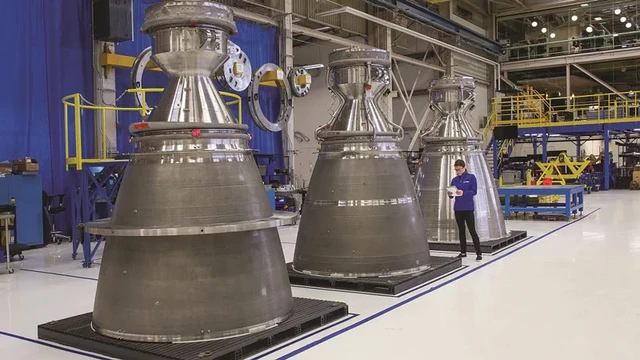
The BE-4 is a sophisticated powerhouse operating on a propellant mix of liquefied natural gas (methane) and liquid oxygen. With a sea-level thrust of up to 2.85 MN, a cluster of seven such engines generates the colossal power required to loft New Glenn's reusable first stage. Within this architecture, the oxygen valve serves as both a critical safety mechanism and a precision regulator for oxidizer flow. Any deviation in its performance during active combustion disrupts the balance of pressure and propellant flow, almost inevitably leading to combustion instability and the subsequent catastrophic failure of the entire propulsion system.
To isolate the flaw, engineers conducted a series of rigorous stress tests on individual components and full-scale engines, attempting to replicate the failure scenario under controlled conditions. This effort resulted in a decision to implement surgical design modifications to the valve. These upgraded components, expected by the end of August, will allow for the retrofitting of existing BE-4 engines without requiring a complete redesign, significantly accelerating the program's recovery timeline.
The extent of the damage at the launch complex was substantial: the blast and subsequent fire destroyed the vehicle itself and damaged the lightning tower, the transporter-erector, and various hydraulic systems. However, critical infrastructure—including the fuel farm, the integration building, and the water tower—remained intact. This crisis has pushed Blue Origin toward a strategic pivot in its launch preparations. The company is abandoning its previous protocol in favor of a hybrid horizontal-vertical assembly process. Under the new scheme, stages will be mated horizontally before the rocket is hoisted to the launch pad by crane, with the payload integrated vertically. This approach is designed to optimize the workflow and return New Glenn to flight status by the end of 2026.
However, the repercussions of this accident extend beyond a single company. Because the BE-4 engine also powers United Launch Alliance's Vulcan Centaur, this technical defect becomes a shared liability for both players. For Vulcan, the situation is further complicated by existing delays stemming from issues with Northrop Grumman-produced side boosters.
In this context, the New Glenn failure feels particularly poignant and alarming: despite previous BE-4 engine explosions during factory testing, the root cause of the systemic failure was only identified after the loss of a complete vehicle and significant ground infrastructure. It underscores a dangerous gap between laboratory validation and the harsh operational realities of super-heavy lift launch vehicles.
 The Phenomenon of the Supermassive Galaxy IC 1101