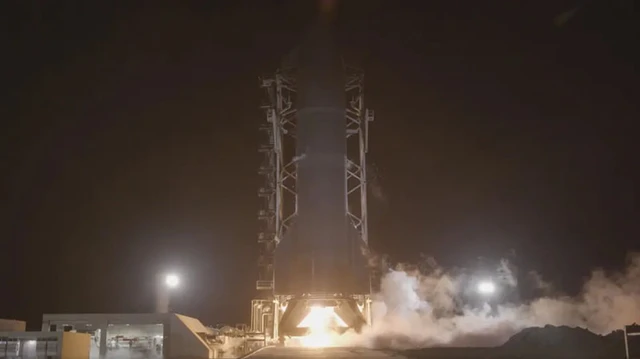
The global satellite internet race has evolved from a competitive scramble into a phase of near-absolute dominance. While other players grapple with launch schedules and technical bottlenecks, SpaceX is fundamentally reshaping the landscape of near-Earth space. The sheer scale of the Starlink deployment is forging a new paradigm for connectivity, ensuring access from any point on the planet. This is no longer simply a matter of technological superiority; it is the construction of an unprecedented infrastructure of cosmic proportions.
The architecture of Low Earth Orbit (LEO) is undergoing a rapid transformation, evolving into a domain defined by the hegemony of a single player. According to recent data, the Starlink constellation has reached a milestone of 11,000 active spacecraft. This figure is not merely impressive—it illustrates a profound chasm separating SpaceX from every other contender in the satellite internet market.
An analysis of the KeepTrack catalog as of July 2026 confirms this disparity. While Starlink operates over ten thousand satellites, its closest pursuers remain distant: OneWeb maintains just 654 units, Amazon’s Project Kuiper 394, and the Chinese constellations Qianfan and Guowang hold 238 and 186 respectively. In effect, Starlink accounts for more than half of all payloads currently in orbit. The combined capacity of the ten largest constellations, excluding the leader, is five times smaller than the Starlink array alone.
This scale has been made possible by treating space launches as an industrialized pipeline. Since May 2019, SpaceX has deployed 12,444 satellites. Notably, the network's refresh cycle is so aggressive that the number of spacecraft that have burned up in the atmosphere upon decommissioning (approximately 1,660 units) already exceeds OneWeb's entire historical launch count. The cadence of weekly missions has transformed orbital space into a dynamic ecosystem defined by a constant cycle of renewal.
Against this backdrop, Amazon's strategy appears less assured. Despite ambitious plans to deploy a first generation of 3,236 satellites and authorization for another 4,500 units, the company has faced significant delays. The deadline for deploying 1,600 spacecraft, originally slated for July 2026, has been pushed back to 2028. While Amazon leadership assures investors that a few hundred satellites are sufficient to provide basic services, the actual lag in deployment velocity creates a critical strategic risk.
Ultimately, technological superiority is translating directly into market expansion. Starlink's subscriber base has already surpassed the 12-million mark, validating the viability of the ultra-dense orbital coverage model. SpaceX has successfully engineered a system that does more than just provide connectivity; it establishes a new industry benchmark where iteration speed and deployment scale serve as the primary competitive advantages.
 The Phenomenon of the Supermassive Galaxy IC 1101