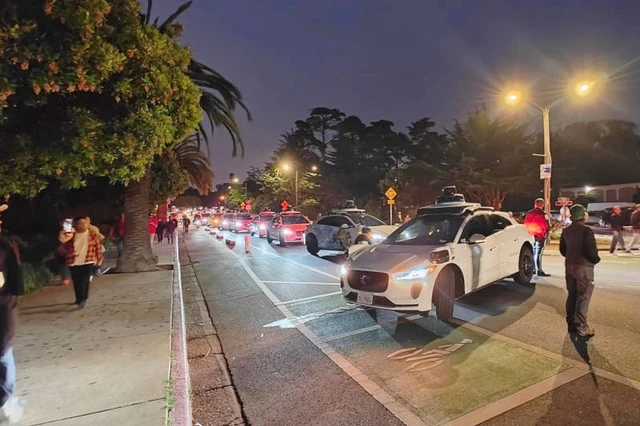
The shift toward autonomous urban mobility is often marketed as a seamless leap into the future, yet reality reveals friction in the most granular details. In Austin, Texas, Waymo’s fleet has run headlong into a surprisingly "human" obstacle: the intricacies of parking compliance. While the industry toasts its technological milestones, AI’s struggle to parse the nuances of the urban landscape is resulting in thousands of dollars in fines. This friction underscores a critical disconnect between rigid algorithmic logic and the inherent chaos of city infrastructure.
The deployment of autonomous taxis in major urban centers inevitably collides with the problem of "edge cases"—scenarios intuitive to humans but computationally challenging for algorithms. Austin has emerged as a primary proving ground for these systems; here, Waymo, operating a fleet of over 300 vehicles, has encountered the uncompromising nature of municipal regulations. Since launching commercial operations in 2024, the company has accrued $9,325 in fines. While this figure seems negligible compared to the city's total parking revenue—which reached $6.3 million in fiscal year 2025—it serves as a bellwether for a systemic challenge facing the entire autonomous transport industry.
The core issue is not so much the vehicle's technical ability to stop, but rather its semantic understanding of context. The National Highway Traffic Safety Administration (NHTSA) has already voiced concerns that robotaxis often struggle to respond adequately to emergency service instructions or identify safe stopping zones that do not obstruct traffic. For an AI, the distinction between a "technically feasible" parking spot and a "legally permissible" one can be blurred, particularly within the fluid dynamics of an urban environment.
Waymo's violation statistics highlight specific vulnerabilities in signage and pavement marking recognition. The most significant penalties, reaching up to $519, were issued for parking in disabled spaces. Additionally, there were 64 instances of stopping in tow-away zones, 13 cases of unpaid parking, and nine episodes of double parking. Each incident represents a failure in interpreting visual data or a logical error in selecting an optimal stopping point.
Managing an autonomous fleet requires a constant equilibrium between operational efficiency and regulatory compliance. To minimize passenger wait times and reduce "deadheading" (empty miles), Waymo vehicles utilize public parking spaces across various city sectors. The alternative is returning to an Uber-managed operational hub for charging and maintenance. However, this distributed deployment strategy inevitably leads to friction with municipal parking laws.
Despite these hurdles, the overall safety profile of autonomous transport remains optimistic. A distinct paradox emerges: while robotaxis may falter in the nuances of parking, they are significantly more effective than humans at preventing serious collisions. According to an independent analysis by the Insurance Institute for Highway Safety (IIHS), across more than 50 million miles of operation in Phoenix, San Francisco, Los Angeles, and Austin, Waymo's accident rate was 68% lower than that of human drivers. Consequently, the industry is currently in a phase of fine-tuning—moving beyond basic navigational safety toward mastering the complex social and legal norms of urban space.
 Texas Opens Its Skies to Air Taxis