Modern spaceflight demands absolute precision, where the slightest technical oversight can trigger a catastrophic financial fallout. The current predicament of the Vulcan Centaur serves as a stark reminder of how vulnerable even industry titans are to systemic supply chain disruptions. When ambitious launch manifests collide with the harsh reality of manufacturing defects, the impact extends beyond delayed schedules—it threatens the very economic viability of the corporation. United Launch Alliance now finds itself in a precarious position, scrambling for stability while its flagship technological asset remains grounded.
The crisis unfolding at United Launch Alliance (ULA) has laid bare the company's precarious reliance on the reliability of individual components. Current fiscal volatility is a direct consequence of the Vulcan Centaur flight suspension, which has created a perilous disconnect between fixed operational expenditures and actual revenue streams. In this climate, Lockheed Martin—one of ULA's co-owners—has stepped in as the primary financial backstop, guaranteeing loans with payment limits up to $500 million. Against this backdrop, the stance of the second owner, Boeing, remains conspicuously passive; the corporation has yet to take any visible steps to support its subsidiary and continues to avoid public comment.
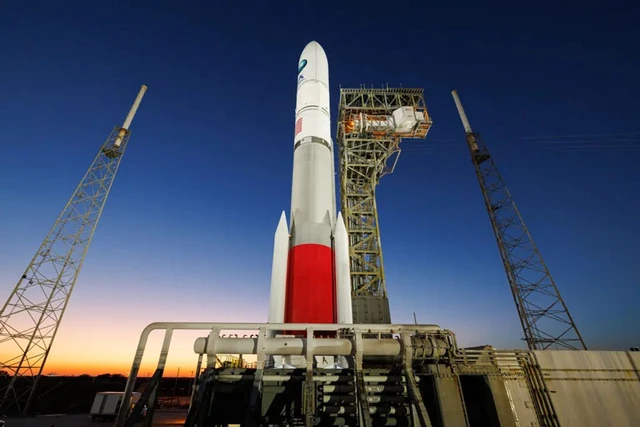
The scale of the crisis is underscored by a stark divergence between projections and reality: out of 18 launches scheduled for the year, only one has taken place. This paralysis was triggered by a technical anomaly during the USSF-87 mission for the Pentagon on February 12, 2026. One of the four GEM 63XL solid rocket boosters experienced a failure mode—a partial structural collapse in the nozzle area resulting in a loss of thrust. The mission was salvaged only by the agility of the flight control system: the automation rapidly gimbaled the nozzles of the two BE-4 methane engines on the first stage to compensate for the power deficit. Despite the incident, the first stage and the Centaur V hydrogen-oxygen second stage performed nominally, successfully delivering the payload into its target orbit.
However, for Vulcan, this marks the second critical booster malfunction in just three launches. A similar incident occurred during the certification flight in October 2024, where a portion of the nozzle was also destroyed. At that time, the cause was identified as a manufacturing flaw in the internal insulation. The recurrence of this failure mode has forced the U.S. Space Force to completely ground the rocket until the root causes are fully identified and corrective measures are implemented.
The technical crux of the problem now rests with Northrop Grumman, the booster supplier. In April, the company conducted static fire tests of a modified GEM 63XL featuring a redesigned nozzle and an advanced propellant formulation. Nevertheless, the results of these tests have yet to be reconciled with the findings of the primary investigation, leaving the timeline for the rocket's return to flight uncertain.
Economic pressure on ULA is intensifying as the company continues to shoulder staggering overhead costs and payroll expenses while effectively deprived of its primary revenue source. This has already impacted the financial metrics of the parent organizations: Lockheed Martin was forced to downgrade the annual operating profit forecast for its space division to a range of $1.34–$1.38 billion, citing reduced dividend yields from its stake in ULA.
The prospects for Vulcan remain promising yet precarious. The order book contains dozens of missions, including 19 high-complexity contracts for defense and intelligence agencies valued at approximately $5.3 billion. The optimistic scenario envisions a return to flight by the end of 2026. However, this timeline depends entirely on Northrop Grumman's ability to stabilize the production of truly reliable boosters—components whose updated versions are also not expected to be delivered until late 2026.
 The Price of Patience: Apple’s Strategic Delay in the Foldable Smartphone Market