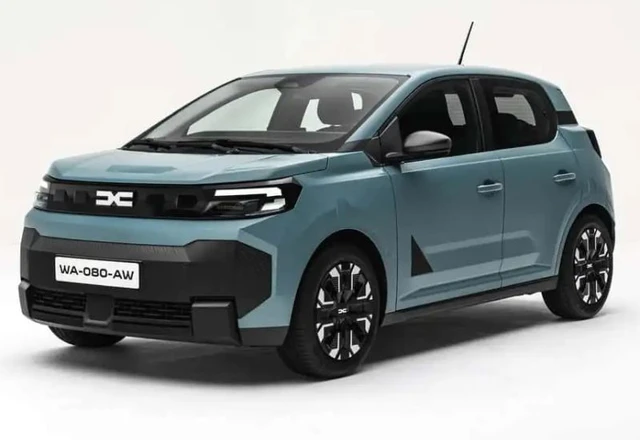
The European automotive market is undergoing a profound transformation, struggling to strike a delicate balance between environmental mandates and the mounting economic pressure exerted by China. Amidst cutthroat competition and the imposition of protectionist tariffs, manufacturers are being compelled to rethink their strategies for developing mass-market electric vehicles. The next-generation Dacia Spring emerges as the embodiment of this shift, offering a starkly pragmatic vision of urban mobility. It is more than just a budget-friendly car; it is a strategic instrument designed to democratize electrification for the general public.
The European automotive industry currently finds itself at a crossroads where shielding the domestic market from the onslaught of affordable Chinese EVs requires more than just regulatory hurdles; it demands a product capable of competing on price. In this strategic landscape, the second-generation Dacia Spring emerges as a critical asset. Shifting production from China to Slovenia is more than a mere logistical optimization—it is a calculated political gesture, sharpening the contrast with foreign brands and leveraging EU internal preferences. As part of Renault's broader roadmap, three more electric models will join the Dacia lineup by the end of the decade, signaling a commitment to the total democratization of electric mobility.
Technically, the newcomer leverages a proven platform shared with the even more compact Twingo E-Tech. For the new generation, engineers opted for a measured increase in dimensions: the vehicle has grown 18 cm wider and 15 cm longer. With final dimensions of 3.85 m in length and 1.74 m in width, the car retains its agility in dense urban traffic while significantly enhancing interior comfort.
At the heart of the powertrain lies a single traction motor delivering 80 hp and 175 Nm of torque, paired with a 27.5 kWh Lithium Iron Phosphate (LFP) battery. The choice of LFP technology is pragmatic: these cells offer superior cycle life and lower production costs compared to their NMC counterparts. While a range of 250 km (WLTP) may seem modest compared to flagship models, user behavior analysis reveals that the average daily mileage for first-generation owners did not exceed 34 km, with 75% having access to home charging. Consequently, limiting battery capacity is a conscious decision to reduce the cost of goods sold without sacrificing functionality for the target audience.
Energy replenishment is handled via a flexible charging ecosystem. Utilizing a 50 kW DC fast charger, the battery can be boosted from 15% to 80% in just 28 minutes. For those relying on standard domestic outlets, a 6.8 kW charger can achieve the same result in nine hours. However, upgrading to an 11 kW AC module slashes this time to 1 hour and 55 minutes, making the vehicle viable for intensive urban duty cycles.
The Dacia Spring's interior is a masterclass in functional conservatism. In an era of total digitization, the manufacturer has retained physical buttons and dials, significantly simplifying tactile interaction while driving. The digital layer consists of a seven-inch instrument cluster and a 10.1-inch central touchscreen. The ergonomics have been overhauled: the gear selector and audio control joystick have been moved beneath the steering wheel, allowing for the near-total elimination of the center tunnel, which has been replaced by a multi-level organizer.
Practicality is engineered into every detail, including an optional 18-liter frunk for charging accessories. The luggage compartment offers 337 liters in the standard configuration, but with the rear seats folded in a 50:50 split, the usable volume expands to an impressive 1,283 liters.
Safety and compliance with European standards are ensured not only by a rearview camera but also by a mandatory cabin camera for driver monitoring. In Italy, the base model starts at €17,900, with top-tier trims reaching €19,500. However, the final price for the consumer may be substantially lower thanks to government subsidies across various EU member states, positioning the Dacia Spring as one of the most accessible entry points into the world of electromobility.
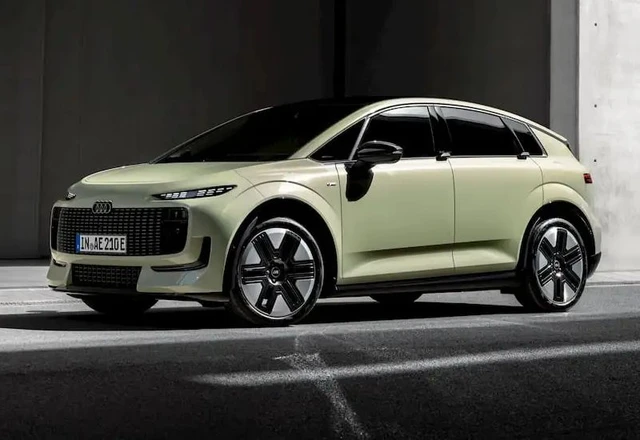 The Energy Pragmatism of the Audi A2 e-tron