The smartphone market has long since plateaued, with iterative updates failing to spark the excitement they once did. For years, foldables remained little more than a technological curiosity, hampered by fragility and prohibitive pricing. Apple, adhering to its philosophy of arriving late to perfect the execution, is finally preparing to enter the fray. This move will be more than a mere shift in form factor; it will be a calculated maneuver to redefine the boundaries of the premium segment.
As the iPhone family approaches its twentieth anniversary, the industry is bracing for a tectonic shift. The debut of Apple's first foldable will not only redefine the device's form factor but also legitimize a new price tier, pushing the ceiling beyond the $2,000 mark. While some view this move as belated, internal company dynamics suggest a deeply calculated, multi-year cycle of preparation.
The development of a foldable iPhone has been underway for at least eight years under the guidance of John Ternus. Now, in a key leadership role, Ternus is turning this project into a professional manifesto of sorts. His objective is to deliver a product that does not merely mimic the competition, but fundamentally corrects their systemic flaws.
Foldable displays have been present in the market for roughly seven years, yet mass adoption has remained elusive. The primary barriers have been technical imperfection and economic viability. An analysis of Apple's internal roadmap reveals that the technical capability to produce a foldable smartphone existed a decade ago; however, the cost of flexible panels at the time was prohibitively high. Furthermore, the addressable market was too narrow to justify the colossal investments required for R&D and production scaling.
Market dynamics tracked by IDC vividly illustrate this trajectory. Following the aggressive expansion of Huawei and Samsung in 2019, the segment saw explosive growth—nearly 800% by 2020. This was followed by a cooling-off period: growth rates dipped to 300% in 2021 and slowed to modest double-digit figures by 2022. Today, foldables account for less than 2% of the global market, validating Apple's "wait-and-see" strategy.
The company's technological trajectory has been defined by cautious pragmatism. While a patent for the hinge mechanism was secured as early as 2011, active experimentation with flexible panels only began in 2018. Apple closely monitored the failures of Samsung's early batches—which triggered a landslide of warranty claims—and the repeated release delays from Huawei. For Cupertino, such reputational risks are unacceptable.
The primary battleground will be China, where the foldable format enjoys steady demand, but where Huawei's position remains formidable. For Apple, entering this segment is primarily a tool for brand amplification and a means of revitalizing consumer appetite.
According to forecasts from Jefferies and IDC, the arrival of a foldable iPhone could catalyze a 12% growth across the entire flexible device segment as early as this year. It is expected that Apple will capture up to 40% of this market next year, shipping approximately 10 million units in its first year. In the context of total iPhone sales, which reach 250 million units, this figure may seem modest, but the strategic value is entirely different.
Increasing the Average Selling Price (ASP) will allow the company to significantly boost profitability—a critical priority amid rising costs for memory components and semiconductors. Consequently, the foldable iPhone is not merely a gadget with a flexible screen, but a financial instrument designed to optimize the margins of the company's entire premium portfolio.

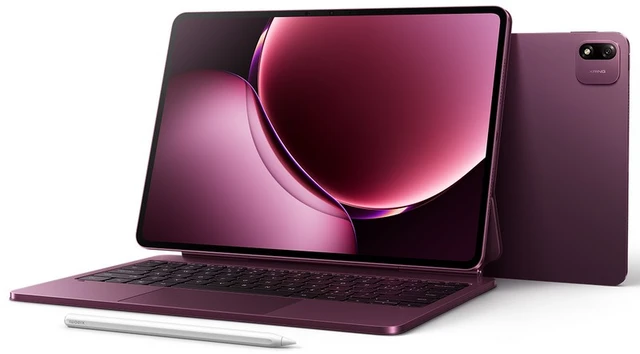 Power and Poise: The Xiaomi Pad 9 Pro Max