The integration of artificial intelligence into consumer electronics is carving out new vulnerabilities within the frameworks of state oversight and professional certification. A recent incident in South Korea serves as a stark illustration of how wearable technology can compromise the integrity of certifications for essential emergency personnel. An attempt to "automate" success during a firefighter's examination resulted not only in criminal charges for the candidate but also sparked widespread public outcry. The episode exposes a profound disconnect between the breakneck pace of technological evolution and the inherent inertia of regulatory frameworks.
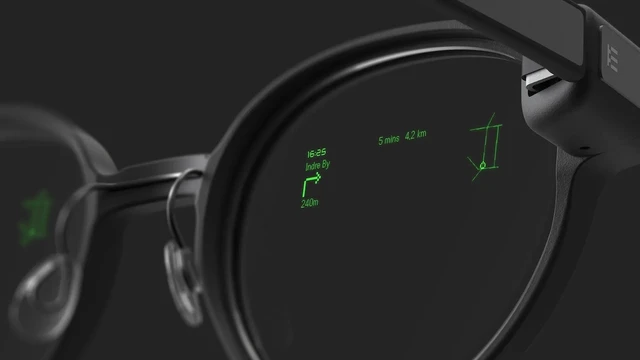
The rapid evolution of augmented reality (AR) and wearable technology has unlocked new frontiers of productivity, but it has also paved the way for increasingly sophisticated methods of deception. In South Korea, a candidate seeking a firefighter's license attempted to leverage this potential by integrating smart glasses into a state examination. The irony of the situation lies in the fact that this high-tech gambit was undone by a fundamental law of physics: a vigilant proctor spotted a suspicious glint on the device's lenses, providing the first clue that led to the candidate's exposure.
From a technical standpoint, the case offers a compelling look into the capabilities of modern software. According to the suspect, he had independently developed a specialized AI-powered application designed to process information in real time and project the correct answers directly into his field of vision. In essence, he had created a personal cognitive assistant capable of instantaneous analysis, effectively transforming the examination from a test of human knowledge into a benchmark for algorithmic efficiency.
Legally, the incident has escalated from a mere administrative infraction to a criminal offense. The Gwangju District Prosecutors’ Office has classified the man's actions as a violation of the National Technical Qualifications Act. In this context, the use of smart glasses is viewed not merely as academic fraud, but as a systemic challenge to state order.
The gravity of the situation is further amplified by the nature of the profession involved. While cheating in a humanities course might spark an ethical debate, falsifying a firefighter's qualification correlates directly with public safety. A specialist who obtains a license through deception potentially jeopardizes lives in real-world emergency scenarios, where a lack of fundamental knowledge can prove fatal.
This is not an isolated incident. There is a troubling upward trend in "digital fraud" across East Asia, with similar episodes involving smart glasses reported in Taiwan. This has prompted a wave of countermeasures from government agencies, which have begun urgently revising security protocols for standardized testing.
A global perspective reveals varying degrees of regulatory adaptation. In the United States, for example, there is no unified federal standard banning wearables during exams; instead, oversight is decentralized, with organizations like the College Board implementing their own internal regulations. However, the South Korean experience suggests that as AI tools become more accessible and electronics continue to miniaturize, localized prohibitions are becoming insufficient.
In response to these challenges, South Korean authorities have initiated the development of stringent new regulations designed to close loopholes for wearable gadgets. We are witnessing a new technological arms race—one where the mechanisms for ensuring certification integrity must evolve faster than the tools designed to circumvent them.
 Intel’s Strategic Play for Advanced Packaging Supremacy