For too long, the era of Large Language Models has remained confined to the boundaries of smartphone screens and web browsers. However, the drive to manifest AI in the physical realm has forged an ambitious alliance between Sam Altman and Jony Ive. Today, the industry stands poised in anticipation of a device intended to fundamentally reimagine the very essence of human-machine interaction. This is not merely about another gadget; it is an attempt to architect the definitive physical interface for the age of generative intelligence.
The collaboration between OpenAI CEO Sam Altman and legendary former Apple designer Jony Ive has emerged as one of the most compelling narratives in the modern tech landscape. It has been over a year since the announcement of their joint venture to develop an AI-centric device, yet concrete details remain elusive. Current analytical data suggests that a full product release is unlikely before next year, underscoring the inherent complexity of engineering an entirely new form factor.
Efforts to reveal the device's aesthetic have been carefully guarded. In recent discussions, OpenAI President Greg Brockman hinted at a concept defined by "atmospheric" qualities and frictionless interaction. This suggests a shift toward the paradigm of ambient computing—where technology recedes into the background of the environment, and interaction becomes intuitive and seamless. While voice control is prioritized, it will not be the sole modality, pointing toward a multimodal system with a rigorous commitment to data privacy.
Whether the device will feature a screen remains an open question, though OpenAI's leadership has left significant room for interpretation. While marketing promises of the "coolest technology in history" may seem hyperbolic even by Silicon Valley standards, the actual functionality could be more pragmatic. It is likely an intelligent hub equipped with an integrated camera designed to implement visual intelligence—akin to the Ray-Ban Meta glasses—analyzing surroundings in real-time to provide contextual responses.
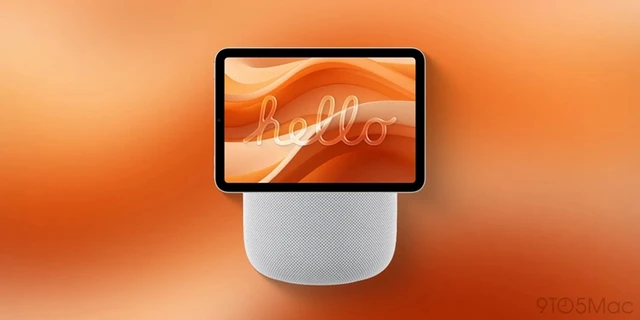
Simultaneously, Apple is refining its own strategy, reportedly preparing a response dubbed the "HomePad." This concept envisions a hybrid of the HomePod and iPad, intended to serve as the central nerve center for smart home management. The device is expected to feature a compact square display of approximately 6 inches and will be deeply integrated with Apple Intelligence and the HomeKit ecosystem.
The divergence in philosophy is stark: while the Altman-Ive project seeks to create a pure, streamlined interface for AI interaction, Apple’s solution focuses on expanding existing home infrastructure. Forecasts suggest Apple's offering could hit the market as early as this autumn alongside the new iPhone lineup, whereas the OpenAI device remains in an iterative phase, striving for the perfect equilibrium between minimalist aesthetics and neural network performance.
 The Environmental Toll of U.S. Technological Leadership