The global AI arms race has transformed computational power into the primary currency of today's tech economy. Against this backdrop, any decision by system integrators to pivot their hardware providers takes on strategic significance, directly impacting stock valuations and market sentiment. SpaceX's commitment to the Nvidia ecosystem underscores the latter's current hegemony over the high-performance computing (HPC) landscape. Yet, market dynamics suggest that even in the face of such singular dominance, sustained competition remains the only true safeguard for the industry's long-term stability and growth.
Elon Musk's public pronouncements often act as catalysts for market volatility, and SpaceX's current trajectory is no exception. The company's shift toward an exclusive Nvidia-based compute infrastructure is not merely a change of vendors; it is a strategic pivot toward the most mature acceleration ecosystem available. In an era defined by the training of massive language models and the processing of vast cosmic datasets, betting on CUDA and specialized Tensor Cores has become virtually mandatory for those chasing peak performance in real-time.
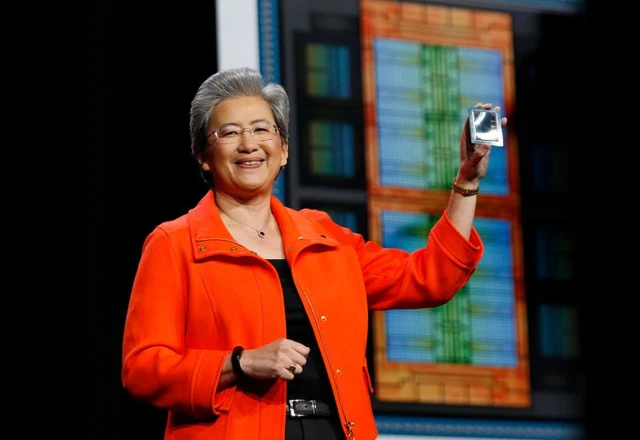
Despite SpaceX's decisive pivot, AMD leadership remains composed. CEO Lisa Su views the current situation not as a loss, but as a phase within a long-term strategic engagement. AMD’s diplomatic stance underscores a fundamental truth of today's IT landscape: demand for compute power is accelerating so rapidly that no single client can dictate the fate of the entire industry. For AMD, SpaceX remains a critical technological partner, and their history of collaboration provides a foundation for potential reintegration or hybrid deployments in the future.
An analysis of internal metrics reveals that AMD is betting heavily on the aggressive expansion of its server segment. The forecasts are ambitious: an expected 80% revenue surge from server solutions in the current half-year, with growth rates projected to remain above 70% through 2027, signaling deep systemic demand. The market is transitioning from a phase of selective accelerator adoption to a total overhaul of data center architecture, where bandwidth and energy efficiency have become the primary determinants of success.
To meet these demands, AMD is transforming its operational model, focusing on critical nodes within the supply chain. Primary investments are being channeled into chip testing and packaging—processes that frequently act as the "bottleneck" in advanced semiconductor manufacturing. Operating under a fabless model, AMD's strategy centers on building a highly efficient ecosystem of manufacturing partnerships. This approach allows for flexible scaling of production, ensuring the market receives necessary compute resources amidst a chronic shortage of high-tech components.
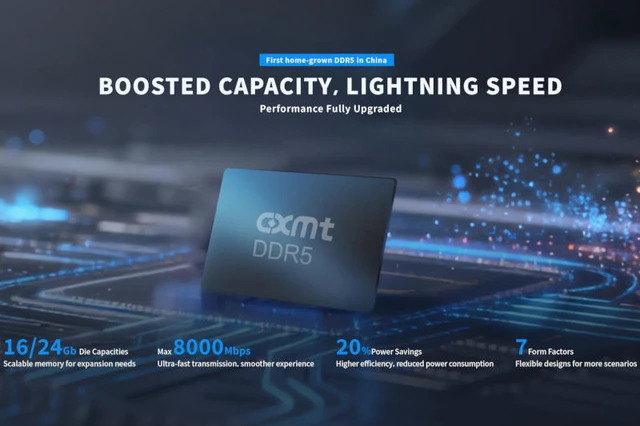 The Price of Acceleration: CXMT’s Rapid Push into Memory