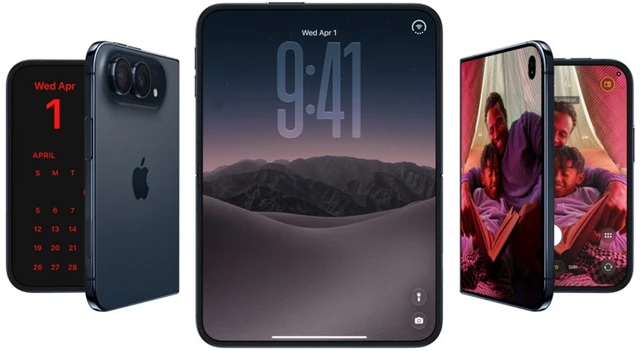
Apple's entry into the foldable market marks a watershed moment for the mobile technology industry. For years, Samsung has operated as the sole vanguard of this segment, pioneering consumer behavior and stress-testing the underlying technological hypotheses. Yet, the South Korean giant now views its primary rival's expansion not as a threat, but as a potent catalyst for broader market acceleration. This competitive friction is poised to finally legitimize the foldable form factor in the eyes of the mainstream consumer.
The high-tech industry often experiences a paradox where the entry of a new player into a specific segment benefits the established leaders more than it harms them. This is precisely how Samsung Electronics views Apple's debut in the foldable category. Rather than fearing a loss of market share, the company is betting on the expansion of the category itself, believing that interest in Apple's products will inevitably stimulate demand for its own solutions.
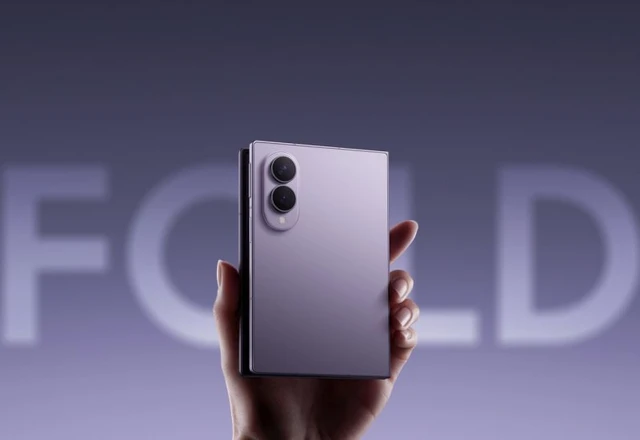
Empirical data supports this thesis. Analysis of consumer behavior reveals that the Galaxy Z Fold8 series attracted 1.6 times more users migrating from the iOS ecosystem than the previous Fold7 and Flip7 generations. This suggests that consumers who previously ignored flexible displays are beginning to view them as a viable alternative to traditional "slab" smartphones.
According to forecasts from Counterpoint Research, even with Apple's aggressive entry, Samsung is poised to maintain its dominance, holding approximately 38% of the market. The Cupertino newcomer is expected to secure second place with a 25% share. Such a market configuration creates a healthy duopoly, incentivizing both companies to accelerate the pace of innovation.
The dynamics of the US market are particularly noteworthy. Approximately 30% of Galaxy Z Flip8 owners migrated to the model from other brands, and for the majority, this marked their first experience with a foldable screen. In the higher-end segment represented by the Galaxy Z Fold8, the primary purchase drivers were ergonomics—specifically reduced weight and a thinner chassis—and the functionality of the internal display. The capacity for full-scale multitasking and seamless content consumption transforms the device into a comprehensive productivity tool.
The Fold8 Ultra deserves special mention. Here, the emphasis shifts toward peak productivity: the expanded workspace of the flexible screen allows users to effectively abandon the tablet, converging two devices into one.
Recognizing that the primary barrier to switching from iPhone to Android is the complexity of data migration, Samsung is actively working to lower this "barrier to entry." The updated Galaxy Switch system now allows users to initiate data transfer via a simple QR code scan. This eliminates the need to install additional applications on the iPhone, making the transition as seamless and frictionless as possible for the user.
Consequently, the foldable market is transitioning from an experimental phase to a stage of maturity. The competition between these two tech giants is transforming flexible screens from a premium curiosity into a new industry standard.
 A Comprehensive Refresh of Apple's Global Product Portfolio