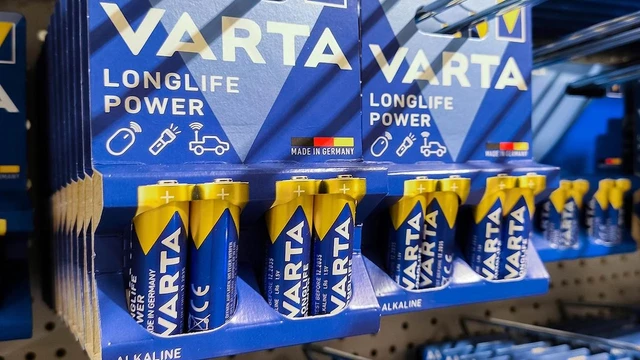
The saga of German industrial titan Varta has become a cautionary tale—a textbook case study in the perils of over-reliance on a single strategic partner. An aggressive push to scale production to meet Apple's demands spiraled into a financial disaster once the tech behemoth pivoted toward diversifying its supply chain. Now, the company teeters on the brink of a fragmentation that threatens to permanently extinguish its ambitions within the innovative energy sector. This corporate drama pits the demands of uncompromising creditors against regional authorities desperate to preserve Europe’s industrial capacity.
Varta’s crisis was no sudden shock; it was the inevitable result of a perilous strategic misalignment. By betting heavily on rechargeable coin cells for Apple, the company effectively devolved into a niche contractor. Massive capital expenditures to expand capacity, coupled with aggressive leveraging, created a facade of stability that shattered the moment Apple began diversifying its supplier base. The resulting plunge in order volumes left Varta burdened with staggering debt and an infrastructure operating far below capacity.
Macroeconomic headwinds further exacerbated the collapse. Currency volatility—specifically the decline of the US dollar in late 2025—eroded the margins on contracts with the American giant. Consequently, Varta breached its financial covenants twice, triggering a final rupture with Apple and initiating restructuring under the German StaRUG framework. This draconian mechanism effectively wiped out existing shareholder equity, transferring control of the enterprise into the hands of financial institutions.
Against this backdrop, a struggle for the company's technological destiny unfolded. CEO Michael Ostermann fought to maintain Varta’s integrity to realize an ambitious roadmap: the establishment of a sodium-ion battery plant. The shift to sodium is more than a mere change in cell chemistry; it is a strategic attempt to break the dependency on costly and scarce lithium and cobalt—a move that would have been pivotal for regional energy security.
Rescue attempts also emerged from the outside. Allswiss, a Swiss group, proposed acquiring €298 million of creditor debt to stabilize the company and sustain the development of lithium-ion technologies. This initiative found support from the state governments of Baden-Württemberg and Saar, who viewed Varta as a critical industrial asset. However, the backing of Landesbank Saar proved insufficient to bring the negotiations to a close.
The opposing faction—a consortium comprising Deutsche Bank and investment funds including Blantyre, RBC Bluebay, and Whitebox—pursues a different strategy. These creditors are pushing for the carve-out of the consumer battery division into a separate entity. From a financial perspective, this is purely pragmatic: the standard battery segment remains profitable, generating approximately €65 million in 2025. Selling this asset at a standard earnings multiple (5–7x) could yield between €325 million and €455 million for creditors.
Ultimately, immediate financial gain is outweighing long-term technological potential. The fragmentation of Varta effectively kills the development of sodium-ion systems, sacrificing an innovative leap on the altar of operational liquidity. Instead of establishing a new standard for energy storage, the industry witnesses another asset optimization play where short-term recovery takes precedence over industrial progress.
 Dragonscale’s Radical Battery Warranty