The era of generative AI remains largely a software-driven phenomenon, yet to establish a ubiquitous hardware standard. Industry efforts to transcend the smartphone often culminate in either niche curiosities or high-profile failures. Against this backdrop, Apple's decision to halt the development of a wearable AI accessory serves as a telling indicator of current market realities. It appears that discovering the ideal form factor for an "intelligent assistant" is proving far more challenging than engineering the underlying neural network itself.
The contemporary tech landscape is defined by a peculiar dissonance: while the capabilities of Large Language Models are scaling exponentially, the physical interfaces we use to interact with them have remained virtually stagnant for a decade. We are still confined to the boundaries of rectangular screens, even though the very nature of AI suggests a more organic, ambient presence in a user's life. The industry is desperately searching for a form factor that allows artificial intelligence to see and hear the world alongside the human, without creating social or aesthetic friction.
Early attempts to realize this vision have yielded mixed results. The Humane Ai Pin, positioned as a comprehensive smartphone replacement, faced scathing criticism over its poor power efficiency and questionable ergonomics. Meanwhile, Meta has found some success with its smart glasses lineup, yet this segment remains largely niche, limited to a small circle of enthusiasts and highly specific use cases.
Apple, with its traditional obsession with seamless user experience, has also explored this frontier. The company developed a new type of device—a compact pendant or clip-on wearable. The concept was to create an "always-on eye" for the iPhone. The gadget was designed with a camera and microphone to serve as a sensory extension for Siri AI, enabling the assistant to analyze visual context in real-time and provide responses based on exactly what the user is seeing.
However, despite the technological potential, the project was shelved. It appears the company concluded that a standalone accessory creates excessive cognitive load and physical inconvenience without offering an indispensable value proposition that couldn't be achieved within existing product lines.
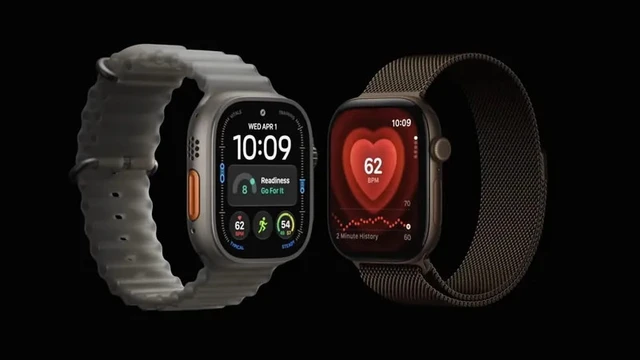
Rather than launching a new device, Apple has pivoted its resources toward evolving its current ecosystem. The primary focus has shifted toward deep AI integration within the Apple Watch, where monitoring and data analysis functions can be implemented more naturally. Simultaneously, work is underway on AirPods with integrated cameras and full-fledged smart glasses, with a projected release by 2027. These devices offer a more logical method for gathering visual data, as they align directly with the user's line of sight.
A further vector of development is the interest in screenless fitness trackers. This underscores a broader trend toward "invisible technology," where the interface becomes minimalist and the core intelligence migrates to the cloud or companion devices. Apple has effectively acknowledged that the path to ubiquitous AI lies not in the creation of eccentric new gadgets, but in the gradual infusion of familiar accessories with new sensors and cognitive capabilities.

 Qualcomm’s New Standard for Mobile Performance