The battle for dominance in the living room has long since shifted; it is no longer fought on the battlefield of screen resolution, but rather through the purity and precision of light. For years, sophisticated backlight control remained the exclusive prerogative of premium flagships. Huawei’s latest strategy seeks to democratize these technologies, bringing professional-grade color reproduction to the mainstream consumer. The Vision Smart Screen 6 SE RGB serves as the catalyst for this transition, fusing raw hardware performance with seamless ecosystem integration.
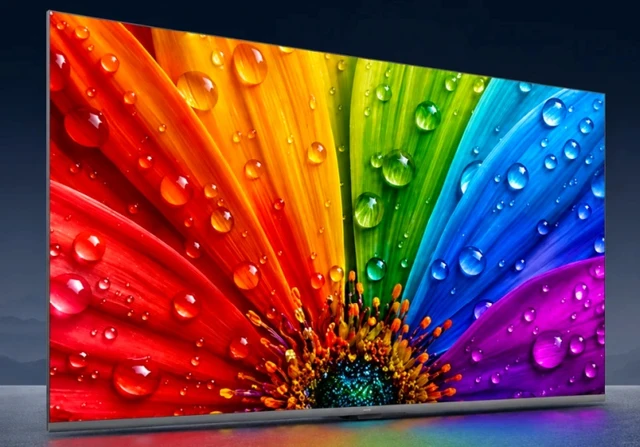
The visual display industry is undergoing a pivotal transformation: a shift from standard backlighting methods toward more sophisticated, multi-component systems. The debut of the Vision Smart Screen 6 SE RGB marks a departure from traditional single-color LED approaches in favor of independently controlled red, green, and blue emitters. This paradigm shift radically enhances image quality, bringing it closer to the rigorous standards of professional-grade monitors.
A primary achievement here is the BT.2020 color space coverage, which reaches 105%. In the context of modern broadcasting and cinematic production, this translates to unprecedented saturation and hue accuracy—levels previously unattainable in the mid-range segment. Combined with 94-bit color precision and an optimized system of focusing lenses, the device effectively tackles one of MiniLED's primary challenges: "blooming" or parasitic light leakage around bright objects on dark backgrounds, significantly boosting visual contrast.
The panel's technical foundation is built upon a 4K resolution with an 8ms response time and a native refresh rate of 120Hz. To ensure fluid motion in dynamic scenes, the device employs motion enhancement technology that achieves an effective rate of up to 300Hz, making it highly attractive for gaming and sports content. This process is managed by a specialized 24-core backlight control chip which, paired with an updated LCD panel, delivers a double-digit percentage increase in color reproduction efficiency.
Under the hood, the hardware consists of a quad-core processor combining Cortex-A73 and Cortex-A53 cores, ensuring a stable experience for both the interface and applications. 3GB of RAM and 64GB of internal storage provide the necessary performance overhead for HarmonyOS 4.3. Here, the operating system serves as more than just an app launcher; it acts as a comprehensive smart home control center. Integration with the Harmony ecosystem allows the television to interact with peripheral devices—from sensors to smart locks—effectively turning the screen into the primary interface for spatial interaction.
In terms of functionality, the device fully aligns with modern requirements for multimedia hubs. The inclusion of HDMI 2.1 ports unlocks the full potential of current-gen gaming consoles, while 4K Super Casting simplifies content streaming from mobile devices. In the top-tier 75-inch model, the audio system has been boosted to 100W, minimizing the need for external soundbars in smaller rooms.
The launch of the Vision Smart Screen 6 SE RGB in the Chinese market demonstrates an aggressive pricing strategy, with models ranging from 3,499 to 5,799 yuan (approximately $520 to $860). This approach effectively democratizes flagship-level technology, forcing competitors to rethink their hardware standards for mid-budget panels.
 The Evolution of Apple's Augmented Reality Ecosystem