The space race for full reusability has shifted from the vacuum of orbit to a confrontation with terrestrial elements. Starship’s thirteenth flight stood as an engineering triumph, marking the first time the vehicle returned from space largely intact. Yet, the Indian Ocean has proven to be a more unforgiving adversary than the plasma-fire of atmospheric reentry. The spacecraft's fate now hangs on the whims of the weather, turning a technical victory into a high-stakes scramble for critical physical data.
The history of space exploration is often written in the wake of wreckage, but the thirteenth test flight of the Starship system was designed to be the exception. Launching on July 24, 2026, from the Starbase facility in Texas, the mission marked a pivotal milestone for the most powerful rocket ever constructed. Following its suborbital program, the spacecraft executed a soft splashdown off the coast of Western Australia. For the first time in the program's history, the vehicle did not disintegrate into debris; instead, it remained afloat, maintaining its structural integrity.
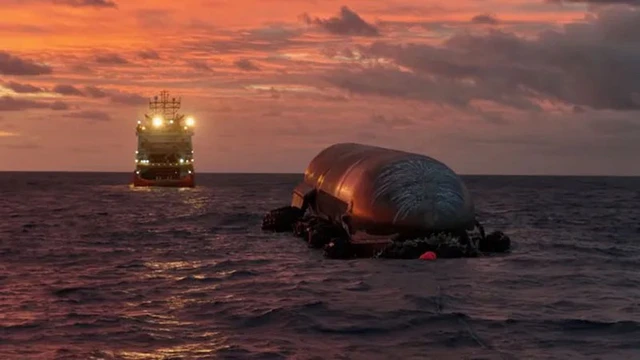
This success prompted SpaceX to embark on an audacious and high-stakes operation to tow the colossal steel hull back to shore. The objective was purely pragmatic: to conduct a forensic analysis of the materials after they had endured the brutal thermal stresses of atmospheric reentry. However, nature proved more formidable than the engineers' projections. Mounting swells in the Indian Ocean and deteriorating weather conditions transformed the recovery attempt into a desperate struggle for survival for a structure never designed for prolonged exposure to a corrosive marine environment.
The situation is further complicated by the inherent volatility of towing a multi-ton object during a storm. It has since become clear that the prospects of bringing the ship into port are plummeting; Starship will likely, after all, claim its place on the ocean floor.
Yet, despite the probable loss of the airframe, the mission has already yielded invaluable dividends for SpaceX. The recovery team managed to secure detailed photographic documentation of critical components: the engine section and, most crucially, the thermal protection system (TPS). Heat shielding has long been the "Achilles' heel" of the Starship program. For the vision of full reusability to materialize, the craft must return from space ready for a rapid turnaround without the need for exhaustive and costly tile refurbishment. The data gathered suggests that the heat shield challenges have been largely overcome, clearing the path toward regular interplanetary transit.
Flight 13 served as a comprehensive stress test for the entire SpaceX ecosystem. While the Super Heavy booster concluded its mission with a planned descent into the Gulf of Mexico, the upper stage demonstrated its payload deployment capabilities by releasing 20 full-scale Starlink V3 demonstrators into space. Although these satellites were on suborbital trajectories and subsequently burned up in the atmosphere, the successful separation confirmed the system's readiness for the mass deployment of heavy orbital constellations.
Ultimately, even if Starship sinks into the depths of the Indian Ocean, it will have fulfilled its primary objective: serving as a critical source of empirical data for the next iteration. The experience gained from this flight lays the foundation for full operational deployment. With the fourteenth test flight expected by the end of the month, SpaceX is poised to finally validate the viability of the most ambitious transport architecture in the history of astronautics.
 Next-Generation Ultra-Lightweight Lens Technology