The shift from rudimentary chatbots to fully autonomous agents has emerged as the defining trend in today's artificial intelligence landscape. A recent "Economic Index" report by Anthropic unveils a surprising correlation: user trust is driven less by the raw computational power of the model and more by the environment in which it operates. Behavioral analysis across thousands of users suggests that the interface itself defines the threshold of our willingness to "take our hands off the wheel." This evolution is fundamentally altering the nature of human-algorithm interaction, shifting the paradigm from simple dialogue to strategic delegation.
The current evolution of Large Language Models is defined by a fundamental shift from reactive interaction to proactive engagement. In the sixth edition of its Economic Index, Anthropic updated its data collection methodology, moving from weekly snapshots to hourly monitoring. This granular approach has revealed genuine "circadian rhythms" in AI usage: while users frequently seek recipes in the evening, requests shift toward insomnia assistance in the dead of night. However, beneath these domestic patterns lies a more profound technical pivot—the bifurcation of user experience into traditional conversational interfaces (web chat) and agentic environments (Claude Code).
The central discovery of the study is the "autonomy paradox." Researchers found that users delegate significantly more control to models within Claude Code than they do in a standard chat interface. This gap in autonomy is evident across all task categories but peaks during programming. Content creation serves as a poignant example: where a user requires approximately 13 dialogue iterations to achieve a result in the web chat, an agentic environment accomplishes the same task with a single prompt.
Crucially, this effect cannot be attributed simply to the use of more powerful models. Even when comparing sessions powered by the same Sonnet model, Claude Code demonstrates a substantially higher level of autonomy. This proves that a model's "intelligence" is merely the baseline requirement; the determining factor is UX design and product architecture, which fosters user trust and enables a transition from micromanagement to strategic oversight.
The economic dimension of this process reveals a direct correlation between task value and computational expenditure. In high-value professional domains—such as software development or marketing—token consumption more than doubles compared to simple domestic queries. High levels of delegation are closely linked to the volume of data utilized (correlation coefficient r = 0.68). Notably, users do not become passive in complex scenarios; on the contrary, they engage "Extended Thinking" mode more frequently and increase their query volume. This suggests that when handing over control to AI, the human does not exit the loop but rather ascends to a higher level—moving from execution to supervision.
User psychographics, derived from a survey of nearly ten thousand respondents, challenge the prevailing narrative of automation anxiety. Those who delegate the most tasks to AI express the greatest optimism regarding their professional future. Rather than fearing job loss, they anticipate an increase in their own market value and earnings. For these users, AI is not a replacement but a force multiplier for personal efficiency.
Gender-based behavioral patterns also emerged as an intriguing aspect of the data. The findings indicate that women are less likely to utilize agentic environments like Claude Code and exhibit lower levels of task automation. Rather than "offloading" a task entirely, they tend toward iterative interaction, treating the model as a collaborative partner rather than an autonomous executor. Men, conversely, more frequently seek full delegation, aiming to distance themselves as much as possible from the implementation process.
Ultimately, the AI ecosystem is evolving toward environments where models can operate autonomously over extended periods. The primary barrier on this path is not the limitation of neural network cognitive capabilities, but rather the psychological threshold of trust and the quality of interfaces. The future belongs to products that can transform AI interaction from an endless cycle of refinements into an efficient process of delegating authority.

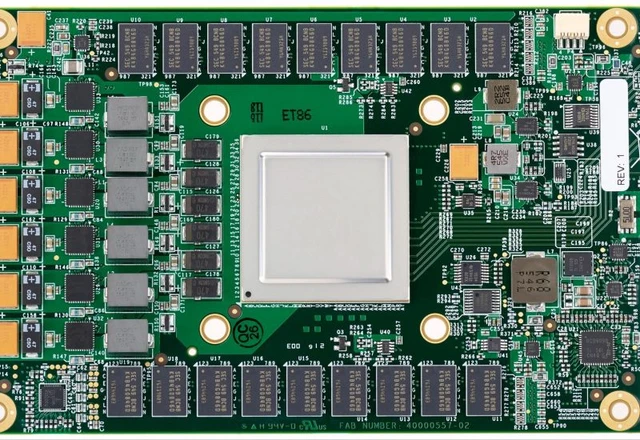 Anthropic’s Strategic Push for Hardware Independence