The race for AI hardware supremacy is no longer fought solely on the battlegrounds of silicon architecture and power efficiency; it has extended into the realm of corporate identity. Elon Musk’s ambitious vision for Terafab—a massive chip-manufacturing facility—has hit an unexpected legal snag. This trademark dispute between a global tech titan and a niche player underscores the inherent fragility of branding in an era of breakneck technological acceleration. Ultimately, the conflict serves as a poignant case study in the collision between industrial-scale manufacturing and highly specialized, laboratory-driven innovation.
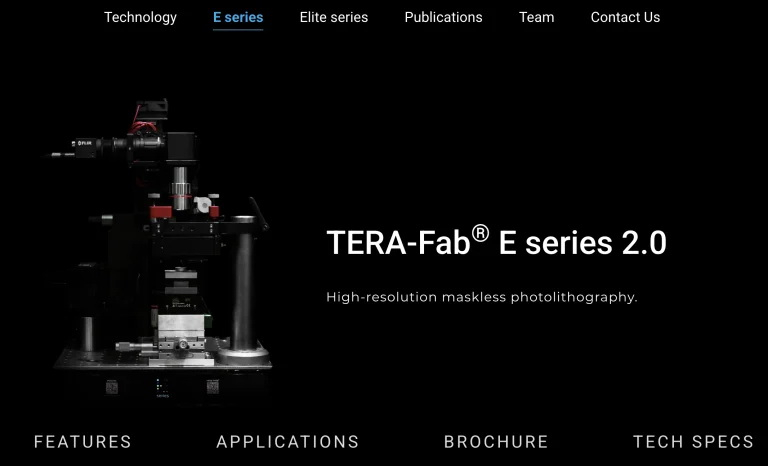
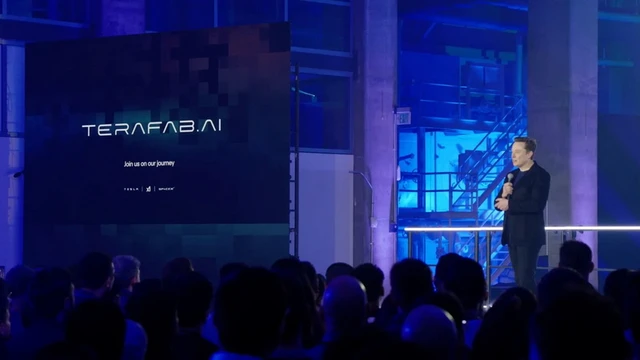
At the core of Elon Musk's modern technological stack lies a relentless drive toward total vertical integration. Project Terafab is envisioned as the bedrock of this ecosystem: a massive industrial enterprise designed to produce cutting-edge processors for orbital data centers, humanoid robotics, and electric vehicles. However, a legal clash has emerged on the path to realizing this vision. Tera-Print, an Illinois-based company, has long utilized the designation "TERA-fab" for its specialized photolithography systems, leading to a sharp conflict of interest.
The situation escalated when SpaceX, Tesla, and SpaceXAI filed a lawsuit in a U.S. District Court, attempting to preemptively secure their right to the name. Previously, Tera-Print had demanded that Musk's entities cease using the brand, arguing that the emergence of Terafab would create market confusion and infringe upon established trademark rights. The niche company did not stop at a mere warning, threatening litigation over unfair competition and the misleading of consumers regarding the product's origin.
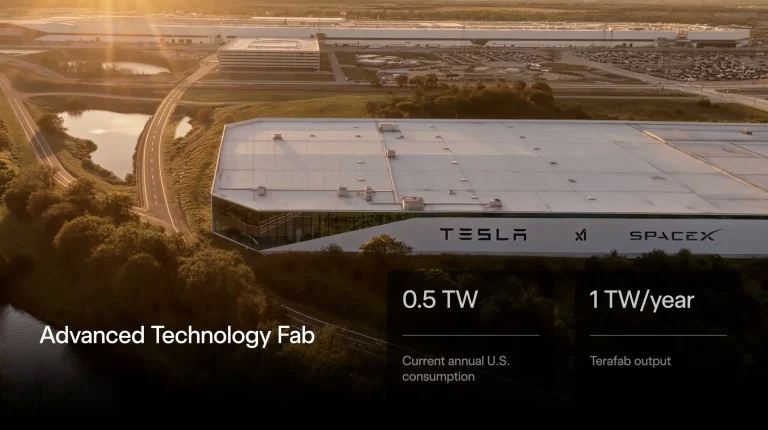
The position held by SpaceX and Tesla is built on the argument of fundamentally different market niches. From the perspective of the tech giants, confusion is impossible because the Texas-based Terafab is focused on the industrial-scale fabrication of chips for robotics and aerospace systems. In contrast, Tera-Print's products are benchtop printers that apply microscopic patterns to surfaces for bioengineering and laboratory research. The plaintiffs contend that Tera-Print does not actually engage in logic design, memory device development, or semiconductor packaging, rendering their claims baseless.
However, the opposition views the situation differently. Tera-Print's technical leadership insists that their TERA-FAB brand has been in continuous commercial use for over a decade. Furthermore, the company claims that attempts to reach a settlement were sabotaged by Tesla. Rather than concluding negotiations, Musk's corporation opted for litigation to legitimize the use of the name without obtaining the necessary authorization.
The conflict gains further depth when considering Tera-Print's actual market footprint. The company does more than sell laboratory equipment; it executes a significant contract for the U.S. Department of Defense to produce new semiconductors. Additionally, it collaborates closely with the AI solutions developer Mattiq, effectively shifting Tera-Print's operations from the realm of "benchtop printers" into high-end engineering—a sphere where the interests of both parties intersect.
An analysis of data from the United States Patent and Trademark Office (USPTO) reveals that both parties have filed applications for the name Terafab, but for different categories of goods. Tesla has secured the right to supply semiconductor chips, their packaging, and integrated circuits. Tera-Print, meanwhile, holds the rights to the name in the context of silicon and glass chips, as well as polymer and electron-beam lithography tools.
Ultimately, this dispute boils down to a question of legal certainty. For a project of Terafab's scale, any ambiguity in branding could pose a serious risk to scaling operations and the protection of intellectual property. SpaceX and Tesla are seeking a judicial ruling that definitively confirms their right to the name, eliminating any claims from Tera-Print and ensuring the legal indemnity of one of the most ambitious infrastructure projects of the decade.
 Forecasting Exponential Growth in Nvidia Shipments