Outer space is an environment that brooks no error; often, the thin line between a successful mission and total catastrophe hinges on the performance of a single sensor or actuator. NASA’s Swift Observatory—a cornerstone of modern astrophysics—now finds itself on the brink of destruction as intensifying atmospheric drag pulls it toward a premature end. The rescue operation, spearheaded by Katalyst Space via its LINK satellite, has evolved into a high-stakes struggle for control over the spacecraft. Now, the fate of the entire mission rests on whether engineers can successfully reconfigure the control systems in real-time while orbiting in the void.
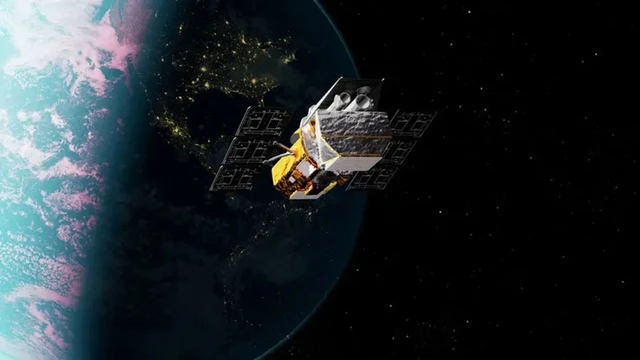
The LINK spacecraft, tasked with one of the most daunting challenges in modern orbital servicing—raising the orbit of the Swift observatory—has encountered a critical system failure. Immediately after reaching its target parameters, the satellite entered a state of uncontrolled rotation. This dynamic instability resulted in sporadic telemetry with Earth and triggered an emergency reboot of the onboard computer, casting doubt on the overall viability of the mission.
Technical analysis has revealed severe degradation of the attitude control system: two of the three reaction wheels—the gyroscopic devices responsible for stabilization and precision positioning in the vacuum of space—have failed completely. The situation is further complicated by the fact that the auxiliary cold gas thruster system is only partially operational. In deep space, such a combination of failures typically signals the loss of the spacecraft; however, LINK retains several critical advantages: its power system and solar arrays are functioning nominally, ensuring battery charging and the maintenance of radio communications.
To stabilize the craft, engineers have opted for an unorthodox maneuver by engaging the electric propulsion systems. In standard operations, such thrusters are designed for long-duration inter-orbital transfers and course corrections rather than combating angular momentum. Nevertheless, initial pulses have already succeeded in reducing the rotation speed, offering a glimmer of hope for restoring full control over the vehicle.
The next phase will involve a comprehensive overhaul of the Guidance, Navigation, and Control (GNC) algorithms. The satellite must effectively "relearn" how to fly under constrained resources: flight operations must now be managed using a single functional reaction wheel and a partially operational gas RCS (Reaction Control System). Before uploading the updated software to the spacecraft, specialists will conduct a series of stress tests on ground-based testbeds and computer simulations to eliminate any risk of total system collapse.
Should stabilization prove successful, LINK will proceed with its rendezvous with the Swift observatory. The mission profile dictates a cautious inspection of the target followed by the execution of capture maneuvers. The robotic grappling mechanism will only be engaged once the absolute safety of the operation is confirmed.
The context of this mission underscores the vulnerability of space infrastructure to natural solar cycles. The Swift observatory began losing altitude rapidly due to heightened solar activity; the resulting expansion of the upper atmosphere increased orbital density, thereby intensifying aerodynamic drag. Without external intervention, the telescope would inevitably incinerate in the dense layers of the atmosphere by September of this year.
The LINK satellite was launched on July 3, 2026, via a Pegasus XL launch vehicle deployed from the Stargazer aircraft over the Kwajalein Atoll. Its ultimate objective is to dock with Swift—which was not originally designed for servicing—and utilize three xenon thrusters to gradually "pull" the observatory into a higher, more secure orbit.
 The Hidden Dynamics of Mercury's Contraction


