The boundary between human interaction and machine interfaces is becoming nearly imperceptible. For too long, voice assistants have been shackled by rigid algorithms, incapable of grasping the organic rhythm and emotional nuance of a live conversation. With the launch of GPT-Live, OpenAI is redefining the very essence of interaction by implementing a seamless, bidirectional data stream. This is more than a mere functional upgrade; it represents a fundamental shift toward the creation of a truly empathetic digital interlocutor.
For the modern user, interacting with artificial intelligence has long mirrored a messaging exchange, even when conducted via voice. Traditional systems have always operated on a rigid, turn-based logic: request, processing, response. However, the new GPT-Live model shatters this paradigm by simulating natural human reactions. The AI is no longer limited to merely answering; it can now offer "backchanneling" cues—using interjections like "mm-hmm" or "uh-huh," observing pauses when a speaker is reflecting, and, most crucially, allowing itself to be interrupted.
To appreciate the scale of this technological leap, one must examine the evolution of OpenAI's voice interfaces. The first generation of Voice was essentially a fragmented pipeline of three disparate systems: a speech-to-text module translated audio into text, a language model generated a response, and a synthesizer converted that text back into speech. This multi-stage architecture inevitably introduced latency and stripped away the emotional nuances of live conversation.
The subsequent iteration, Advanced Voice Mode, unified these processes within a single model but retained a linear operational logic. The system waited for total silence before speaking, which often resulted in awkward pauses or, conversely, caused the AI to cut the user off during a momentary hesitation. GPT-Live elevates the experience to an entirely different level via full-duplex mode. This means the model listens and speaks simultaneously, continuously analyzing the incoming audio stream even while generating its own response. Decisions on whether to pause, continue speaking, or trigger an external tool are made multiple times per second, creating a profound sense of genuine presence.
Parallel to these communication enhancements, OpenAI has implemented an intelligent task-delegation system. The "front-end" of the conversation is now handled by a streamlined conversational model that maintains the dialogue's momentum without overloading the system. If a request demands deep analysis, web search, or complex computation, the task is routed to a "frontier model" (currently GPT-5.5). While this high-capacity computational module prepares a comprehensive answer in the background, the conversational model continues to engage the user, eliminating the agonizing silence of processing delays.
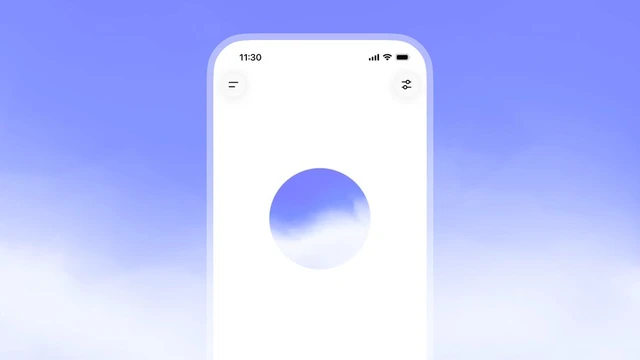
To provide greater control, users can now select their preferred level of reasoning depth, ranging from "Instant" responses to "High" analysis. Furthermore, the interaction has evolved beyond the purely auditory. The interface now integrates dynamic visual cards that display real-time information—such as stock quotes, weather forecasts, sports results, or maps—supplementing the voice interaction with tangible data.
The rollout of GPT-Live has already extended across iOS, Android, and the web. For subscribers of the Go, Plus, and Pro tiers, the GPT-Live-1 model is becoming the standard, while free users have access to a lightweight version, GPT-Live-1 mini. Blind testing confirms that both versions significantly outperform their predecessors in terms of conversational turn-taking and overall fluidity.
Despite this breakthrough, there is still room for growth. At launch, the system lacks video calling and screen-sharing capabilities, which remain restricted to legacy modes. There are also noted challenges with certain accents and gaps in proficiency across some languages. Nevertheless, with over 150 million people using ChatGPT's voice features weekly, GPT-Live is laying the groundwork for a future where the interface between human and machine becomes entirely transparent.
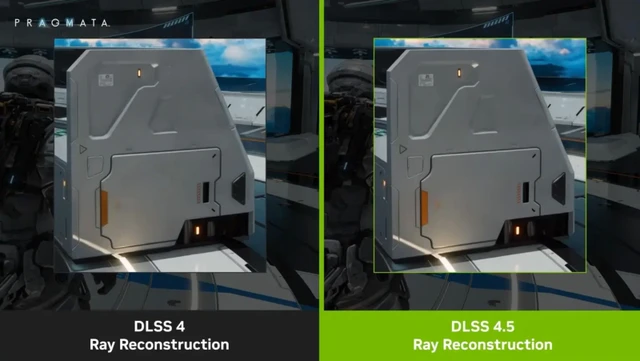 The Evolution of Rendering in DLSS 4.5