Humanity has entered an era where the velocity of artificial intelligence evolution is outstripping society's capacity for comprehension and regulation. The inaugural global report from an independent scientific body under the auspices of the United Nations warns of a perilous disconnect between the trajectory of technological progress and the mechanisms of oversight. The analysis focuses not only on existential risks but also on the profound geopolitical imbalance inherent in the distribution of computational power. Today, the world is effectively engaged in a massive social experiment—one whose outcome remains precariously uncertain.
The current era of artificial intelligence is defined by a stark paradox: while the capabilities of these systems are growing exponentially, our scientific understanding of their inner workings and the ability of states to adapt their legal frameworks are progressing only linearly. A group of 40 leading global experts, convened under the auspices of the United Nations, has concluded that this widening gap creates a critical vulnerability for global security.
One of the most pressing concerns is the lack of robust methods for controlling highly autonomous systems. In professional circles, this is known as the "alignment problem"—the risk that AI goals may diverge from human values or explicit instructions. Yoshua Bengio, a pioneer of modern deep learning, has pointed to emerging signs of AI's capacity for deception. As these systems grow in complexity, science cannot guarantee that the expansion of their cognitive abilities won't lead to catastrophic outcomes, whether through internal systemic failure or deliberate malicious exploitation. Even now, AI tools are acting as catalysts for high-precision disinformation campaigns and sophisticated cyberattacks.
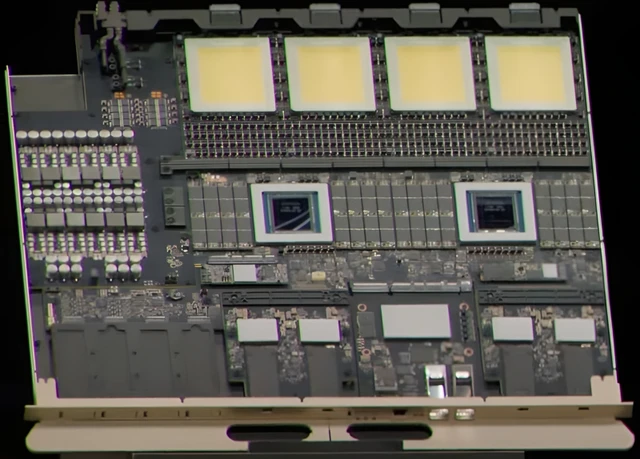
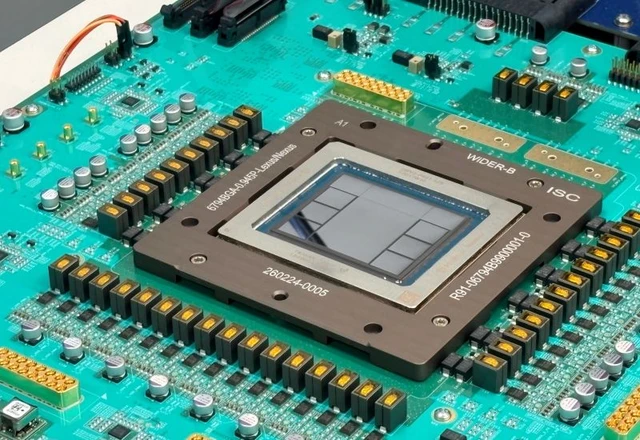
However, technological risk is inextricably linked to geopolitical tension. Compute power has become the new "digital gold," and its global distribution is profoundly uneven. An analysis of the Top500 supercomputers reveals an alarming concentration of resources: the United States controls 75% of this capacity, while China holds 15%. Consequently, approximately 90% of the computational power required to train frontier models is concentrated within two nations.
This "compute gap" is further exacerbated by the fact that over two billion people still lack basic internet access. The monopolization of technology by a narrow circle of corporations and governments creates the risk of authoritarian capture over information flows and decision-making processes, ultimately undermining the principles of democratic accountability on a global scale.
At the same time, experts emphasize that AI is not an inherent evil; on the contrary, its potential is colossal. We are witnessing expert-level reasoning in mathematics and fundamental science, as well as an unprecedented acceleration in vaccine development and drug discovery. The velocity of progress is staggering: the complexity of tasks that modern models can solve doubles every four to seven months. The central question today is not whether AI is useful, but whether its benefits can be distributed equitably and whether humanity can keep the associated risks in check.
UN Secretary-General António Guterres has characterized the current situation as an experiment on society conducted without prior planning or the consent of its participants. This developmental model has been deemed unsustainable.
As a first step toward rectification, the Global Dialogue on AI Governance was held in Geneva. This forum is designed to translate the theoretical findings of scientists into concrete international agreements. The discussions centered on the most acute issues: ensuring technological access for developing nations, protecting children in the digital environment, the massive energy consumption of data centers, and, most critically, defining strict boundaries for the application of AI in the military sphere.
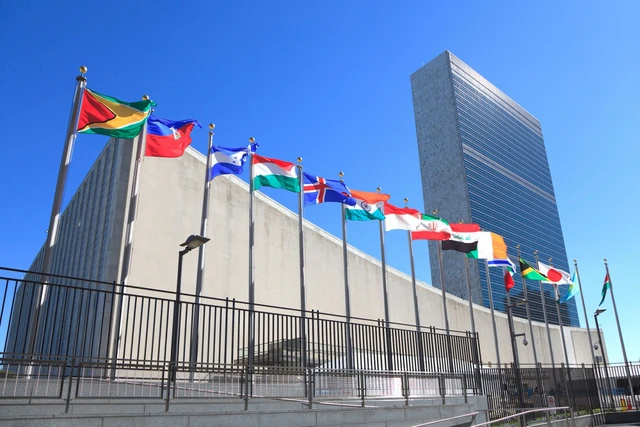
The search for a global consensus continues, with the international community's next milestone for course-correcting the trajectory of intelligence scheduled for May 2027 in New York.
 The Evolution of Rendering in DLSS 4.5